
Unified Namespace

Unified Namespace: One Source of Truth for Your Factory's Data
Most factories run more integrations than anyone can easily count: point-to-point connections between PLCs, SCADA, MES, historians and ERP, each built for a single purpose and each a potential failure point. A Unified Namespace replaces that tangle with a single, structured, real-time source of truth that every authorised system and application can draw from. This page explains what a Unified Namespace is, why it matters for factories and manufacturing plants across industries, and how INGSOL designs and implements one.
What Is a Unified Namespace?
A Unified Namespace (UNS) is a centralised, hierarchical data structure that represents the current state of your entire operation, from individual sensors and machines to production lines, plants and the wider enterprise. Rather than systems querying each other directly through custom, point-to-point connections, every system publishes its data to the namespace and subscribes to the parts of it relevant to that system, using an event-driven message broker such as MQTT.
A Unified Namespace is not simply a bigger database, and it does not replace your SCADA, MES or ERP systems. It is an architecture: a single, consistent, real-time model of what is happening across your operation, structured so that any authorised system, dashboard or application can find and use the same data without a bespoke integration being built for each connection.

Why Point-to-Point Integration Breaks Down
Most plants arrive at their current data architecture gradually, adding a connection whenever a new system needs information from another. Over time, this produces a familiar set of problems:
INTEGRATION COMPLEXITY MULTIPLIES
Every new system requires its own custom connection to every other system it needs data from, and the number of connections grows far faster than the number of systems.
INCONSISTENT DATA
The same piece of data, a tank level, a production count, a machine status, may be defined, formatted or timed differently across each point-to-point connection
FRAGILE TO CHANGE
A change to one system’s data format can silently break every direct connection built against it, often discovered only once a report or dashboard shows incorrect figures.
SLOW TO EXTEND
Adding a new dashboard, analytics platform or AI model means building yet another custom connection back to every relevant source system.
How a Unified Namespace Is Structured
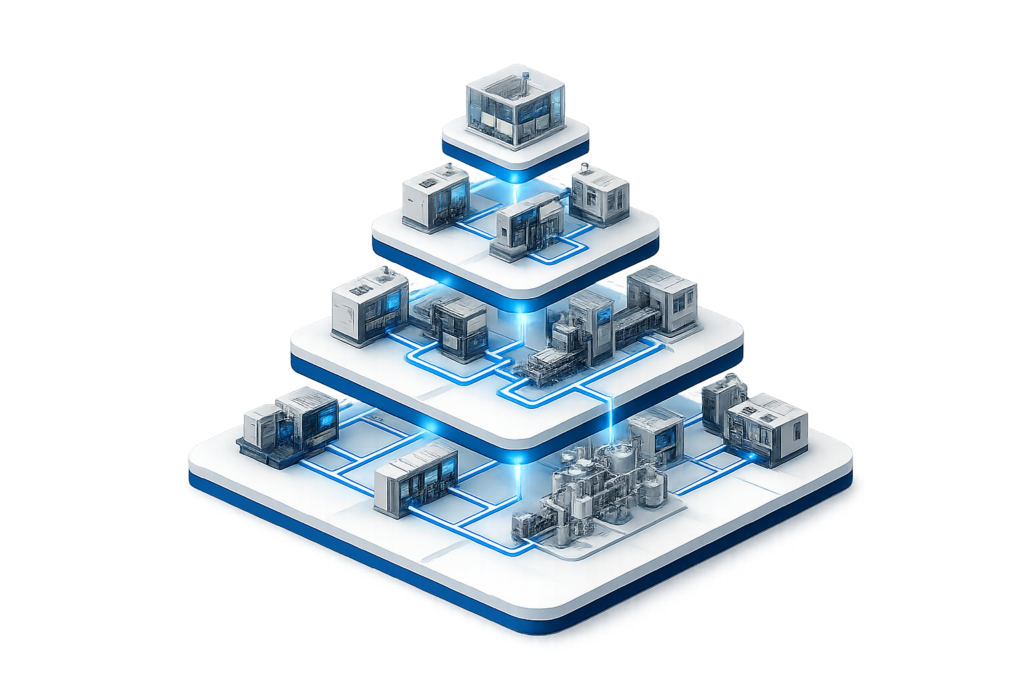
INGSOL designs Unified Namespace architectures around a clear, hierarchical model, commonly aligned with the ISA-95 standard, structured by enterprise, site, area, production line and equipment. Each piece of data, a machine’s status, a sensor reading, a batch record, occupies a defined location within this hierarchy, published in real time as it changes. This means any system connecting to the namespace can find the data it needs by its logical position in the plant, rather than by knowing which specific source system originally produced it.

How INGSOL Implements a Unified Namespace

Data and Systems Audit
INGSOL begins by mapping existing PLCs, SCADA, MES, historians and ERP systems, identifying what data each one holds, how it is currently exchanged, and where duplication
Namespace Design
We design the namespace hierarchy around your specific operation, using naming conventions and structure aligned with ISA-95 or an equivalent model suited to your plant, so the structure reflects how your enterprise, sites, lines and equipment are actually organised.
Broker and Protocol Implementation
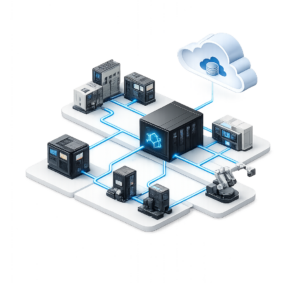
INGSOL implements the namespace using an MQTT broker, commonly with the Sparkplug specification for structured, stateful industrial messaging, integrated with platforms such as Ignition and ThingsBoard. Existing PLCs and SCADA systems are connected using OPC UA, Modbus, EtherNet/IP or PROFINET as required, so legacy equipment can publish into the namespace without replacement

Consuming Applications
Once data is flowing into the namespace, dashboards, historians, analytics platforms and AI models subscribe to the parts of it they need. New applications can be added by subscribing to existing namespace data, without requiring a new connection back to each original source system.

Governance and Security
INGSOL defines clear ownership and access control for each part of the namespace, so that systems and personnel can access the data relevant to their role without exposing the entire architecture unnecessarily
Unified Namespace, SCADA, MES and IIoT
A Unified Namespace does not replace SCADA, MES or your existing IIoT platform. It changes how they exchange data with each other. SCADA continues to provide real-time process control, MES continues to manage production orders and quality, and IIoT platforms continue to manage device connectivity, but each publishes to and reads from the namespace rather than maintaining separate, direct connections to every other system. This is why INGSOL designs Unified Namespace architecture as part of our wider Communication & Integration work, built on the same open protocols we use across SCADA, MES and IIoT implementations.

Why Manufacturers Choose INGSOL for Unified Namespace
Open architecture:
Built on open standards including MQTT, Sparkplug and OPC UA, so your namespace is never dependent on a single proprietary platform.
Works with existing systems:
Legacy PLCs and SCADA systems publish into the namespace through existing protocols, avoiding wholesale replacement
Faster to extend:
A new dashboard, analytics tool or AI model connects to the namespace once, rather than requiring a fresh integration to every source system.
Reduced integration debt:
A UNS reduces the number of custom, single-purpose interfaces a plant has to maintain, lowering long-term integration overhead
Part of a complete architecture:
Unified Namespace work is delivered as part of INGSOL's wider Digital Transformation, Communication & Integration and Data & Intelligence capability, so it supports the full architecture rather than standing alone.
Where to Start
INGSOL typically introduces a Unified Namespace as part of a Digital Transformation Maturity Assessment (DTMA), evaluating your current OT infrastructure, systems and integration approach before designing a namespace structure suited to your plant. Implementation is usually phased, starting with a single production line or area, and extending across the plant as the structure proves its value.

NGSOL designs Unified Namespace architectures that give factories a single, real-time view of operational data, simplifying integration as systems evolve. Contact us to discuss a Unified Namespace or Digital Transformation Maturity Assessment.
Our Clients











membership