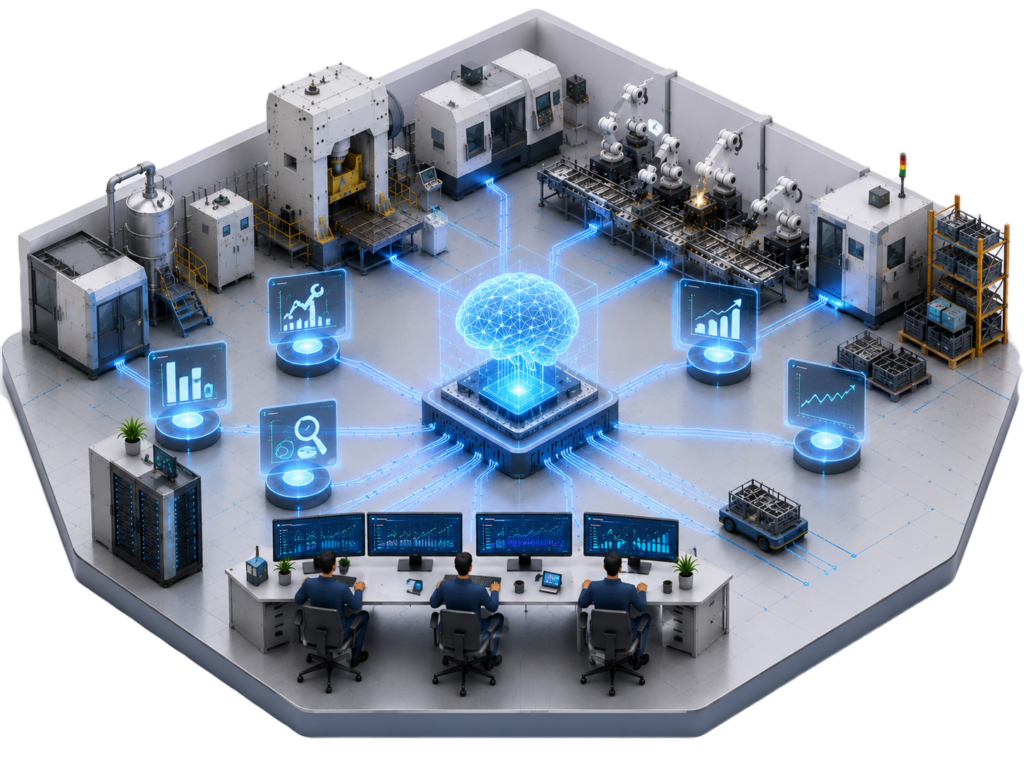
Closing the gap between the production plan and what the shopfloor actually delivers.
INGSOL helps manufacturers across discrete and process industries convert scattered shopfloor data into actionable intelligence, improving reliability, efficiency, and quality through structured digital transformation, not a generic technology rollout.
The Gap Between the Plan and the Shopfloor
Across discrete and process manufacturing alike, plants generate more data today than ever before, through PLCs, SCADA systems, sensors, and quality checks. Yet most manufacturers still make critical decisions using information that is delayed, incomplete, or scattered across disconnected systems.
Changeovers take longer than planned. Scrap and rework are tracked in aggregate rather than traced to a specific cause. Maintenance is scheduled by the calendar instead of actual equipment condition. Energy consumption is monitored at the plant level, not the machine level. The result is a persistent gap between what the production plan assumes and what actually happens on the shopfloor, a gap that stays hidden until it shows up as a missed target, a quality escape, or an unplanned stoppage.
INGSOL helps manufacturers close this gap by converting existing operational data into actionable intelligence, improving reliability, efficiency, and quality across the full production environment.
What INGSOL Does Across Manufacturing
INGSOL delivers digital transformation solutions across discrete and process manufacturing environments, including:
Discrete manufacturing
Machining, assembly, fabrication
Process manufacturing
Continuous and batch production
Multi-site manufacturing operations
Unified visibility across all plants
Brownfield plants
With legacy equipment
Greenfield facilities
Being built for digital-first operation
Digital transformation is not an IT initiative. It is an operational engineering programme built around real-time decision-making and measurable improvement in output, quality, and cost.
Every Transformation Starts With a Diagnosis
Every engagement begins with INGSOL’s Digital Transformation Maturity Assessment (DTMA), which evaluates four key pillars:
OT Infrastructure
Assessment of network architecture, OT-IT connectivity, cybersecurity readiness, and data flow capability across your production environment.
OT Assets
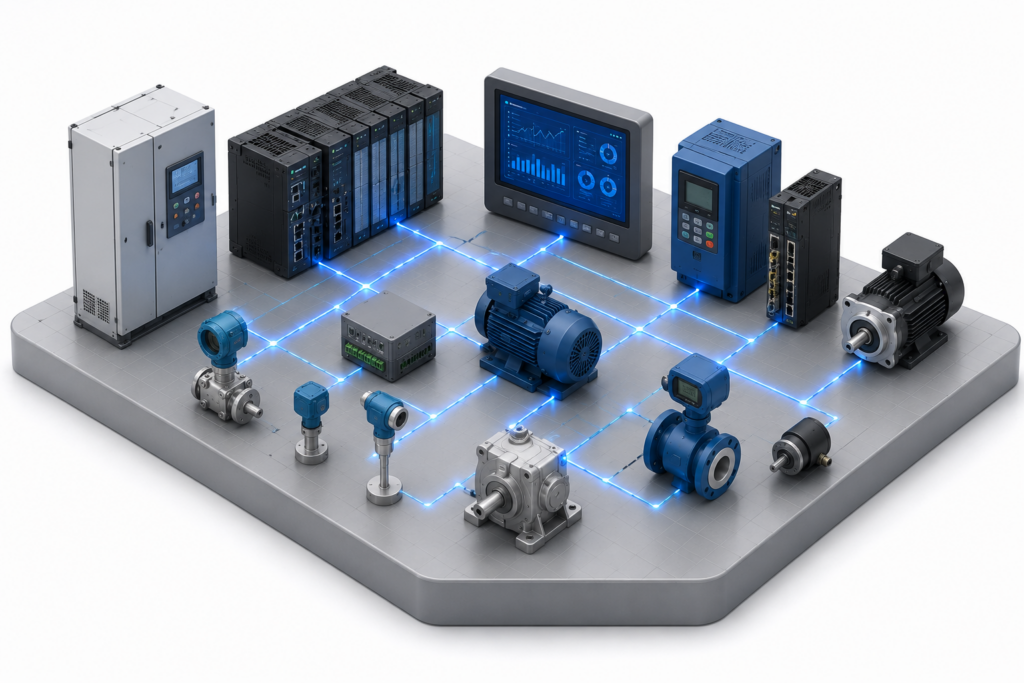
Evaluation of PLCs, drives, sensors, and control systems across production, utility, and testing equipment
People
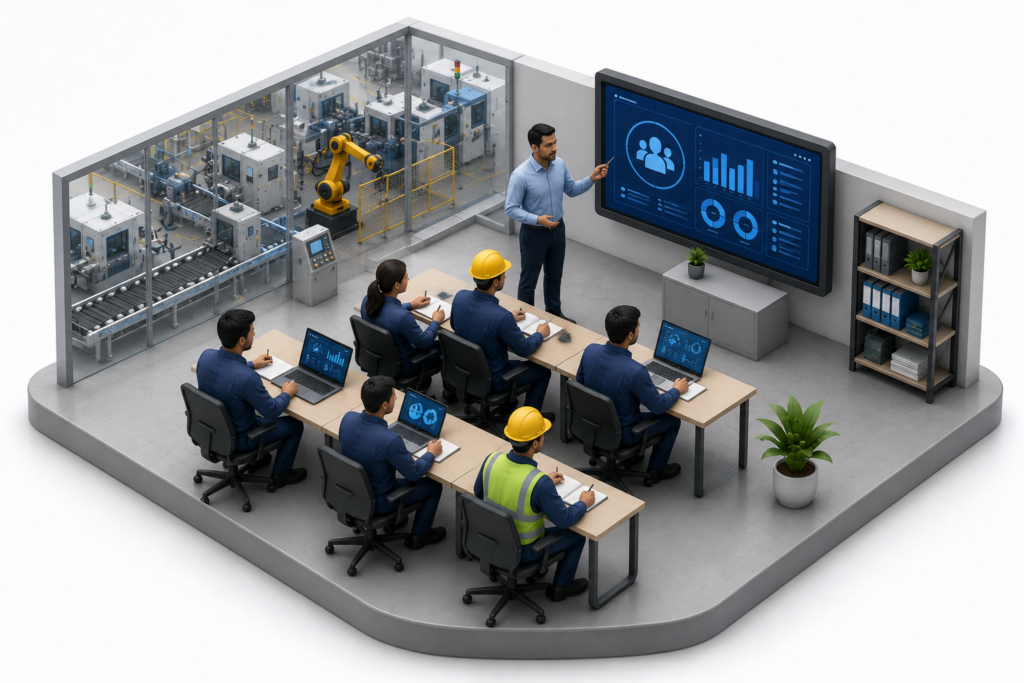
Assessment of workforce capability, digital readiness, and process knowledge distribution.
Processes
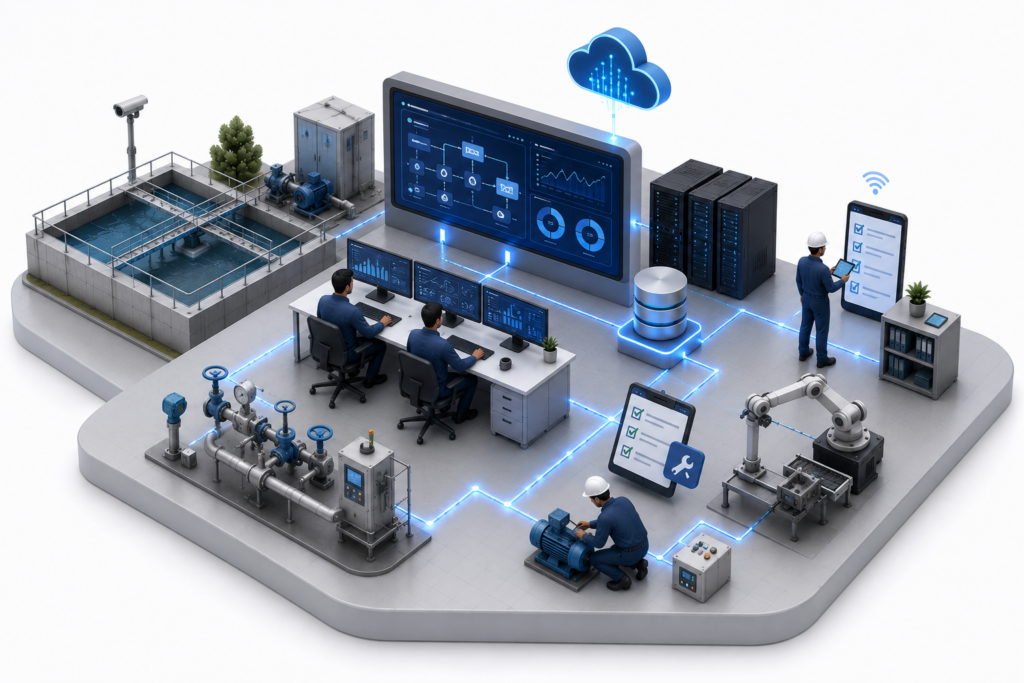
Review of SOP compliance, maintenance maturity, and production data reliability.
The Five-Layer Transformation Framework
LAYER 1
OT Backbone
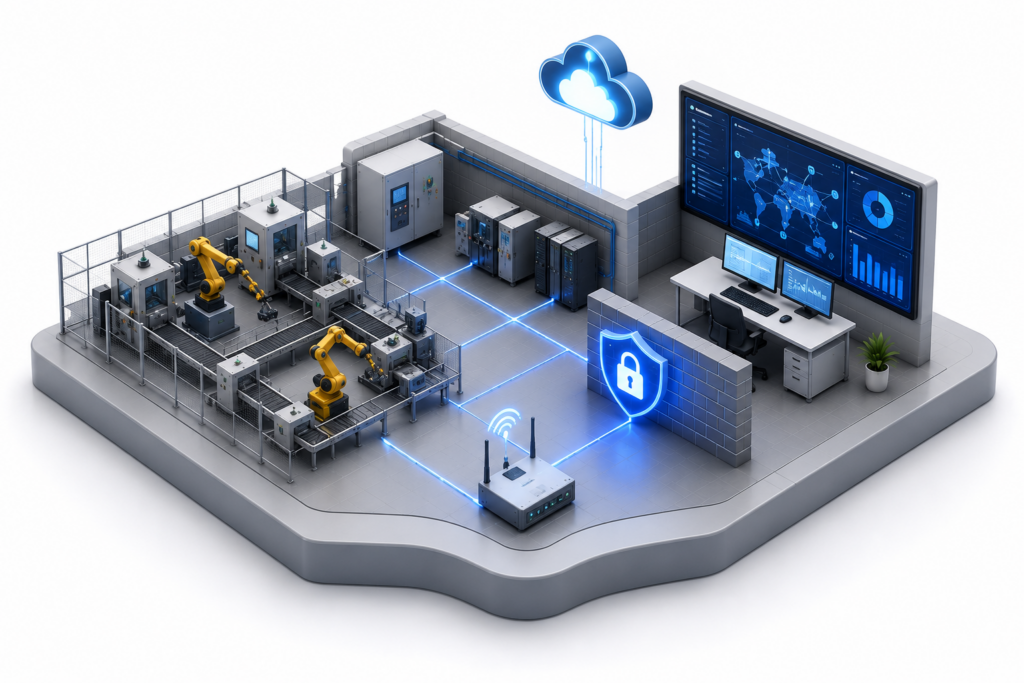
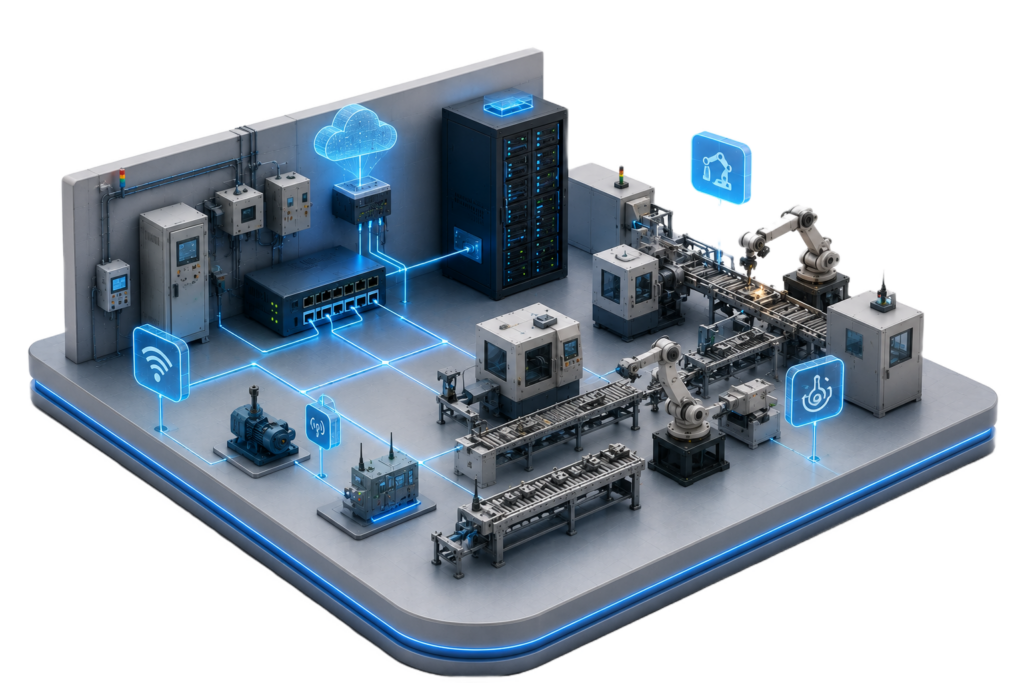
Successful digital transformation starts with a reliable operational foundation. INGSOL establishes the OT backbone through network infrastructure, edge computing, data aggregation architecture, cybersecurity controls, and brownfield connectivity. This means connecting production equipment, utilities, and testing systems into a unified data environment. Legacy equipment can be integrated through sensors and edge devices without requiring wholesale replacement.
LAYER 2
Real-Time Shopfloor Visibility
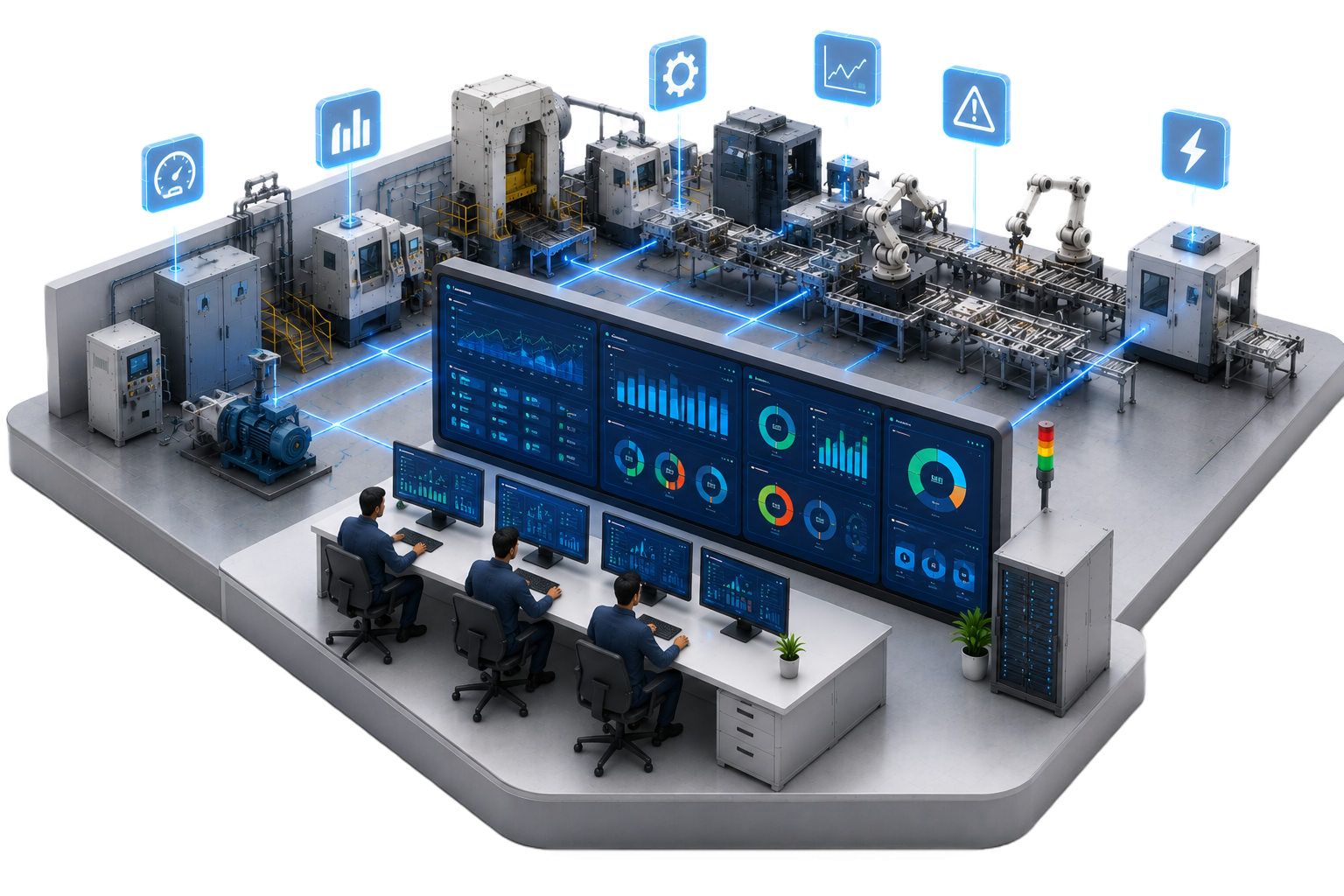
Once the OT foundation is established, visibility becomes possible. The IIoT-powered visibility layer provides real-time OEE monitoring, unified production dashboards for output, quality, and energy consumption, alarms and anomaly detection, and asset-level energy monitoring. This allows operators and supervisors to make decisions using current data rather than delayed reports
LAYER 3
Process Optimisation
Data creates value only when it drives action. INGSOL uses operational data to improve performance through changeover reduction, scrap and rework reduction, energy optimisation, and bottleneck identification. The objective is to transform operational knowledge into repeatable and measurable improvements.
LAYER 4
MES Execution
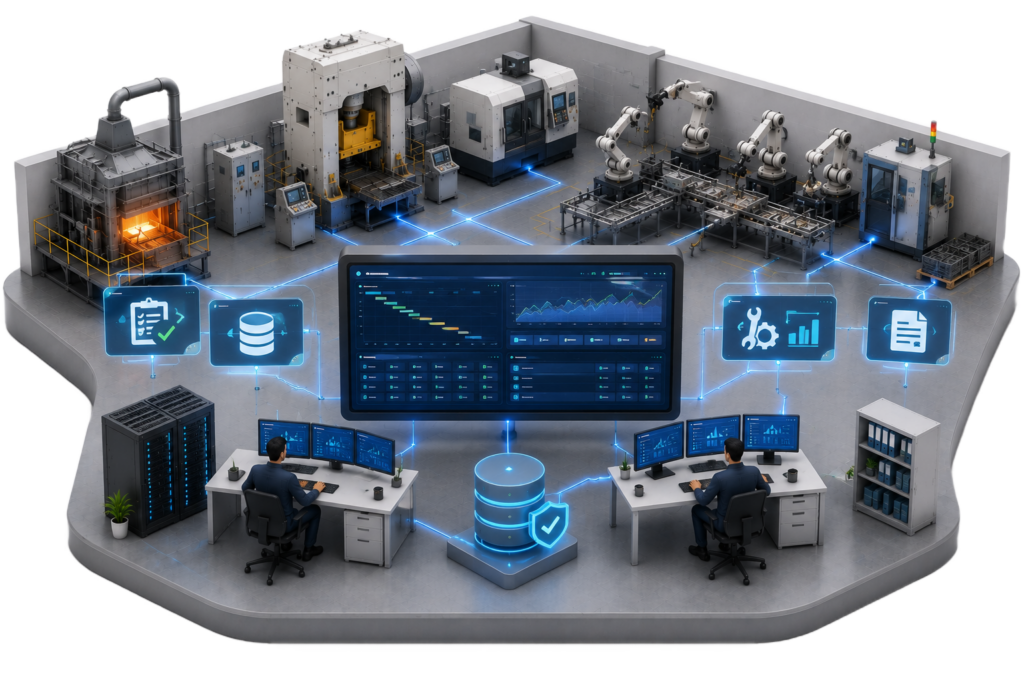
The Manufacturing Execution System bridges the gap between production planning and shopfloor execution. INGSOL implements MES with four core capabilities: production orders and digital recipes, end-to-end quality and traceability, condition-based maintenance triggered by actual equipment condition, and digital SOPs that ensure operators follow the latest approved process. MES helps eliminate variation, standardise execution, and sustain performance improvements.
LAYER 5
Industrial AI
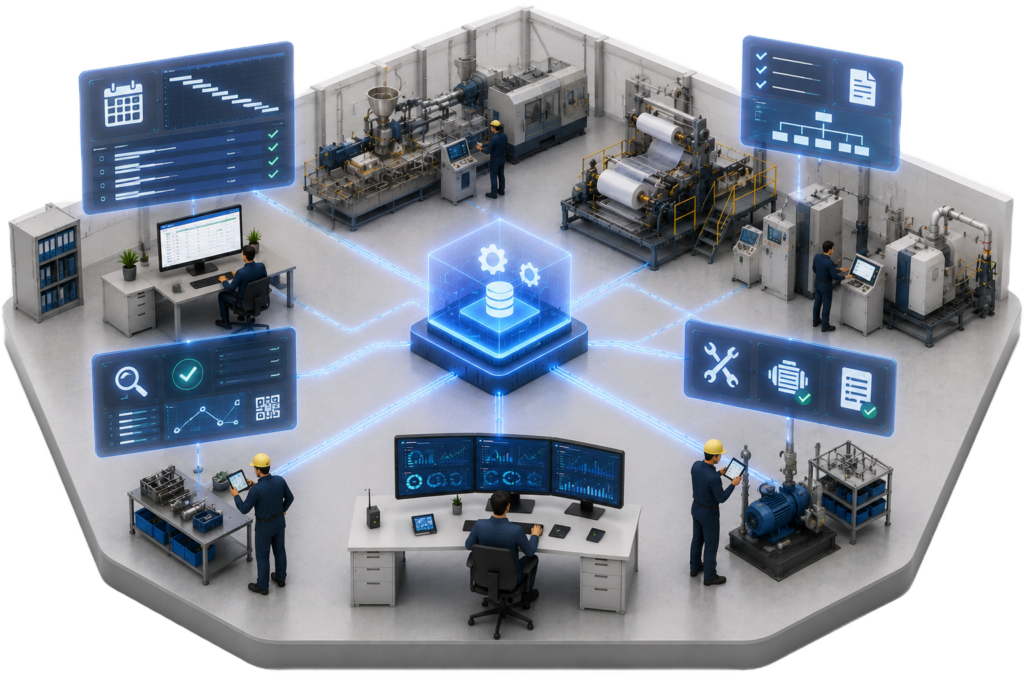
Industrial AI enables manufacturers to move from reactive operations to predictive decision-making, through predictive maintenance, vision-based quality control for defect detection, advanced process optimisation that continuously tunes operating parameters, and demand and energy forecasting. These capabilities improve reliability, quality, and operational efficiency while reducing risk.
Why INGSOL
Manufacturers choose INGSOL because of:
DTMA-LED IMPLEMENTATION METHODOLOGY
STRUCTURED LAYER-BY-LAYER TRANSFORMATION
STRUCTURED LAYER-BY-LAYER TRANSFORMATION
STRONG PROCESS AND CONTROLS ENGINEERING EXPERTISE
PROVEN BROWNFIELD INTEGRATION CAPABILITY
OT CYBERSECURITY FOCUSED ARCHITECTURE
COMPLIANCE AND TRACEABILITY SUPPORT
LONG-TERM OPTIMISATION PARTNERSHIP
GLOBAL DELIVERY CAPABILITY ACROSS INDIA, USA, UK, AND UAE
Industries We Serve
INGSOL applies this same DTMA-led, five-layer methodology across manufacturing industries with distinct process realities. Explore how it’s applied in your industry:
Start with insight, not technology. INGSOL's DTMA evaluates operational maturity, identifies gaps, and delivers a roadmap for successful digital transformation.