PostgreSQL
PostgreSQL: The Reliable Foundation Beneath Your Factory's Data
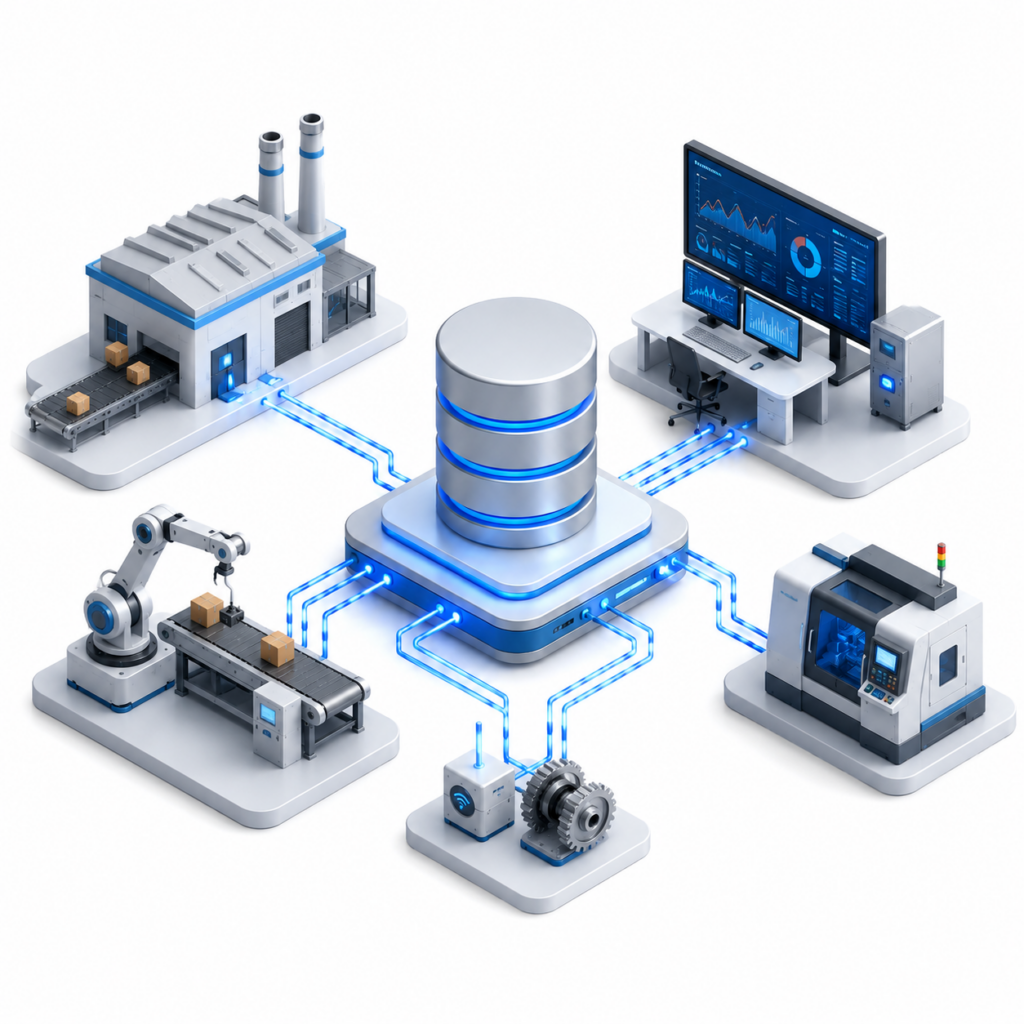
Dashboards, analytics and predictive models draw attention. They are visible, after all. However, one thing quietly holds everything together. The database stores production records, recipes, asset data and configuration. It rarely gets a mention until it fails. INGSOL uses PostgreSQL as the dependable core of our data infrastructure. This page explains what it is. It also shows how INGSOL uses it. Finally, it explains how it fits our wider stack.
What Is PostgreSQL?
PostgreSQL is a mature, open-source relational database. Industries widely use it for reliability, standards compliance and extensibility. For example, it stores structured data in tables with defined relationships. In addition, it supports the SQL query language. It also enforces strict data integrity through ACID-compliant transactions. Therefore, production and configuration records stay accurate. This holds true even under heavy, concurrent use. Even a busy plant with many systems writing at once sees no data corruption.
However, PostgreSQL is not built specifically for high-frequency sensor data on its own. That is why INGSOL pairs it with TimescaleDB. TimescaleDB is a time-series extension built directly on top. Instead, its core strength is structured, transactional data. This includes production orders, recipes and asset registers. It also covers user permissions and configuration. These records need accuracy and consistency, not high frequency.
Why INGSOL Includes PostgreSQL in the Stack
Proven reliability
PostgreSQL has stayed in active development for decades. In fact, many industries use it in demanding, mission-critical applications. As a result, it carries a strong track record for stability.
Strong data integrity
ACID-compliant transactions keep production records accurate. Quality data and configuration changes stay consistent, too. This holds even when multiple systems write data simultaneously.
Open source, no licensing lock-in
Because PostgreSQL is open-source, it avoids licensing costs. It also avoids dependence on a single proprietary vendor. A large global community and ecosystem still support it fully.
Open source:
As an open-source tool with a large community, Node-RED avoids dependence on a single proprietary integration platform.
Extensible architecture
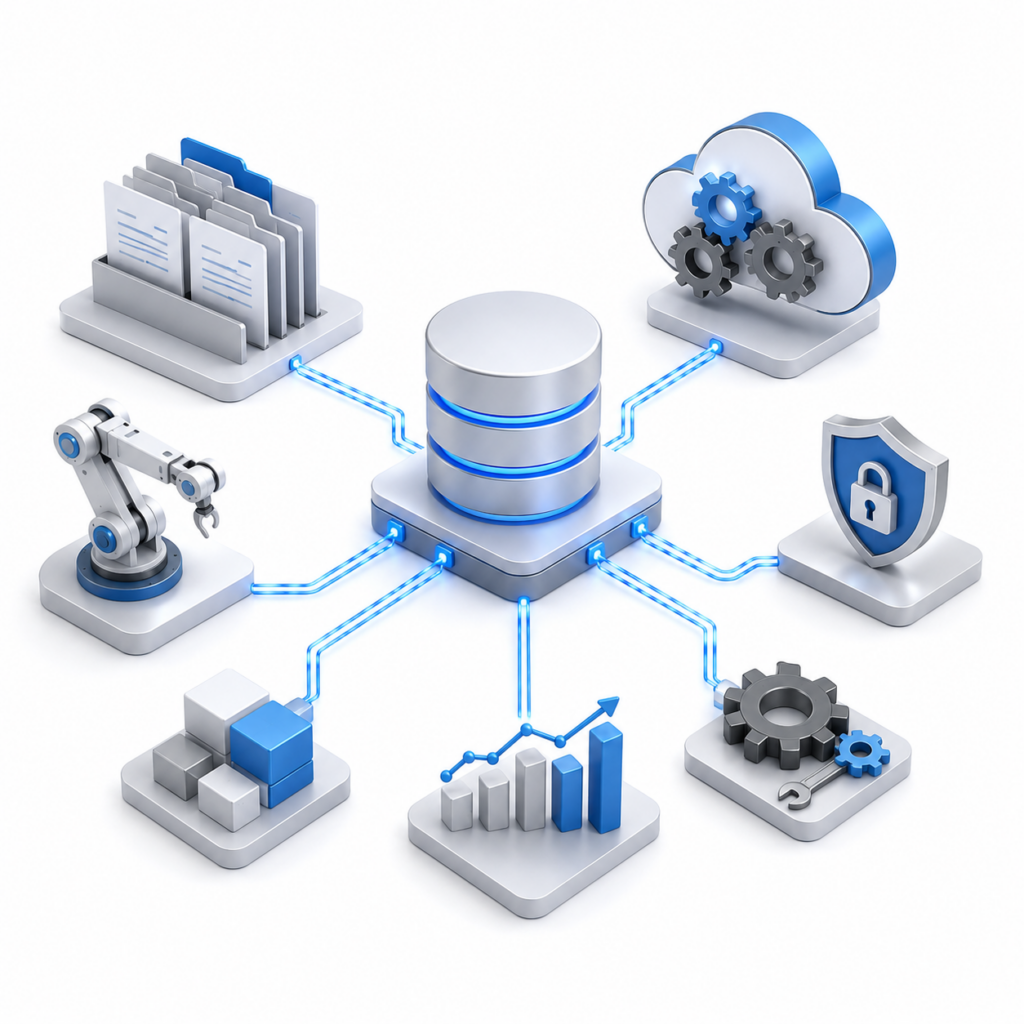
PostgreSQL supports extensions such as TimescaleDB. Therefore, teams can add time-series capability directly on top. Nobody needs an entirely separate system for that.
How INGSOL Uses PostgreSQL in Practice
Production Orders and Recipes
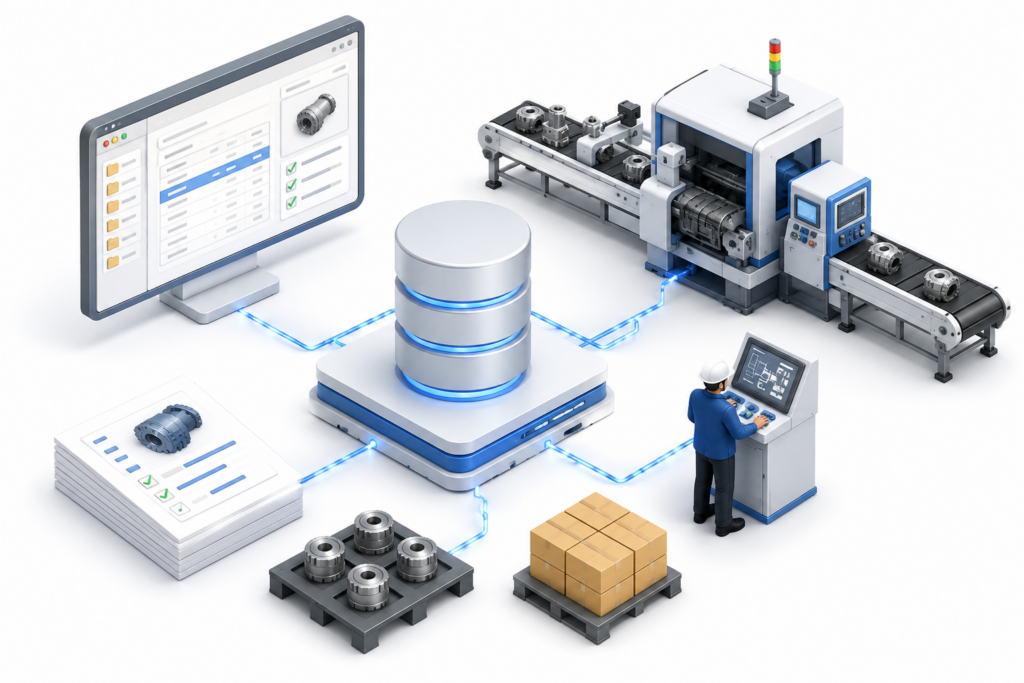
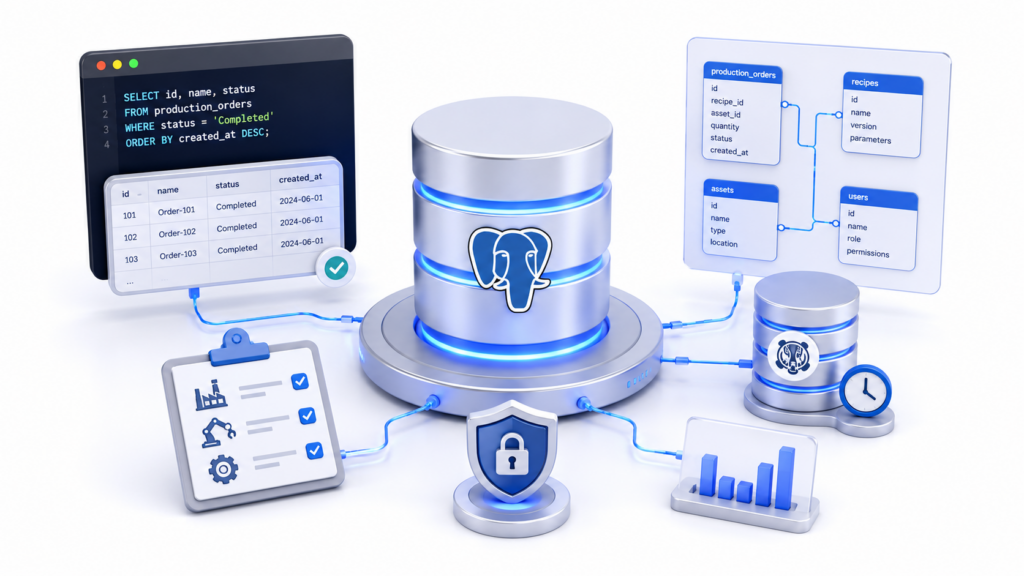
PostgreSQL stores structured production order and recipe data used by MES and SCADA systems, ensuring operators are working from a single, accurate version of the specification for each product or batch.
Asset and Equipment Registers
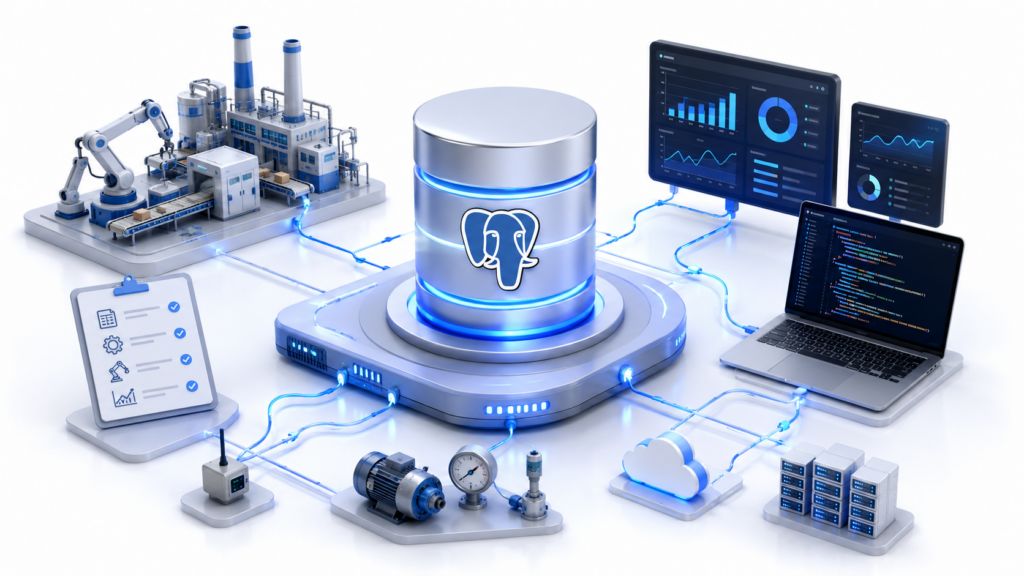
Details of machines, sensors, spare parts and maintenance history live here. This gives a consistent reference point for maintenance planning. It also supports retrofit projects and equipment tracking. Therefore, this works across a single plant or multiple sites.
Quality and Traceability Records
Structured quality checks, batch genealogy and traceability records live here, too. As a result, these support the quality gates an MES depends on. Audit trails stay consistent as well.
User, Role and Access Configuration
Configuration data commonly lives here, too. This includes user roles, permissions and system settings. It spans SCADA, MES and analytics platforms. Therefore, access control rests on a consistent, auditable basis.
Foundation for Time-Series Extensions
Where high-frequency sensor data needs storage, INGSOL builds on PostgreSQL. We use the TimescaleDB extension for this purpose. This combines PostgreSQL’s reliability and SQL compatibility with time-series performance. As a result, nobody needs an entirely separate database technology.
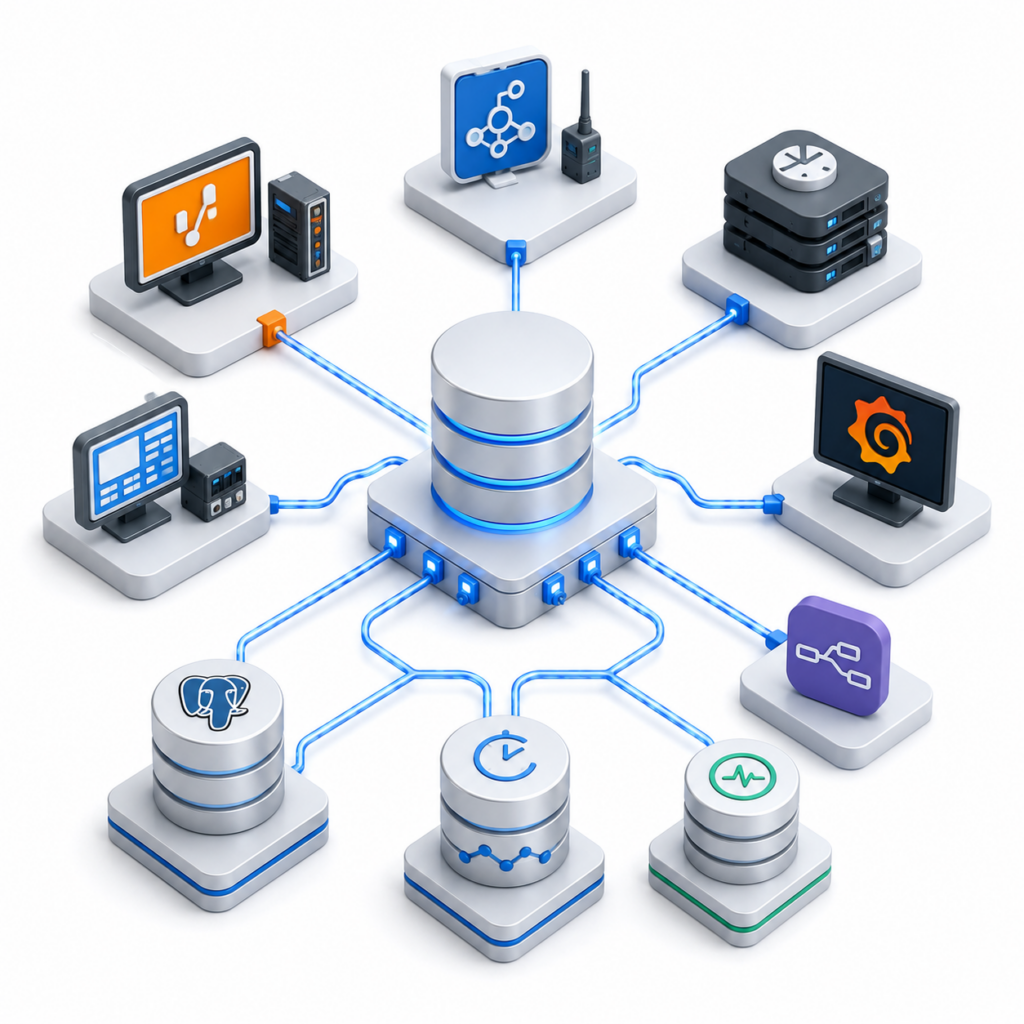
PostgreSQL Within the INGSOL Technology Stack
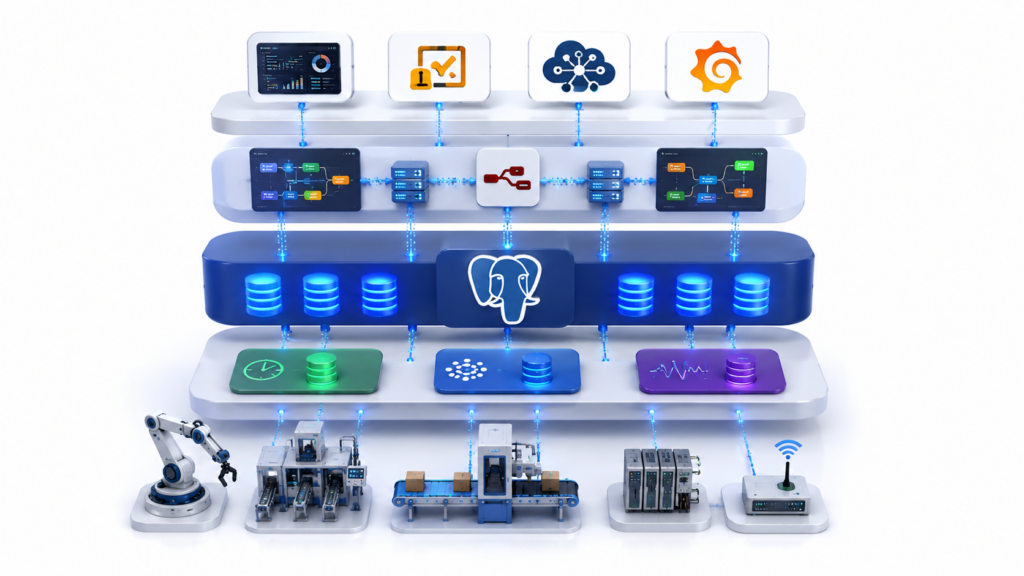
PostgreSQL forms the structured data layer beneath much of INGSOL’s architecture. It holds production, asset, quality and configuration records. Ignition, ThingsBoard and other platforms read from and write to it. TimescaleDB extends this same engine for high-volume time-series data. TimeBase handles particularly demanding, high-frequency workloads instead. These sit outside PostgreSQL’s typical use case. Grafana and Ignition dashboards draw on PostgreSQL for structured data. Node-RED integration flows do this too. This complements the time-series data held elsewhere in the stack.
Why Manufacturers Choose INGSOL's PostgreSQL Implementation
Its maturity and standards compliance make it dependable. As a result, it forms a solid base for production, asset and quality records.
Because PostgreSQL is open-source, it avoids licensing costs and vendor dependence. An active, ongoing global community keeps backing it, too.
INGSOL designs schemas and configuration around your specific requirements. This covers production, asset and quality data needs. It is never a generic template.
INGSOL deploys PostgreSQL within a wider Data and Intelligence capability. Therefore, it integrates cleanly with TimescaleDB, TimeBase and Grafana. The rest of your architecture connects just as smoothly.
INGSOL implements PostgreSQL as the reliable, open-source core of your data infrastructure. This supports everything from production records to time-series extensions built on top. Get in touch to discuss how PostgreSQL fits your technology stack. Alternatively, start with a Digital Transformation Maturity Assessment for your plant.
Our Clients






Our Clients










membership