Metal Processing & Electrical Manufacturing
Turning press, furnace, and assembly line data into consistent, certifiable quality.
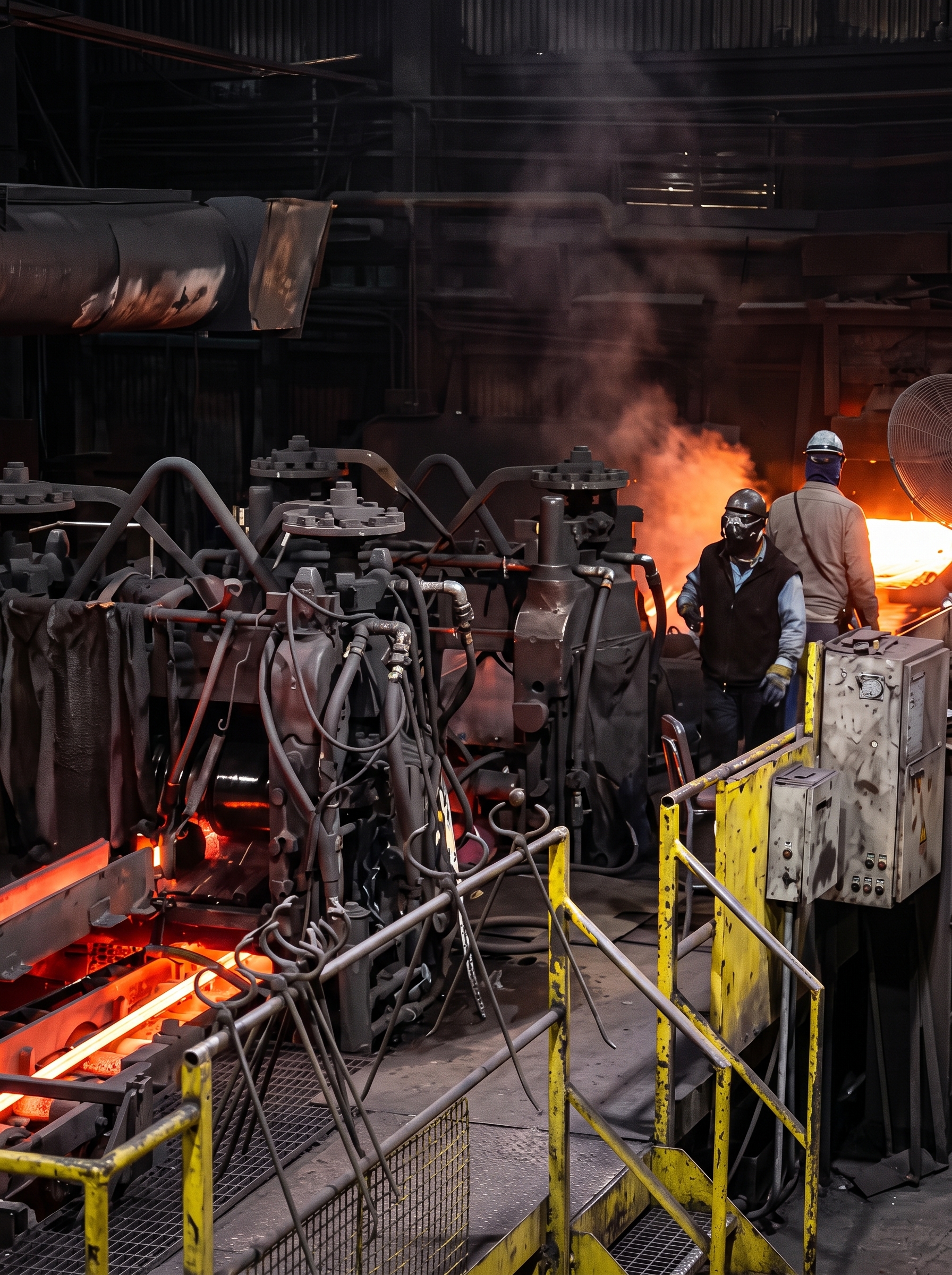
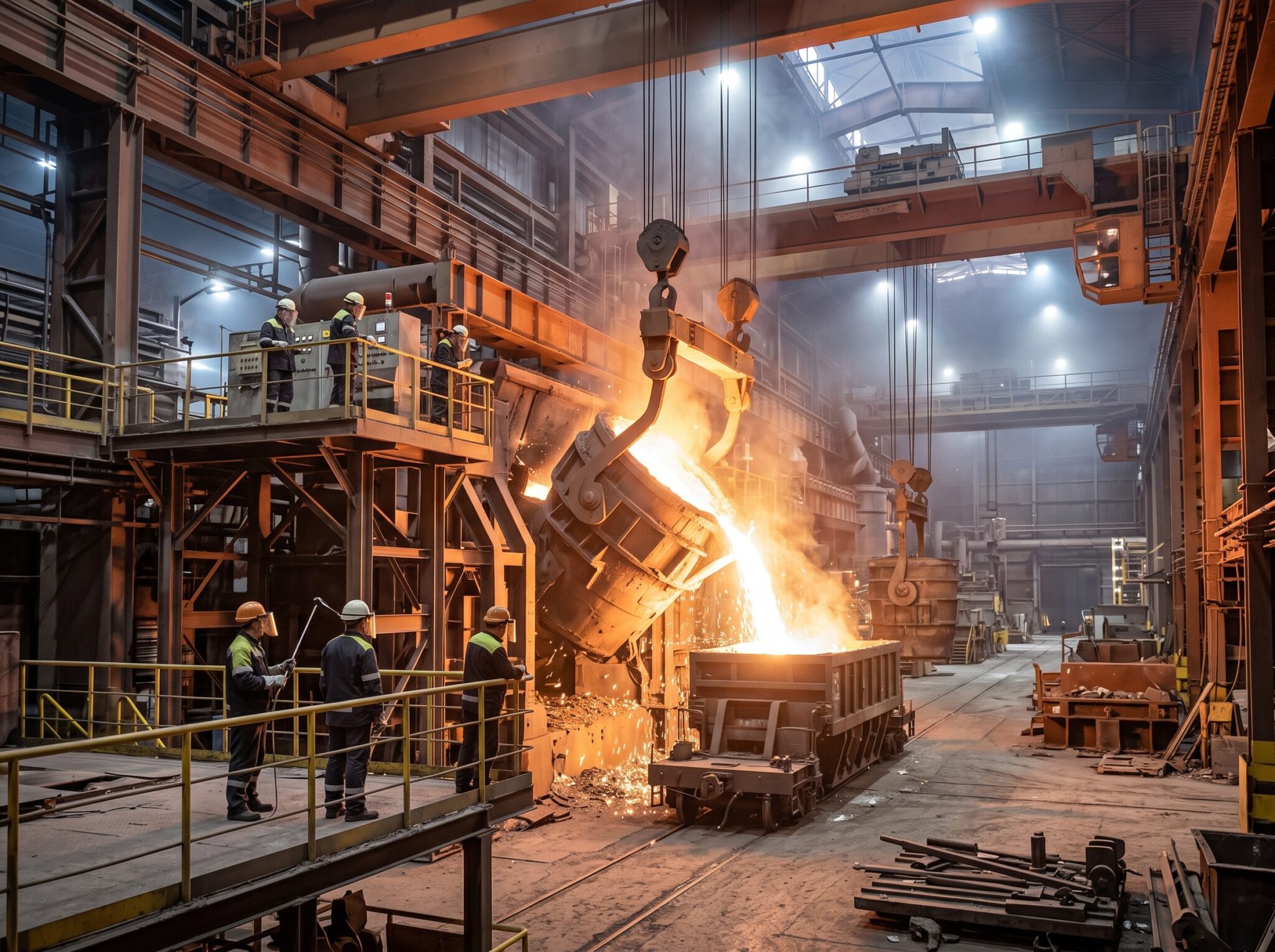
Metal processing and electrical manufacturing span some of the most equipment-diverse environments in industrial production, rolling mills, forging presses, casting and foundry operations, CNC machining centres, surface treatment lines, and electrical panel and winding assembly, each with its own tolerances, cycle times, and failure modes.
Most plants already collect data through PLCs and SCADA at the machine level, but that data is frequently siloed by process area, reviewed manually, and disconnected from quality and energy reporting. Scrap and yield losses are often tracked in aggregate rather than traced to a specific process parameter or shift. Furnace and heat treatment energy use, one of the largest controllable costs in metal processing, is typically monitored at the plant level rather than the individual asset level. Maintenance on presses, furnaces, and CNC equipment is frequently calendar-driven rather than condition-based, and for electrical manufacturers, quality traceability tied to safety certification standards often depends on manual record-keeping.
INGSOL helps convert existing operational data into actionable intelligence that improves yield, reliability, and quality traceability across metal processing and electrical manufacturing operations.
What INGSOL Does in Metal Processing & Electrical Manufacturing
INGSOL delivers digital transformation solutions for:
- Rolling mills and metal forming operations
- Forging and casting facilities
- Stamping and press shops
- CNC machining operations
- Surface treatment and electroplating lines
- Electrical panel, switchgear, and component assembly
Our methodology follows a structured transformation framework: OT Backbone, Real-Time Visibility, Process Optimisation, MES-Equivalent Operational Control, and Industrial AI.
Digital transformation is not an IT initiative. It is an operational engineering programme built around real-time decision-making and measurable reduction in scrap, energy consumption, and unplanned downtime.
The Hidden Losses Across Metal & Electrical Manufacturing
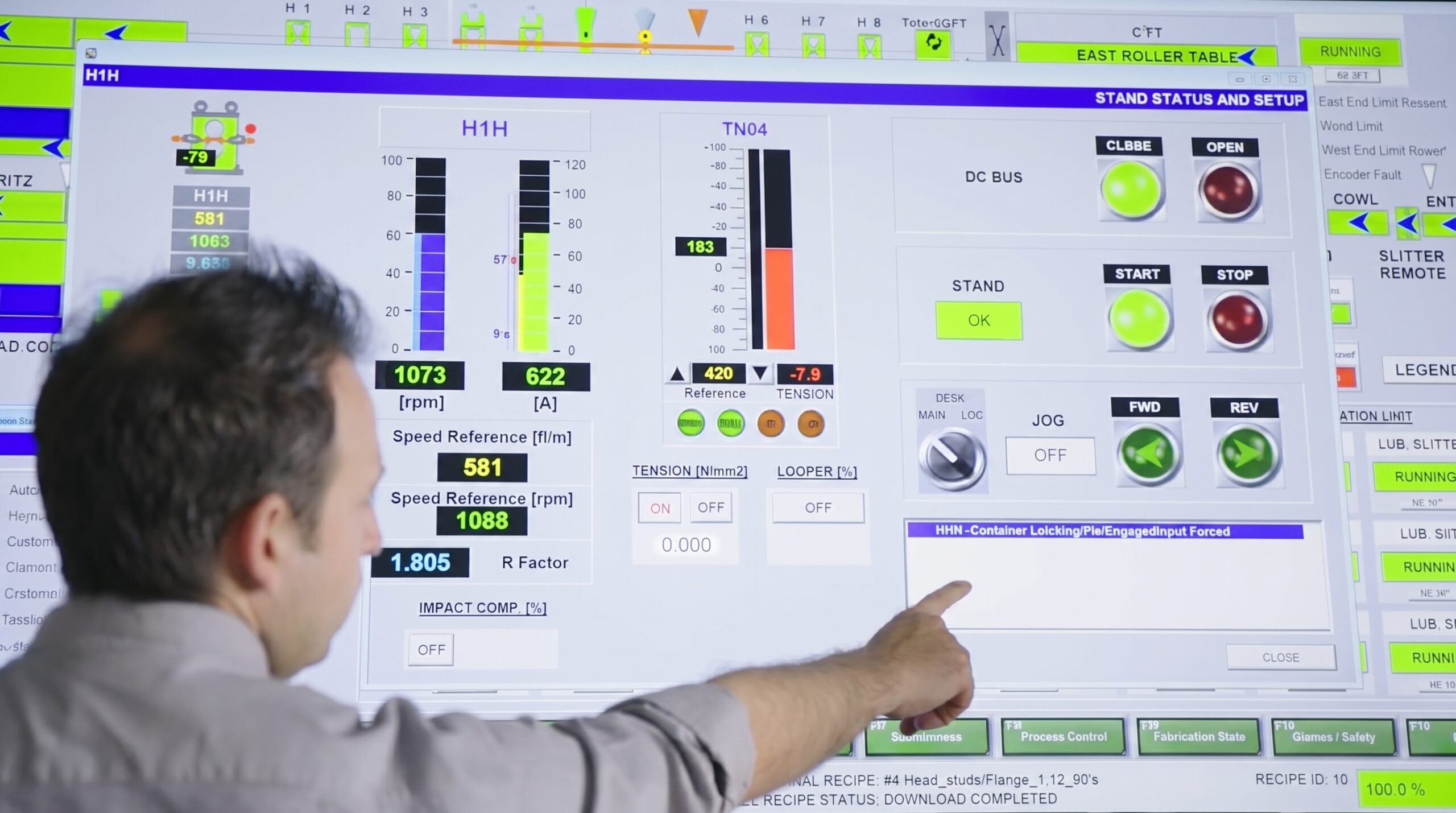
Operational losses often accumulate silently across forming, machining, treatment, and assembly processes.
- Scrap & Yield Losses: Dimensional deviations in stamping, forging, and casting, along with material waste in cutting and forming, reduce yield and increase rework.
- Energy Inefficiency: Furnaces, induction heating, and electroplating baths are among the largest controllable costs in metal processing. Without asset-level monitoring, optimisation opportunities often remain hidden.
- Unplanned Downtime: Failures in presses, furnaces, and CNC equipment can trigger cascading production delays and missed delivery commitments.
- Quality & Compliance Risk: Manual record-keeping and delayed inspection increase the risk of dimensional non-conformance and, for electrical products, exposure against safety certification requirements.
- Maintenance Inefficiency: Calendar-based maintenance on presses, furnaces, and CNC machines often results in unnecessary interventions while still failing to prevent developing failures.
- Changeover Losses: Die and tooling changes, along with product changeovers on electrical assembly lines, consume productive time that is rarely measured precisely.
Every Transformation Starts With a Diagnosis
Every engagement begins with INGSOL's Digital Transformation Maturity Assessment (DTMA), which evaluates four key pillars:
OT Infrastructure
Assessment of PLC and SCADA environments, network architecture, cybersecurity readiness, and data integration capability across presses, furnaces, and machining centres.
People
Assessment of operational knowledge, digital readiness, and workforce capability across forming, machining, and assembly teams.
OT Assets
Evaluation of press controls, furnace and heat treatment systems, CNC machines, winding equipment, and electrical testing systems.
Processes
Review of operating procedures, maintenance maturity, data governance, and quality certification accountability.
The Five-Layer Transformation Framework
LAYER 1
OT Backbone
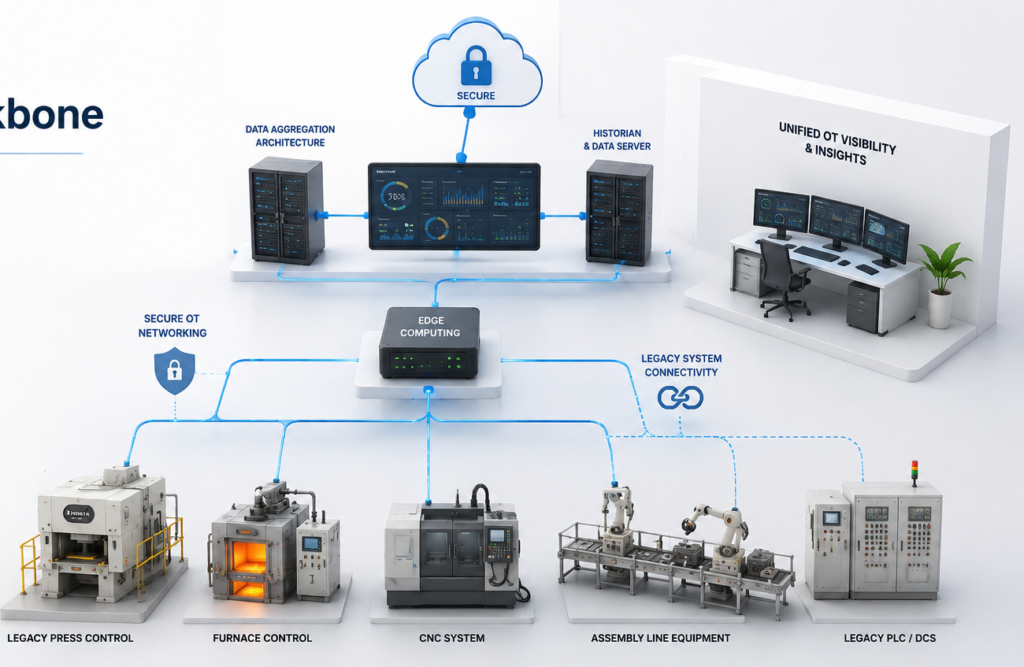
Metal processing and electrical manufacturing plants often operate with a mix of legacy press and furnace controls, standalone CNC systems, and disconnected assembly line equipment. INGSOL establishes the OT backbone by creating a secure, unified operational technology environment through brownfield integration, edge computing, secure OT networking, data aggregation architecture, and legacy system connectivity. This creates the foundation required for reliable digital transformation without replacing existing infrastructure.
LAYER 2
Real-Time Operational Visibility
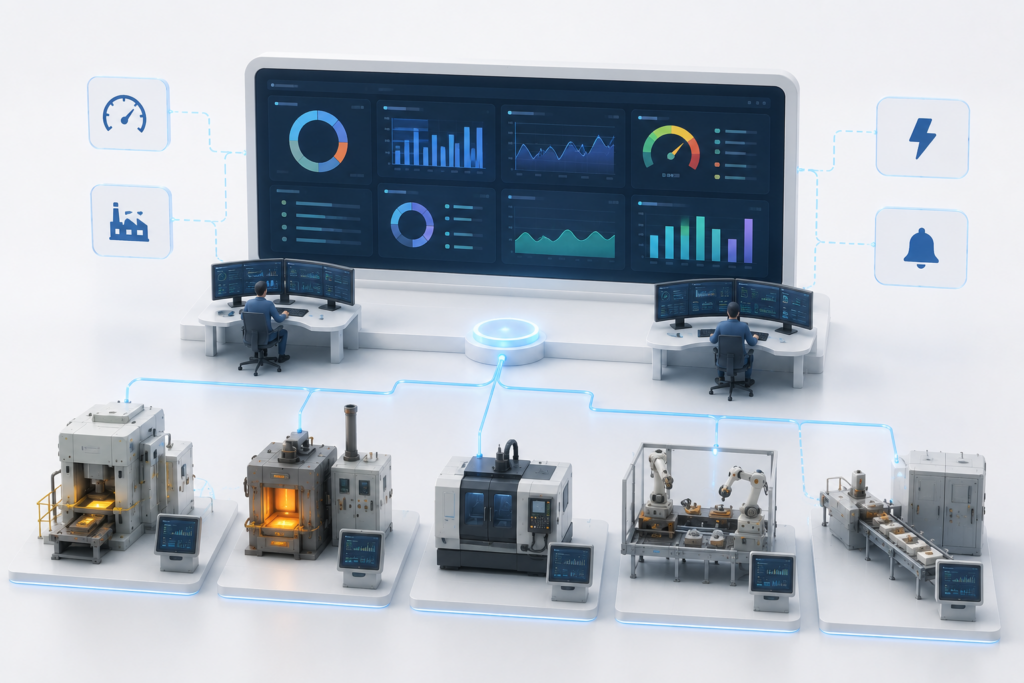
Once the OT backbone is established, plants gain real-time operational intelligence across forming, machining, treatment, and assembly processes. Key capabilities include unified operational dashboards, real-time OEE monitoring, furnace and press health monitoring, energy monitoring at asset level, quality and scrap tracking, and intelligent alarm management. Operators and supervisors gain immediate visibility into production performance rather than relying on delayed shift reports.
LAYER 3
Process Optimisation
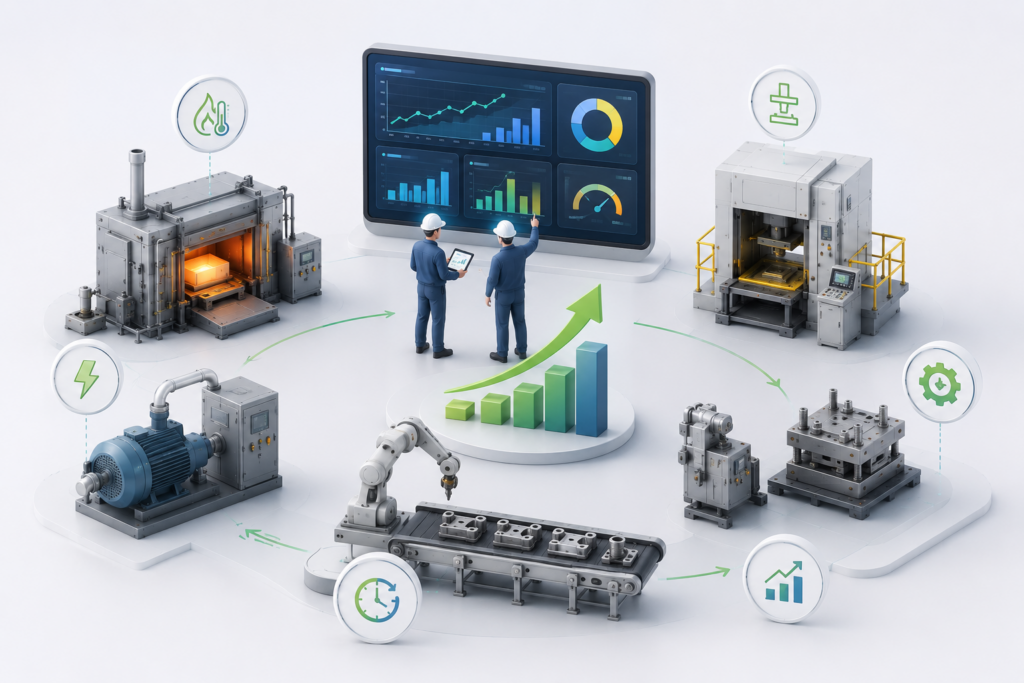
Operational visibility creates measurable optimisation opportunities. INGSOL helps improve furnace and heat treatment efficiency, press and stamping performance, changeover time across die and tooling changes, energy consumption, and maintenance scheduling. Using real-time operational data, plants can reduce scrap, lower energy costs, improve reliability, and increase throughput. Process optimisation combines data-driven insights with the expertise of engineers and operators to ensure improvements remain practical and sustainable.
LAYER 4
MES-Equivalent Operational Control
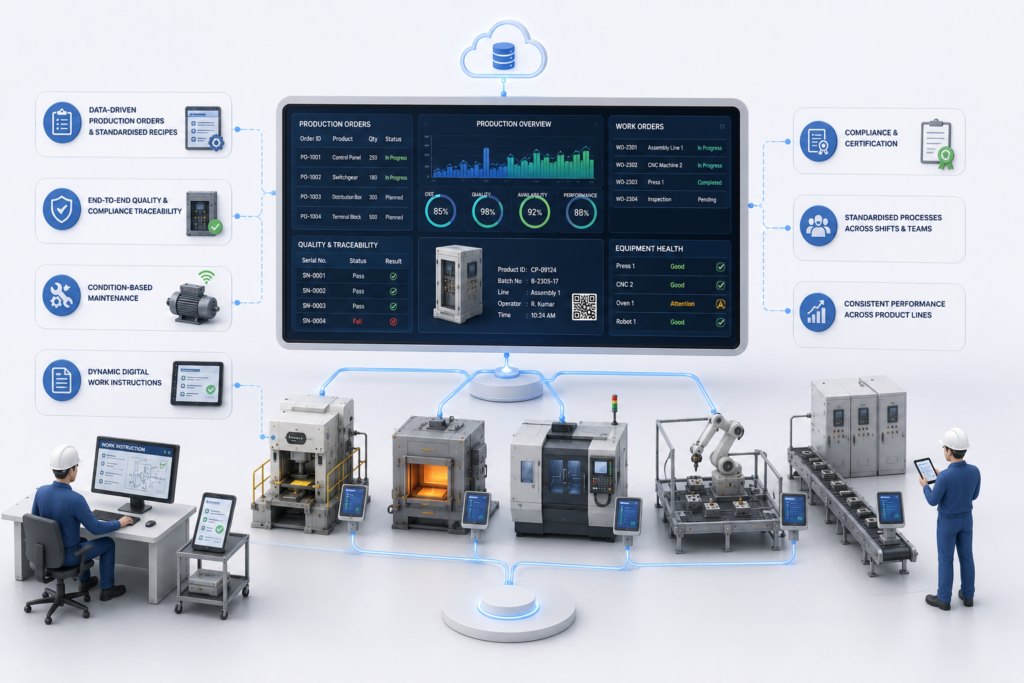
Operational improvements must be standardised to ensure long-term sustainability. INGSOL implements operational control systems that provide data-driven production orders and standardised recipes translated from ERP plans, end-to-end quality and compliance traceability, particularly important for electrical products subject to safety certification requirements, condition-based maintenance scheduled on actual equipment condition rather than fixed intervals, and dynamic digital work instructions accessible across the shopfloor. This layer ensures best practices are consistently followed across shifts, teams, and product lines.
LAYER 5
Industrial AI
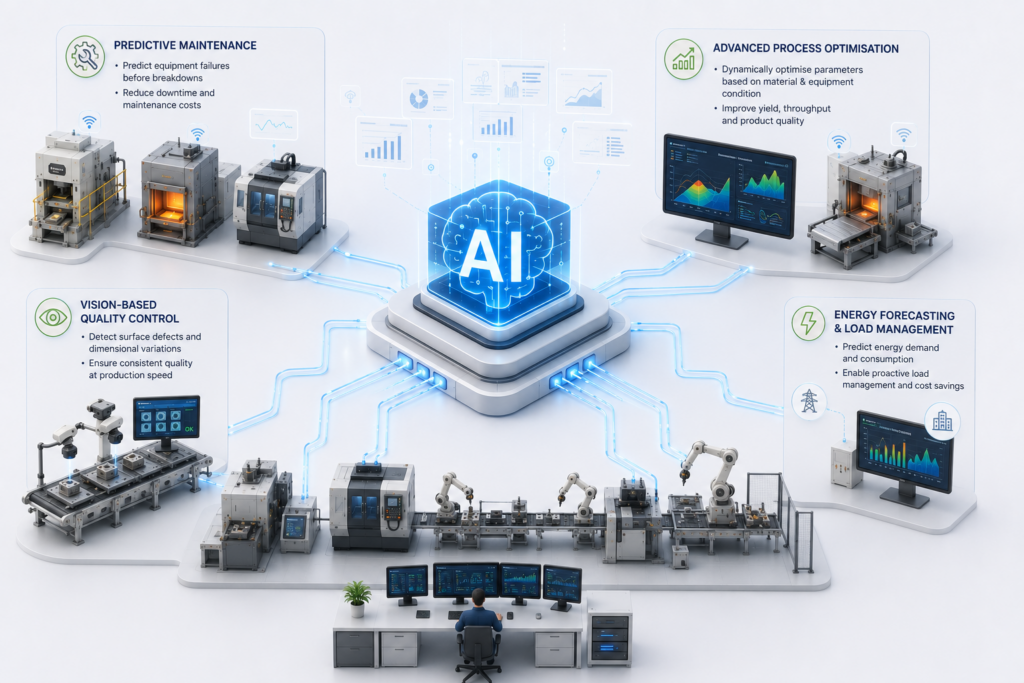
Industrial AI enables plants to move from reactive operations to predictive decision-making. Applications include predictive maintenance that anticipates failures in presses, furnaces, and CNC equipment before breakdowns occur, vision-based quality control that detects surface defects and dimensional variations at production speed, advanced process optimisation that dynamically tunes furnace and forming parameters based on material properties and equipment condition, and energy forecasting that predicts demand and enables proactive load management across energy-intensive processes. Industrial AI transforms operational data into predictive intelligence that improves reliability, quality, and operational efficiency.
Why INGSOL
Metal processing and electrical manufacturers choose INGSOL because of:
DTMA-led implementation methodology
Structured layer-by-layer transformation
Strong process and controls engineering expertise
Proven brownfield integration capability across diverse process equipment
OT cybersecurity-focused architecture
Long-term optimisation partnership
Operations We Serve
INGSOL supports:
- Metal Rolling & Forming Operations
- Forging Operations
- Casting & Foundry Operations
- Stamping & Press Operations
- CNC Machining
- Surface Treatment & Electroplating
- Electrical Panel & Switchgear Manufacturing
- Motor & Transformer Manufacturing
- Busbar & Electrical Component Fabrication
- Cable & Wire Harness Assembly
understanding your current operational maturity, identifying your largest sources of scrap and energy loss, and building a roadmap for sustainable improvement. INGSOL's DTMA provides a structured baseline, risk assessment, and implementation roadmap before any technology investment is made.
Our Clients











membership