Oil, Gas & Petrochemical Operations

The Operational Reality Gap in Hydrocarbon Processing
Oil, gas and petrochemical facilities operate in environments where even minor process deviations can lead to safety incidents, environmental risks, compliance issues and costly downtime.
While modern facilities generate vast amounts of operational data through DCS, SCADA, historians and field instrumentation, much of this data remains isolated within separate systems. As a result, critical decisions are often made using delayed information rather than real-time operational intelligence.
Maintenance is frequently schedule-driven instead of condition-based. Energy consumption is monitored at plant level rather than asset level. Process optimisation opportunities often remain dependent on individual operator experience rather than being embedded into operational systems.
INGSOL helps convert existing operational data into actionable intelligence that improves reliability, efficiency, process control and operational visibility across oil, gas and petrochemical facilities.
What INGSOL Does in Oil, Gas & Petrochemical Operations
INGSOL delivers digital transformation solutions for:
- Refineries
- Petrochemical complexes
- Gas processing facilities
- Upstream production operations
- Midstream pipelines
- Storage terminals
Our methodology follows a structured transformation framework:
- OT Backbone
- Real-Time Visibility
- Process Optimisation
- MES-Equivalent Operational Control
- Industrial AI
Digital transformation is not an IT initiative. It is an operational engineering programme built around real-time decision-making and measurable operational improvement.
The Hidden Losses Across Hydrocarbon Facilities
Operational losses often accumulate silently across equipment, energy systems, and production processes.
failures in compressors, pumps, turbines, heat exchangers and fired heaters can trigger cascading operational disruptions, production losses and environmental risks.
Suboptimal operating conditions reduce yields, increase energy consumption and create product variability across refining and petrochemical processes.
Energy remains one of the largest controllable costs in hydrocarbon processing. Without asset-level monitoring, opportunities for optimisation often remain hidden.
Poor process visibility and delayed response contribute to flaring events, emissions exceedances, regulatory exposure and hydrocarbon losses.
Calendar-based maintenance often results in unnecessary interventions while still failing to prevent developing equipment failures.
Manual reporting and incomplete operational records increase audit exposure and regulatory risk.
How INGSOL Operates
Every Transformation Starts With a Diagnosis
Every engagement begins with INGSOL’s Digital Transformation Maturity Assessment (DTMA), which evaluates four key pillars:
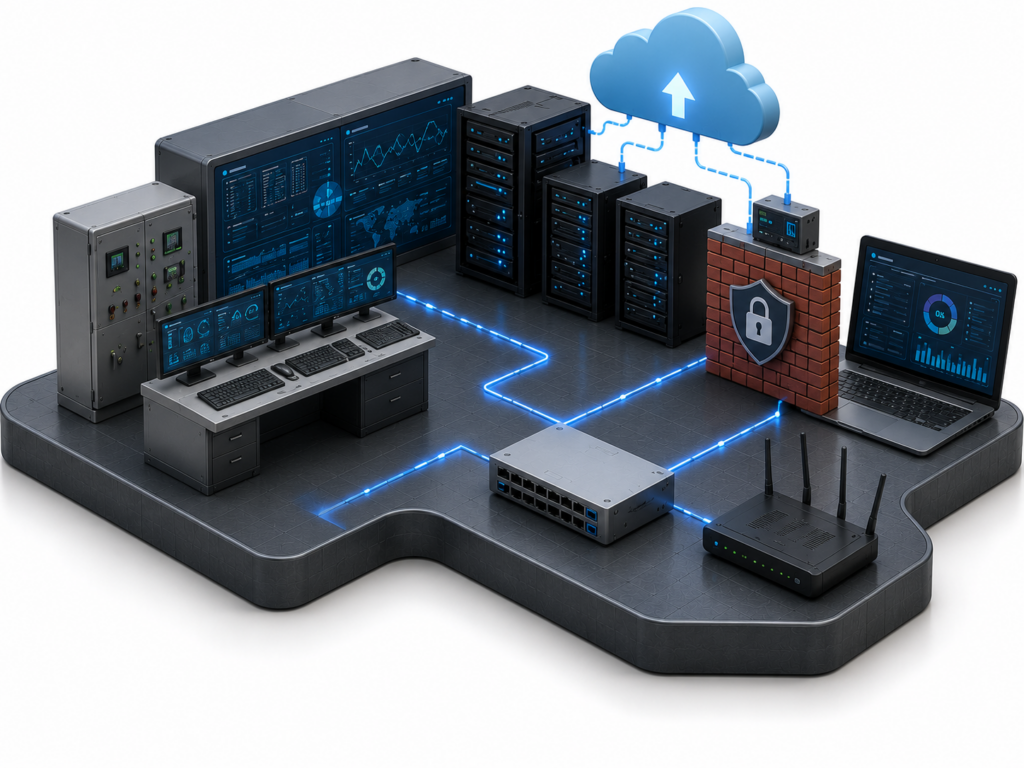
OT Infrastructure
Assessment of DCS and SCADA environments, network architecture, cybersecurity readiness, cloud readiness, and data integration capability.
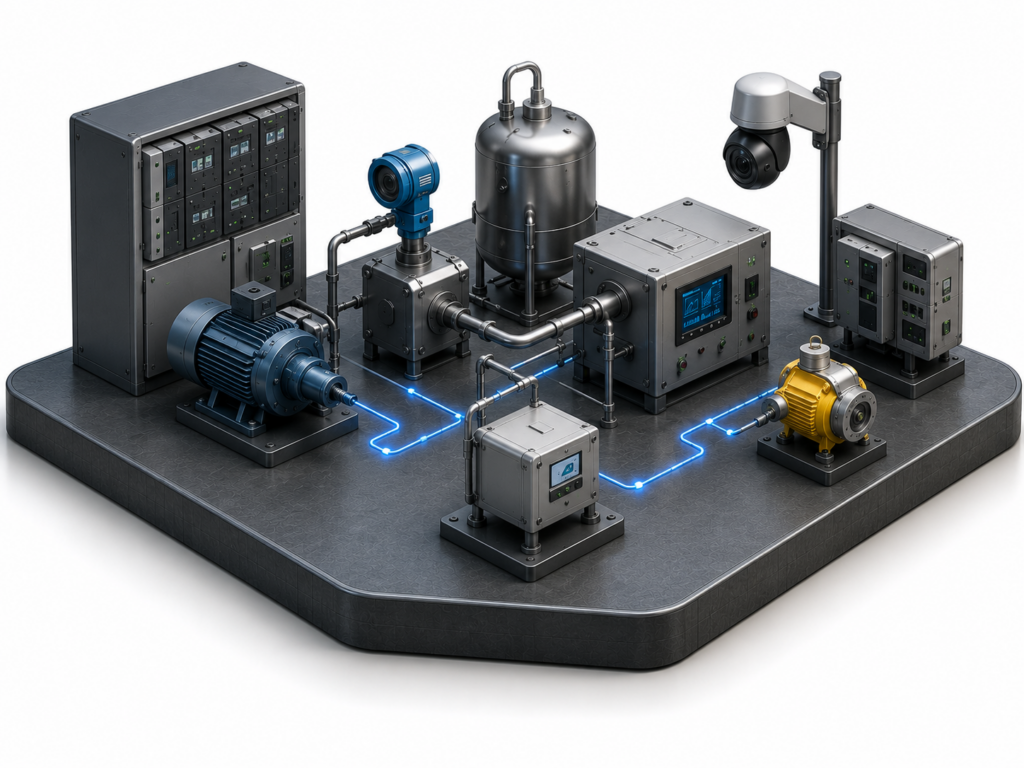
OT Assets
Evaluation of PLCs, RTUs, field instruments, analysers, vibration monitoring systems, and safety systems.

People
Assessment of operational knowledge, digital readiness, and workforce capability.
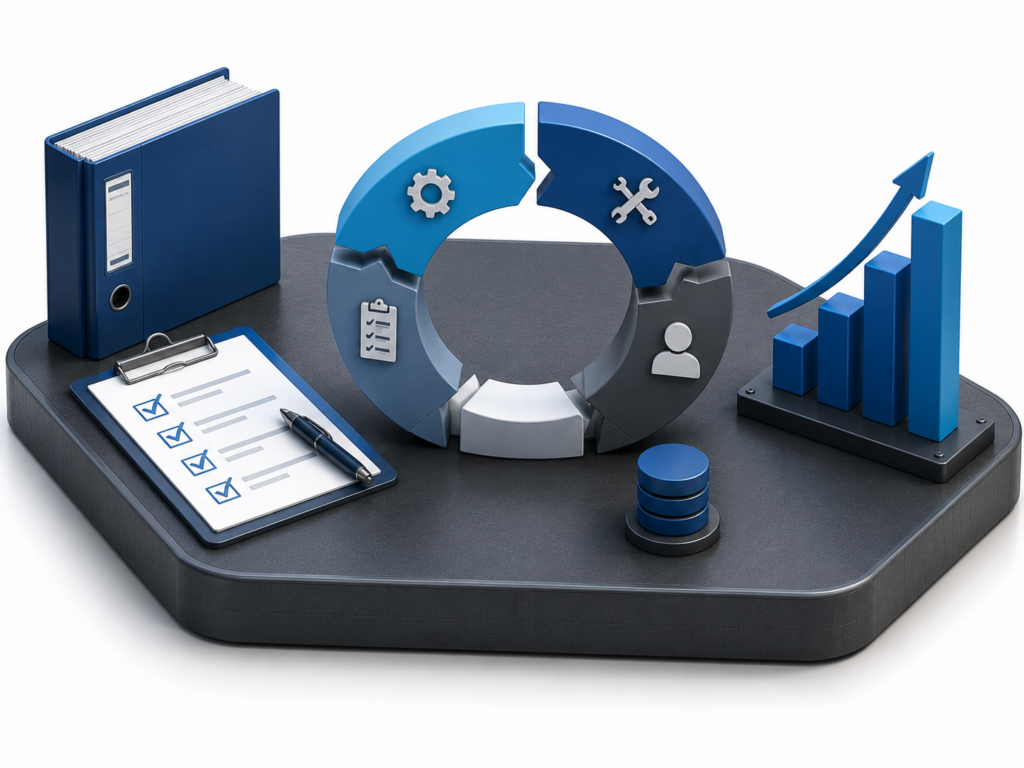
Processes
Review of operating procedures, maintenance maturity, data governance, and operational accountability.
The Five-Layer Transformation Framework
Layer 1 : OT Backbone
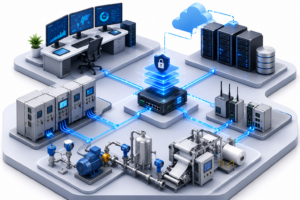
Most facilities operate with decades of accumulated control systems, historians, standalone monitoring platforms, and disconnected field assets. INGSOL establishes the OT backbone by creating a secure, unified operational technology environment through:
- Brownfield integration
- Edge computing
- Secure OT networking
- Data aggregation architecture
- Legacy system connectivity
This creates the foundation required for reliable digital transformation without replacing existing infrastructure.
Layer 2 : Real-Time Operational Visibility
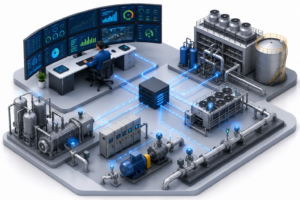
Once the OT backbone is established, facilities gain real-time operational intelligence across equipment, utilities, pipelines and process units. Key capabilities include:
- Unified operational dashboards
- Real-time process monitoring
- Rotating equipment health monitoring
- Energy monitoring at asset level
- Pipeline and terminal visibility
- Emissions monitoring
- Intelligent alarm management
Operations teams gain immediate visibility into plant performance rather than relying on delayed reports.
Layer 3 : Process Optimisation
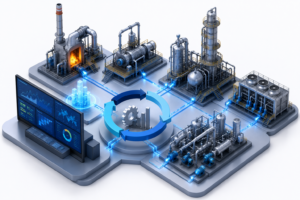
Operational visibility creates measurable optimisation opportunities. INGSOL helps improve:
- Fired heater efficiency
- Compressor performance
- Distillation and separation operations
- Utility system performance
- Maintenance scheduling
- Throughput and yield
Using real-time operational data, facilities can reduce energy consumption, improve reliability, increase production efficiency and lower operating costs. Process optimisation combines data-driven insights with the expertise of engineers and operators to ensure improvements remain practical and sustainable.
Layer 4 : MES-Equivalent Operational Control
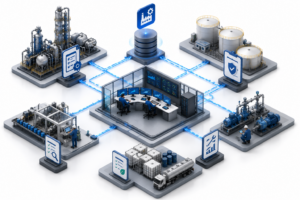
Operational improvements must be standardised to ensure long-term sustainability. INGSOL implements operational control systems that provide:
- Production & Operating Procedure Management: data-driven operating instructions aligned with current process conditions.
- Quality & Compliance Traceability: end-to-end visibility across feedstock, production, quality, and environmental records.
- Condition-Based Maintenance: maintenance scheduling based on actual equipment condition rather than fixed intervals.
- Digital Work Instructions: dynamic procedures accessible across control rooms and field operations.
This layer ensures best practices are consistently followed across shifts, teams and facilities.
Layer 5 : Industrial AI
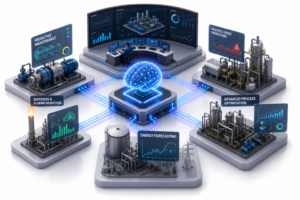
Industrial AI enables facilities to move from reactive operations to predictive decision-making. Applications include:
- Predictive Maintenance: predicting failures in compressors, pumps, turbines, heat exchangers and other critical assets before breakdowns occur.
- Process Upset Prediction: early detection of conditions that may lead to process instability or operational disruption.
- Advanced Process Optimisation: dynamic operating targets based on equipment condition, feedstock characteristics and production objectives.
- Emissions & Flaring Reduction: identifying conditions that contribute to flaring and emissions events before they occur.
- Energy Forecasting: predicting energy demand and enabling proactive utility management.
Industrial AI transforms operational data into predictive intelligence that improves reliability, efficiency and operational control.
Why INGSOL
DTMA-led implementation methodology
Structured layer-by-layer transformation
Strong process engineering expertise
Long-term optimisation partnership
Proven brownfield integration capability
OT cybersecurity-focused architecture
Compliance and traceability support
Global delivery capability across India, USA, UK and UAE
INGSOL supports:
Operations We Serve
- Crude Oil Refining
- Petrochemical Processing
- Natural Gas Processing
- Upstream Production Operations
- Midstream Pipeline Networks
- Storage & Terminal Operations
- Fertiliser Manufacturing
- Chemical Processing Plants
- Offshore Platforms
- LPG & Gas Distribution Infrastructure
is understanding your current operational maturity, identifying your largest operational losses. INGSOL's DTMA provides a structured baseline, risk assessment, and implementation roadmap before any technology investment is made.
Our Clients




membership