Industrial Internet of Things (IIoT) in India: Introduction
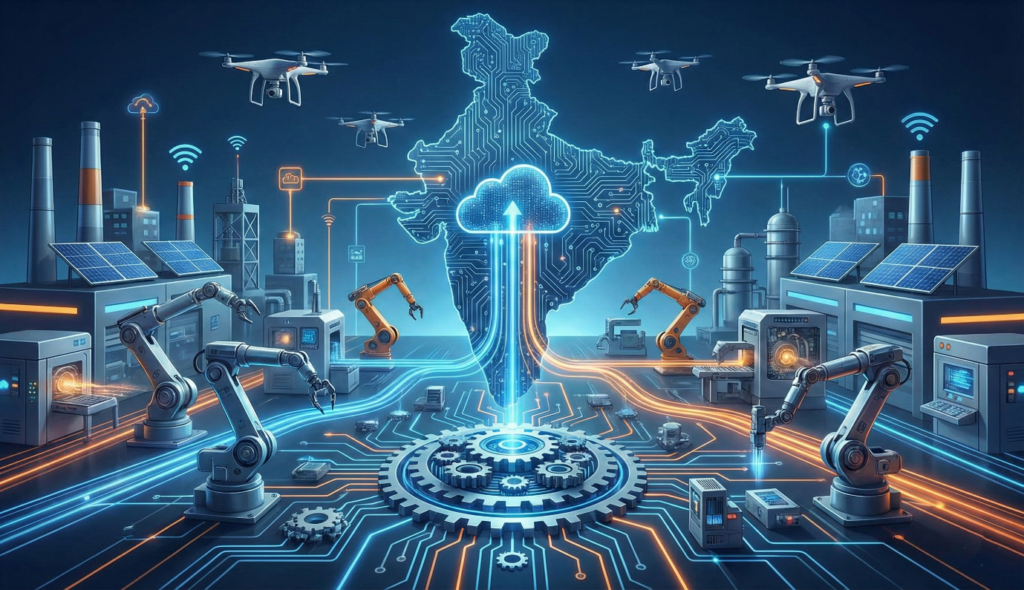
The Industrial Internet of Things (IIoT) in India is rapidly reshaping the country’s manufacturing landscape by connecting machines, sensors and digital systems into a unified, intelligent network. As industries move towards smart manufacturing and Industry 4.0, IIoT is enabling real-time data monitoring, predictive maintenance and automated decision-making across factory floors. With the expansion of 5G connectivity, strong government initiatives and increasing global demand for efficiency and transparency, Indian manufacturers are embracing IIoT to stay competitive. This transformation is not just about adopting new technology, it marks a fundamental shift towards building data-driven, efficient and future-ready industrial ecosystems.
Recent studies support this shift. McKinsey reports that highly automated plants can achieve between 30%–50% higher labour productivity and 15%–30% lower operating costs compared to conventional factories. Gartner predicts that by the end of 2025, 85% of major manufacturing companies will have adopted smart automation systems. At the same time, the global industrial automation market is projected to exceed $410 billion by 2028, showing massive demand and accelerated adoption.
No matter the scale whether a small fabrication unit or a multi-plant industrial conglomerate, industrial automation services have become the most reliable way to increase efficiency, profitability, safety, and long-term sustainability.
India in 2025: The Perfect Storm That Makes IIoT Adoption Inevitable
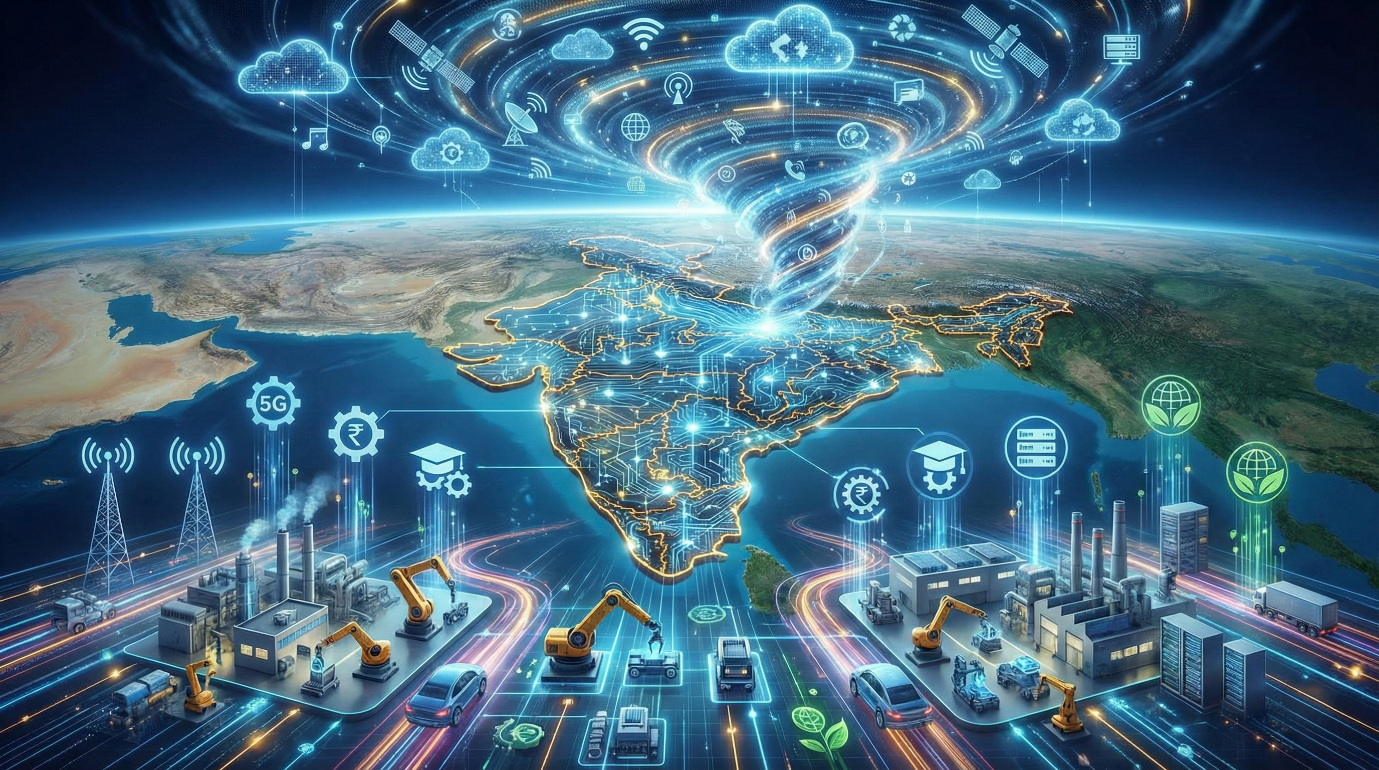
India stands today at a historic turning point, an inflection that manufacturing leaders will talk about for decades. For the first time in independent India’s history, every crucial enabler required to trigger large-scale industrial transformation has aligned simultaneously.
What has changed?
- 5G is now active in 97% of Indian districts, and more than 400 large factories are already operating private 5G networks, a foundation required for ultra-low-latency industrial automation.
- Over ₹10,000 crore in government subsidies are now directly linked to achieving measurable Industry 4.0 outcomes not paperwork, real results.
- 4 million engineers graduate every year, many equipped with AI, IoT, data science, cybersecurity, and robotics skills.
- Indian-born IIoT platforms such as Altizon, Infinite Uptime, Syook and others are now competitively winning projects over Siemens and GE in open tenders.
- Global manufacturing buyers like Apple, Tesla, Volkswagen, Unilever now demand real-time production, CO₂ emissions data per batch, traceability, and blockchain-based ethical sourcing. Without IIoT, compliance is impossible.
The message from customers, regulators, and investors is loud and crystal clear:
By 2027–28, any factory that is not meaningfully connected will be classified as high risk by insurers, auditors, banks, and global customers. This report explains the what, why, and how so that manufacturers can plan and execute with confidence not fear.
What Exactly is IIoT (Industrial Internet of Things)?
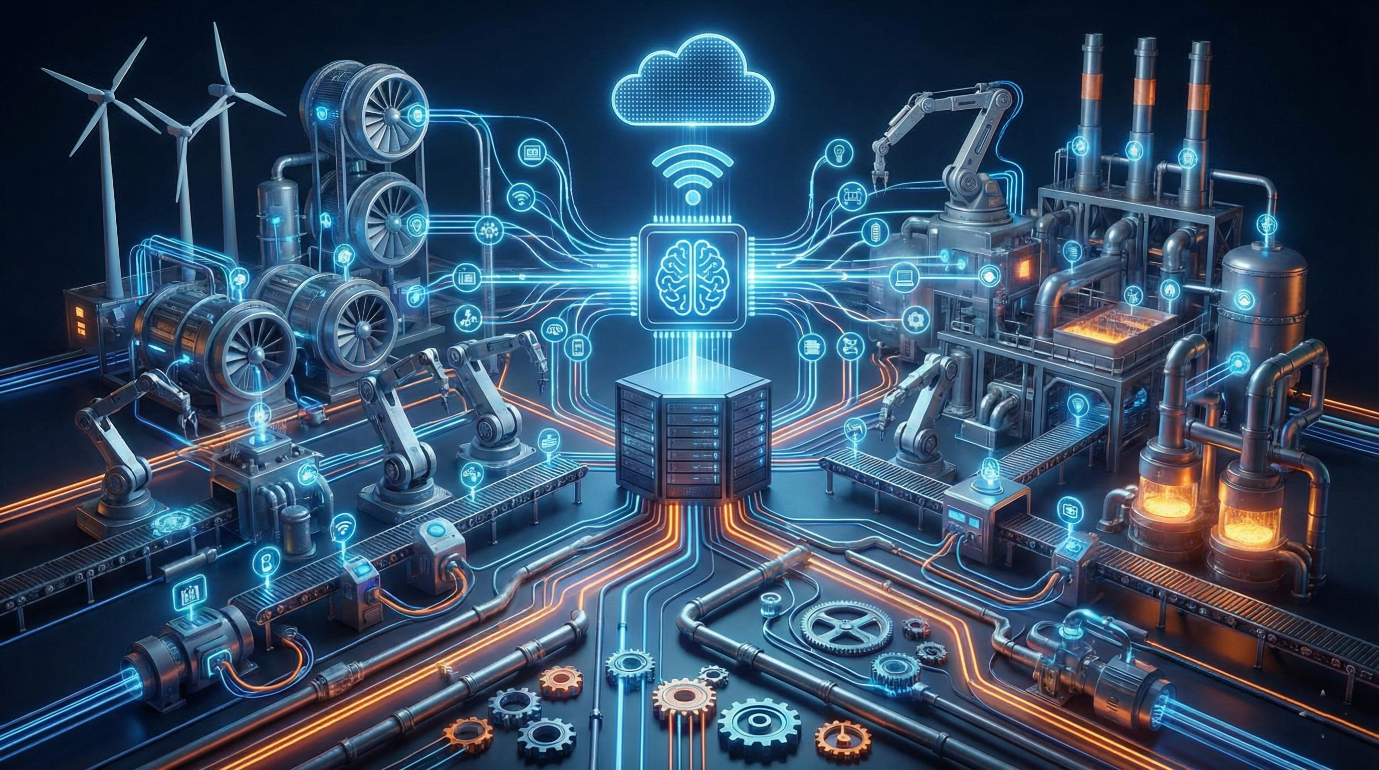
IIoT is essentially the central nervous system of modern manufacturing. It begins with thousands of rugged industrial sensors installed across machines such as motors, pumps, turbines, conveyors, boilers, compressors, furnaces, chillers, robotic arms and packaging lines.
These sensors continuously measure vibration, temperature, sound frequency, torque, pressure, electrical current and hundreds of other process parameters. The data flows through highly reliable industrial networks to edge devices or directly to the cloud where AI/ML algorithms convert data into insights. This enables real-time decision making predicting equipment failures weeks in advance, optimizing production lines or shutting down unsafe equipment automatically.
Consumer IoT vs Industrial IoT
Consumer IoT focuses on convenience (like smart homes), while Industrial IoT is designed for reliability and safety in extreme conditions.
- Consumer devices work in comfortable environments and last 3–5 years. Industrial devices must survive 20–30 years in heat, dust, vibration and moisture.
- Small delays (2–3 seconds) in consumer IoT are acceptable. In industrial environments, even a 4-millisecond delay can ruin welds or misalign robotic operations worth lakhs.
- Security failure in a smart doorbell is inconvenient. A security breach in a refinery, steel plant or nuclear facility can cause fires, explosions and loss of life.
Which is why IIoT follows global safety and cybersecurity standards such as IEC 62443 and ISA-99, including air-gapped networks and cryptographic firmware signatures.
Why IIoT Is Becoming Non-Negotiable in India
Indian factories still operate at an average 62–68% OEE, while global competitors consistently reach 88–94%.
Unplanned downtime in India is 8–15%, whereas connected plants maintain levels under 1%.
Labour costs are rising 8–12% annually, while energy costs have risen nearly 40% since 2021.
The only viable way to remain profitable is to allow machines to optimise themselves in real time something IIoT enables.
IIoT Market Growth in India (2025–2030)
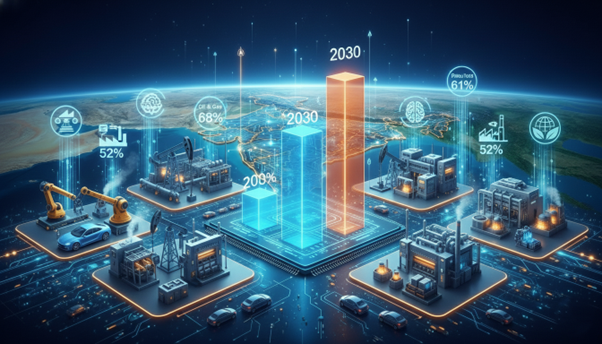
The Indian IIoT market is experiencing explosive growth. In 2025, it stands at US$7.12 billion and is projected to reach US$18.19 billion by 2030, growing at a 20.64% CAGR.
The fastest-expanding segment is IIoT platforms and software, growing at nearly 24.8% CAGR, driven by heavy demand for predictive maintenance, energy optimisation, and real-time quality analytics.
Industrial connectivity is rising rapidly, 2.8 million new connected industrial endpoints were added in 2024, and by 2030 India is expected to cross 150 million connected machines and asset endpoints.
Sector-wise adoption as of 2025
- Tier-1 automotive: 68% of plants already connected
- Oil & gas: 61% connectivity across upstream and midstream assets
- Pharmaceuticals: 55% transition to continuous manufacturing and PAT systems
- Steel & metals: 52% installations for vibration-based predictive analytics
- Traditional industries like textiles (Tiruppur), ceramics (Morbi), plastics and chemicals, 30–40% pilot penetration
Government Policies Fueling IIoT Adoption Multiple national and state-level programmes are directly accelerating smart manufacturing adoption.
Key initiatives include:
- Digital India & BharatNet: 5.2 lakh kilometres of fibre optic backbone and district-wide 5G readiness.
- Make in India 2.0 + PLI Schemes: Performance-linked funds tied to Industry 4.0 KPIs.
- SAMARTH Udyog Bharat 4.0: 42 demonstration smart factories where companies can train and test solutions free of cost.
- IndiaAI Mission (₹10,372 crore) for industrial AI + IIoT innovation.
- 50–70% capital subsidy for SME automation, up to ₹5 crore under central and state policies like Gujarat Industrial Policy 2025 and Tamil Nadu Electronics Policy.
Core Building Blocks of Every Successful IIoT Deployment
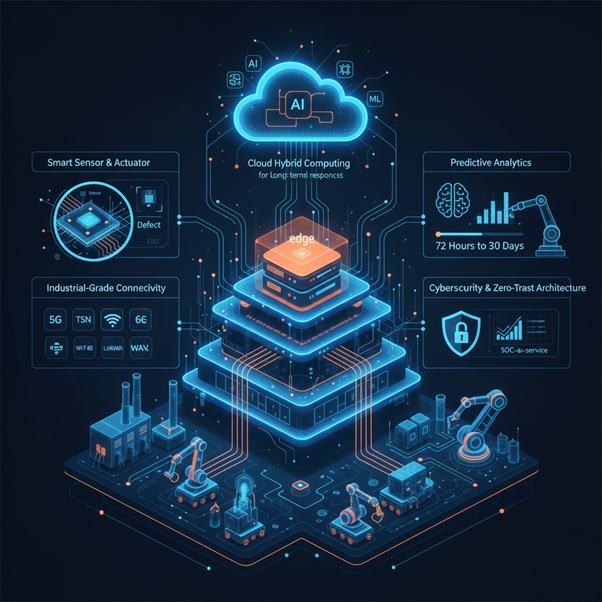
Smart Sensors & Actuators
Sensors today can detect breakdowns months in advance, and AI vision can detect tiny defects of under 50 microns on fast-moving lines. Many are now made in India, reducing costs 40–60% compared to five years ago.
Industrial-Grade Connectivity
Indian factories are adopting:
- Private 5G networks for ultra-low latency
- Time-Sensitive Networking (TSN) for robotics
- Wi-Fi 6E for warehouses with AMRs and AGVs
- LoRaWAN & NB-IoT for remote industrial sites
Edge + Cloud Hybrid Computing
90% of deployments in India use hybrid architecture instant operational responses at the edge and long-term analytics in the cloud.
AI & Predictive Analytics
Modern ML models deliver up to 97–99% failure prediction accuracy between 72 hours to 30 days before breakdown. Generative AI is automating maintenance tickets, spare parts suggestions and safety checklists.
Cybersecurity & Zero-Trust Architecture
Indian firms increasingly use SOC-as-a-service rather than building internal SOCs.
Real Indian Success Stories
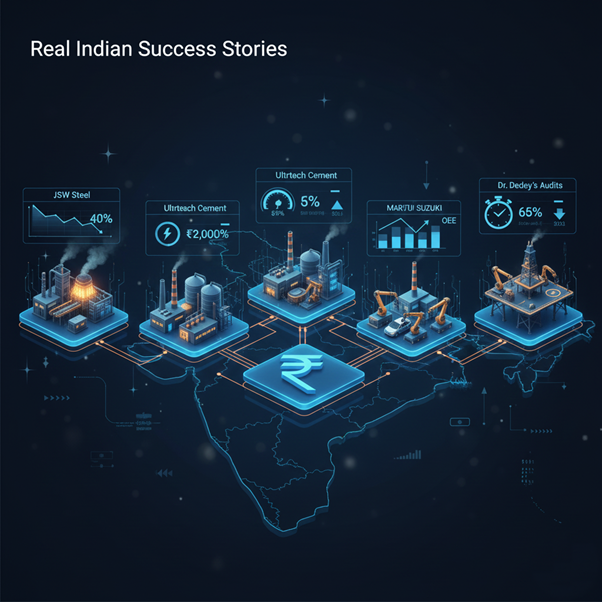
Real measurable outcomes prove the business case:
- JSW Steel saved ₹180 crore yearly through IIoT energy and maintenance optimisation.
- Ultratech Cement reduced energy use by 8.2%, saving ₹92 crore in one year.
- Maruti Suzuki Gujarat increased OEE from 78% to 93% in 14 months.
- ONGC reduced helicopter visits to offshore rigs by 62% through remote asset monitoring.
- Dr. Reddy’s achieved continuous processing and cut regulatory audit time from weeks to hours.
Industry-wise IIoT Applications Already Mainstream
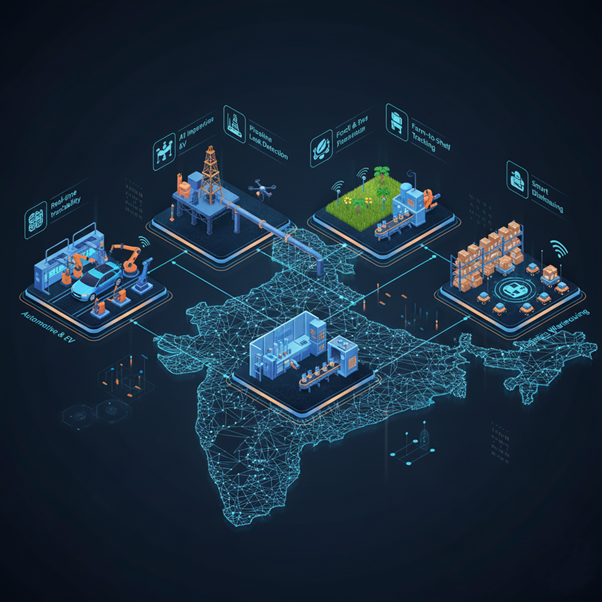
- Automotive & EV: Real-time traceability and AI-enabled inspection
- Oil & Gas: Pipeline monitoring, drone inspection, leak & theft detection
- Pharmaceuticals: PAT sensors, electronic batch records and cold chain traceability
- Food & Beverages: Farm-to-shelf tracking and dynamic load balancing
- Logistics & Warehousing: Autonomous robots and smart distribution hubs
Audited, Tangible ROI Benefits
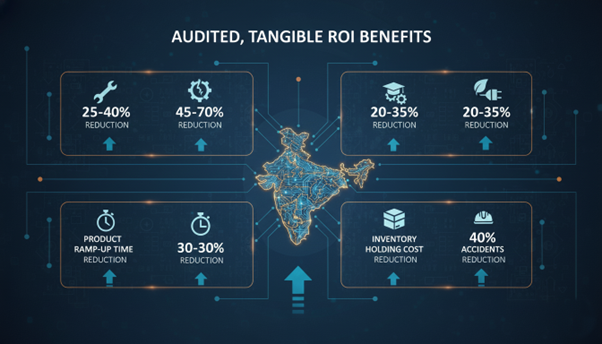
Indian manufacturers implementing IIoT are seeing:
- 25–40% reduction in maintenance costs
- 45–70% reduction in unplanned downtime
- 20–35% reduction in energy bills
- 30–50% reduction in product ramp-up time
- 20–30% reduction in inventory holding cost
- 40% reduction in workplace accidents
Current Challenges and Practical Solutions
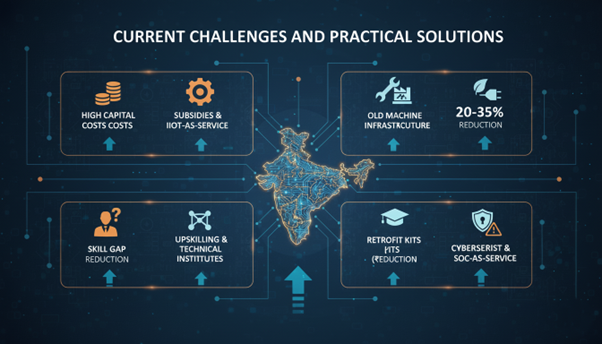
- High capital costs are now manageable through subsidies and pay-per-machine IIoT-as-a-service models.
- Old machine infrastructure is being upgraded through retrofit kits costing just ₹2–5 lakh.
- Skill gap is shrinking due to rapid upskilling through NPTEL, Siemens, L&T, Rockwell and state technical institutes.
- Cybersecurity exposure is being solved through pre-certified zero-trust deployments and affordable SOC-as-a-service models.
Major IIoT Players Leading the Indian Market
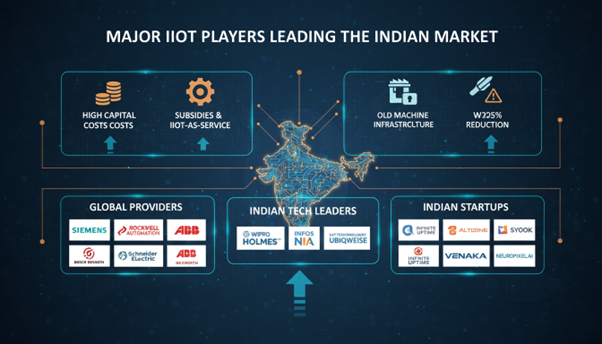
Global providers shaping the space include Siemens, Rockwell Automation, ABB, Schneider Electric and Bosch Rexroth.
Large Indian technology leaders include Tata Communications MOVE™, Wipro HOLMES, Infosys NIA, and L&T Technology Services UBIQWeise. Fast-growing Indian industrial tech startups include Altizon, Infinite Uptime, Syook, Venkaa and NeuroPixel.AI, all scaling globally.
The Road Ahead: IIoT Future in India (2026–2035)
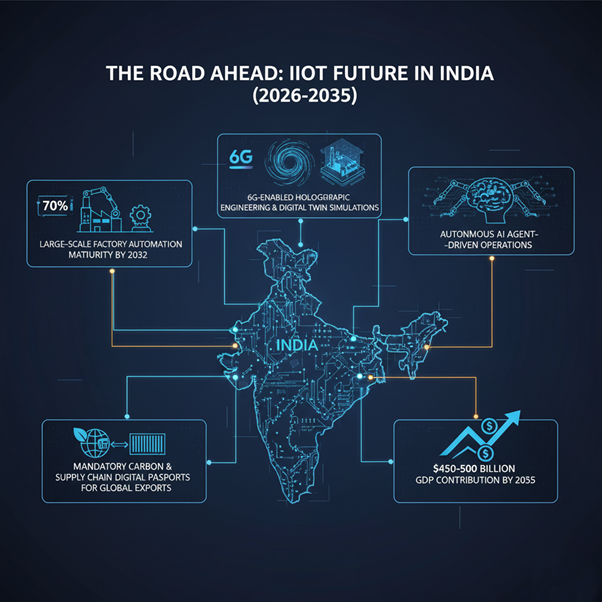
India is headed toward:
- 70% large-scale factory automation maturity by 2032
- 6G-enabled holographic engineering and digital twin simulations
- Autonomous AI agent-driven operations
- Mandatory carbon & supply chain digital passports for global exports
- A GDP contribution of $450–500 billion by 2035 from Industry 4.0
Conclusion
2025–26 offers the strongest subsidy support, most advanced connectivity infrastructure, and most prepared workforce India has ever had. Competitors are already running pilots and full deployments. Every month of delay now costs more than the price of a complete pilot system.
India is not waiting for the factories of tomorrow. It is building them right now shift by shift, sensor by sensor, line by line.
The question is simple: Will your company lead the change or watch others move ahead?
The IIoT era is already here. The only decision left is how big your role will be.
Reference:
https://www.imarcgroup.com/india-industrial-iot-market?.com