What Is IIoT and How It Is Changing US Manufacturing Plants
The Industrial Internet of Things (IIoT) is the use of networked sensors, instruments, machines and other devices to improve industrial and manufacturing processes. In practice, it means machine data such as states, counts, temperatures and vibration is collected automatically and sent to software that people and other systems can use. In US plants, IIoT is moving from pilot projects toward a core data layer, but adoption is uneven and the main obstacles are security, skills and integration rather than sensors.
What Is IIoT?
IIoT applies Internet of Things technology to industrial settings such as manufacturing, energy and logistics. NIST’s glossary describes it as networked sensors, instruments, machines and devices that use Internet connectivity to enhance industrial and manufacturing business processes. The International Society of Automation (ISA) describes IIoT as a subset of the broader IoT, covering interconnected control systems, sensors, instruments, industrial assets, computers and people.
IIoT is closely tied to smart manufacturing. NIST describes smart manufacturing systems as integrated, collaborative systems that respond in real time to changing conditions in the factory, the supply network and customer demand. ISA treats IIoT as one of the main enablers of that goal.
Fact versus analysis: The definitions above come from NIST and ISA. The explanations of how plants use IIoT later in this article are engineering analysis unless a source is named.
How IIoT Differs From IoT, PLCs, SCADA and MES
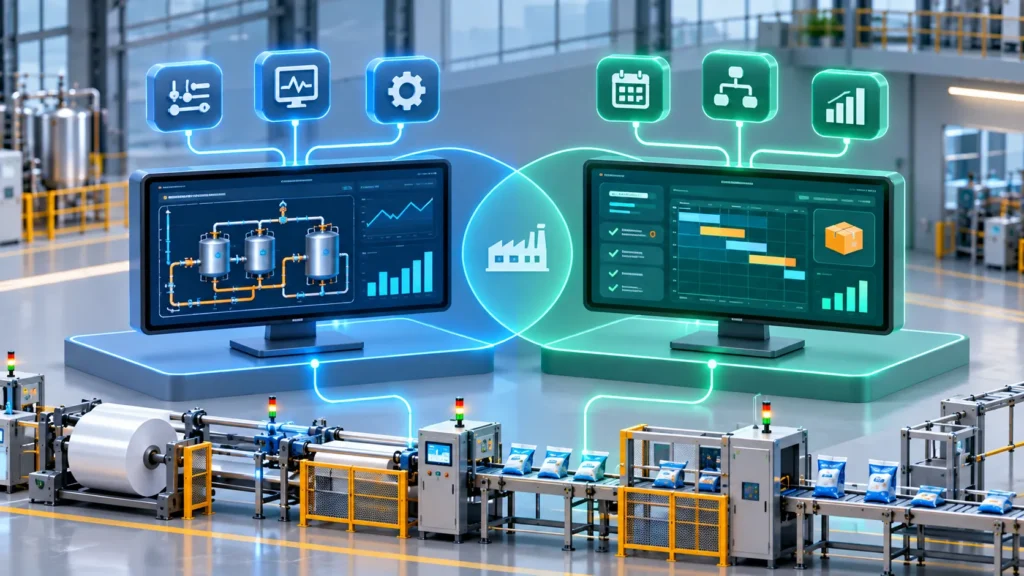
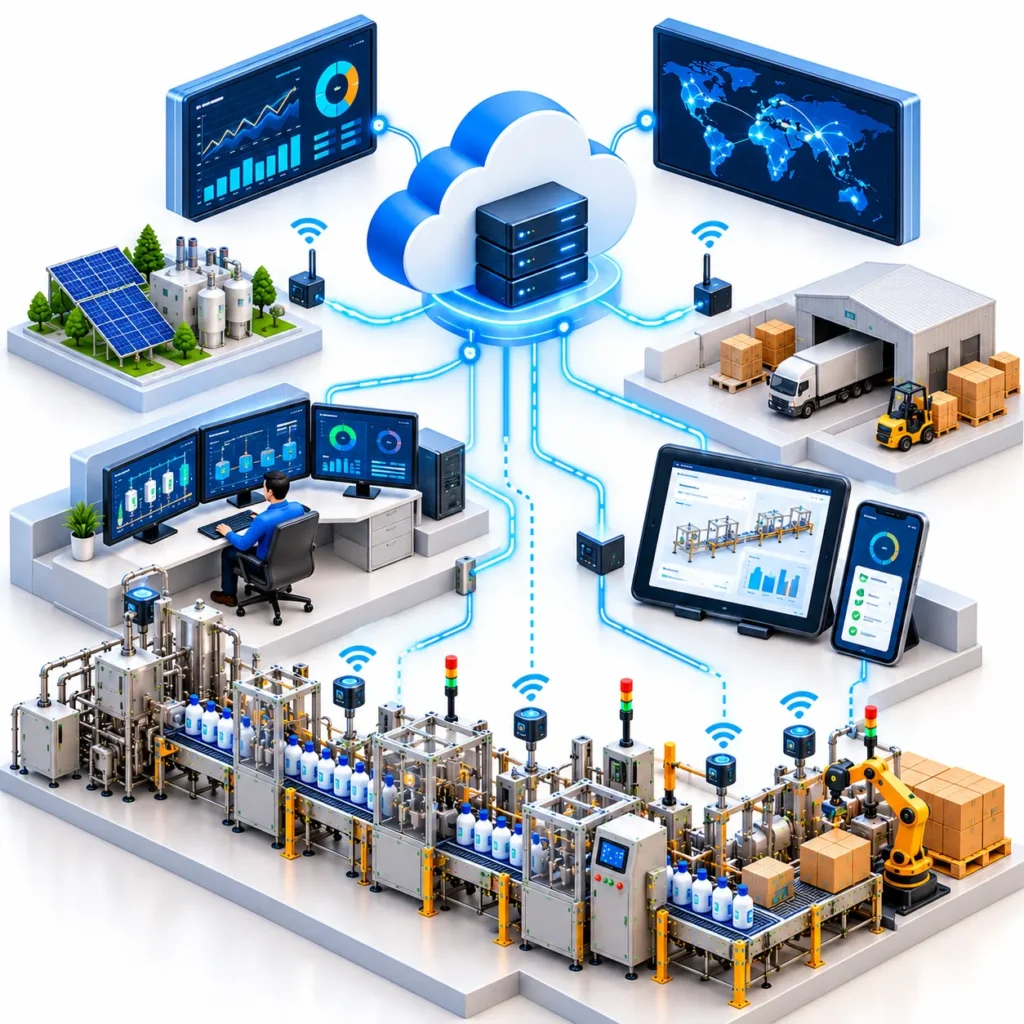
IIoT does not replace the systems already on the plant floor. It connects them and makes their data available to more users and applications.
Technology | Primary role | How IIoT relates |
Consumer IoT | Connected homes and personal devices | Same networking ideas, but lower safety and uptime demands |
PLC | Real-time machine control | Source of machine data; IIoT should not interfere with control |
SCADA | Monitoring and supervisory control | Often the collection and visualization layer for IIoT data |
MES | Production execution and tracking | Uses IIoT data for order progress, downtime and quality |
ERP | Business and production planning | Receives summarized production data |
The key difference from consumer IoT is consequence. A failed smart bulb is an inconvenience. A failed connection on a running line can stop production or create a safety issue, so IIoT designs must respect control-system performance, reliability and safety requirements.
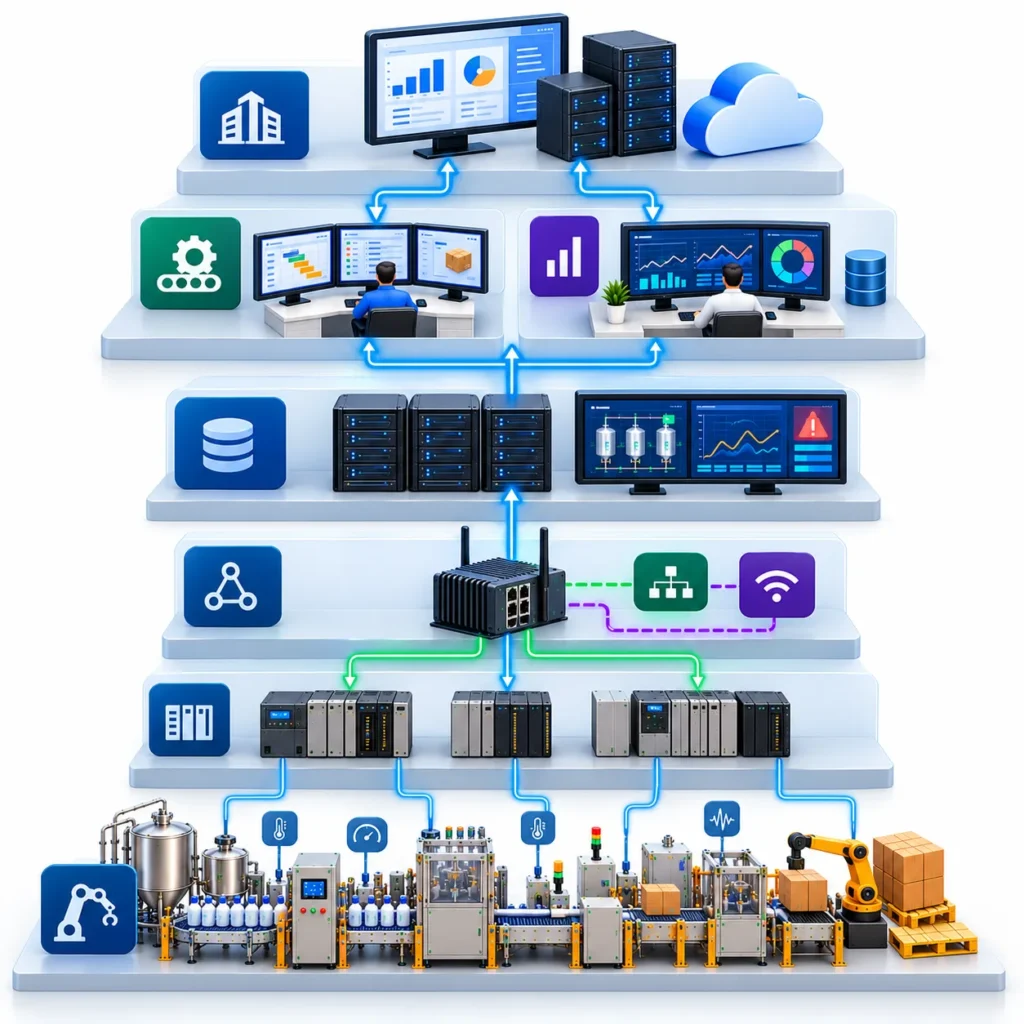
How IIoT Works: A Simple Architecture
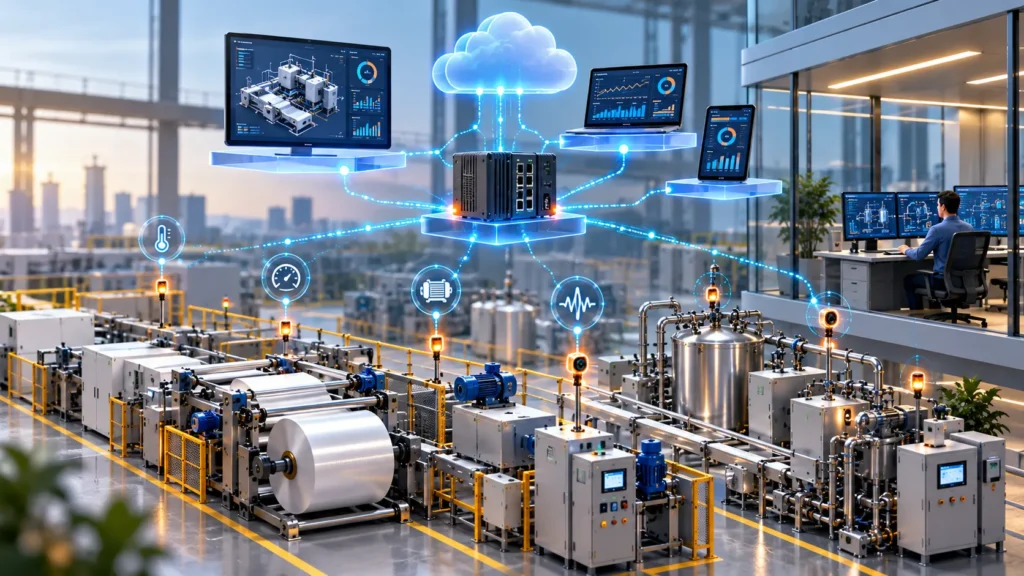
Each layer has a distinct job:
- Machines and sensors generate raw signals such as run state, speed, temperature and vibration.
- PLCs control the process and expose selected values.
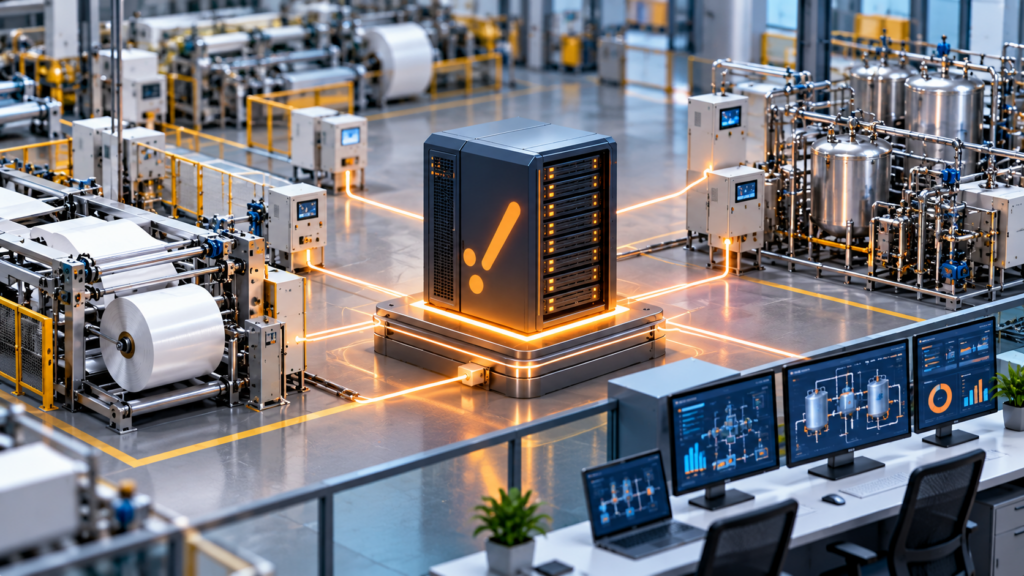
- The edge or protocol layer moves data out of the control network in a standard format. OPC UA is widely used for machine communication. MQTT, a lightweight publish-subscribe protocol, is increasingly used to distribute data, and the Eclipse Sparkplug specification defines the topic structure, payload format and session handling that make MQTT interoperable in industrial settings.
- The platform layer stores, models and presents the data, and applies alarms or logic.
- MES and ERP use the data for execution and planning.
The Eclipse Foundation has said it expects Sparkplug and OPC UA to coexist, with software bridges connecting them. That matches common plant practice: the choice is usually about where each protocol fits, not which one wins.
What the Evidence Shows About US Manufacturers
The most useful recent US data comes from Deloitte’s 2025 Smart Manufacturing and Operations Survey. It covers 600 executives at large manufacturers with US headquarters or operations, surveyed in August and September 2024. Respondents work at companies with at least US$500 million in annual revenue and more than 1,000 employees.
- 46% use IIoT solutions at the facility or network level, alongside 57% using cloud computing and 57% using data analytics.
- 54% report a data standard such as a unified data model, and 45% report an architecture standard.
- Respondents reported average improvements of 10% to 20% in production output, 7% to 20% in employee productivity and 10% to 15% in unlocked capacity from smart manufacturing initiatives.
- Looking ahead, 34% rank active sensors and 40% rank data analytics as a first or second investment priority for the next 24 months.
Limitations matter. These figures are self-reported survey results, and they cover large companies. They do not show that IIoT alone caused the gains, and they should not be read as typical for small or mid-size plants. A plant should treat them as context, not as a forecast.
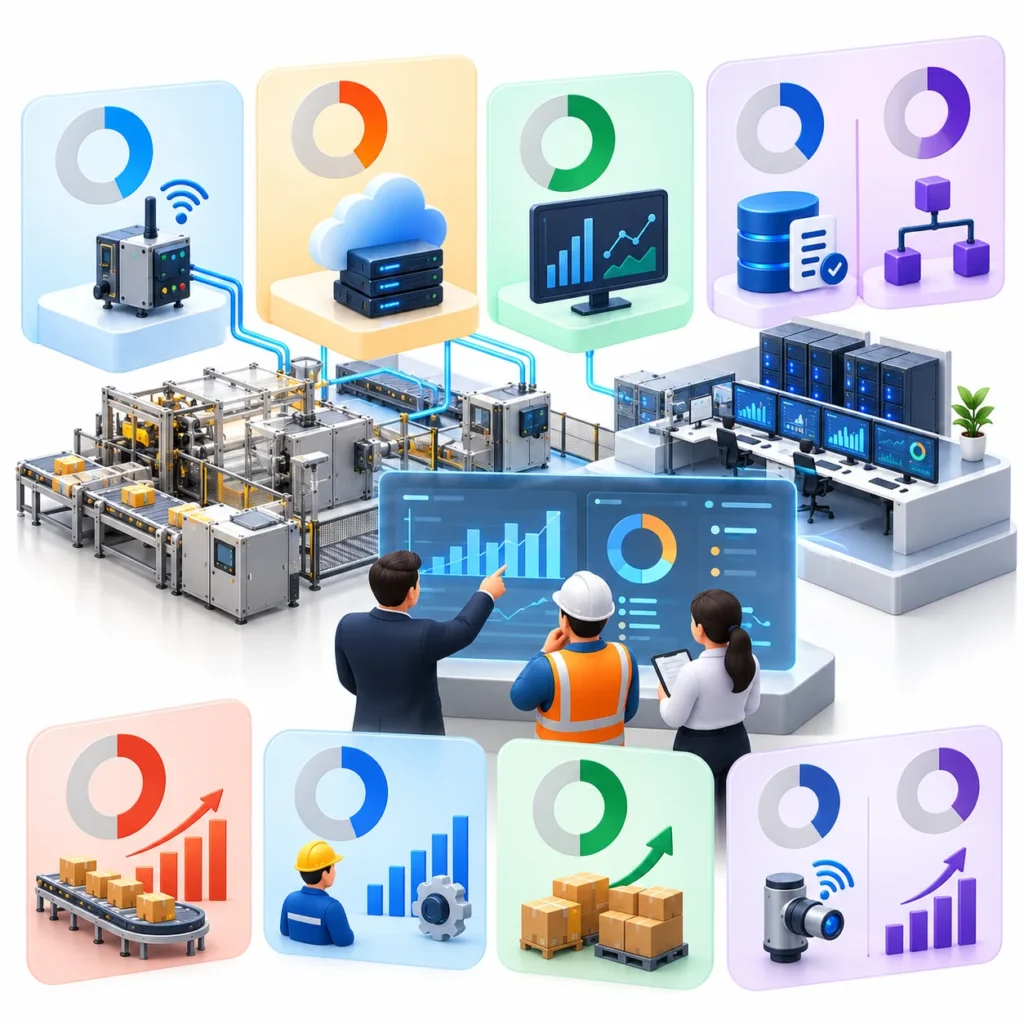
How IIoT Is Changing Plant Operations
The following are engineering analysis of common patterns, not claims about any specific company.
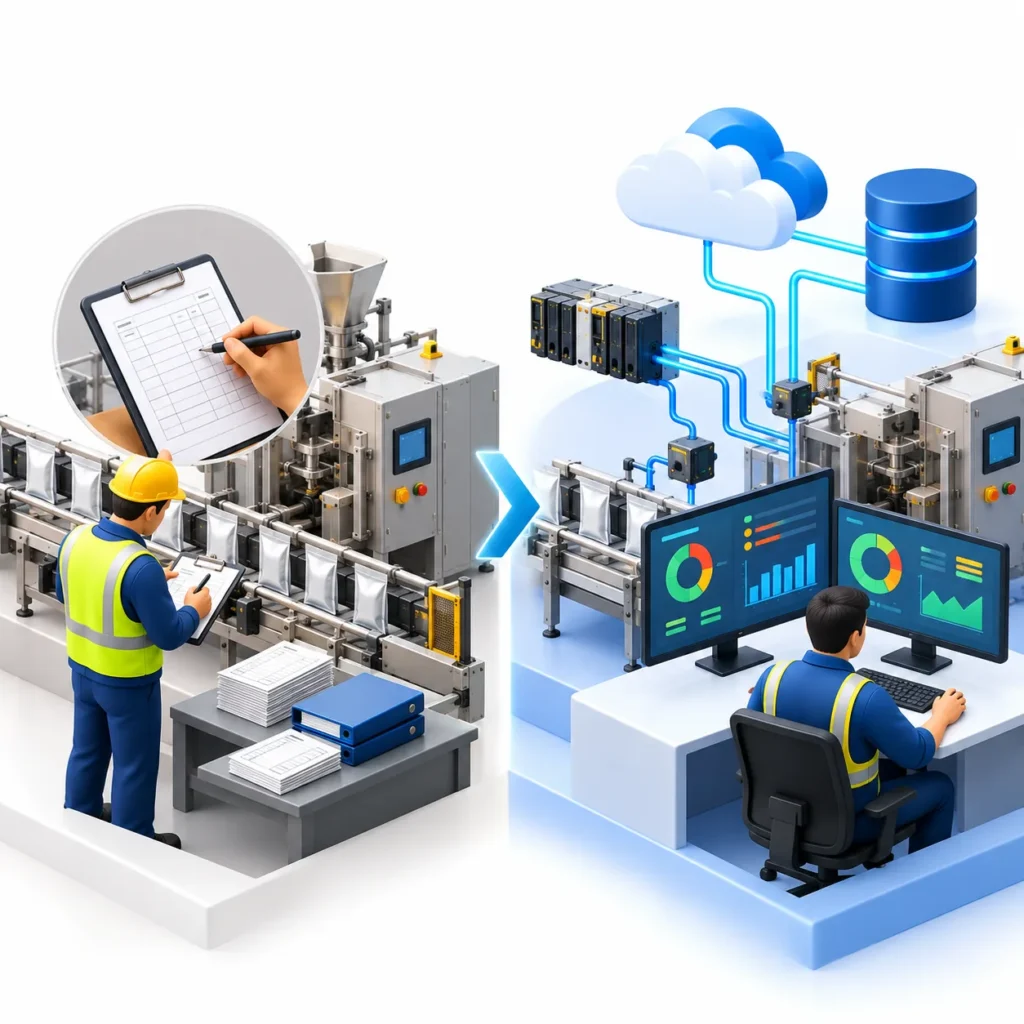
From manual logs to automatic machine data
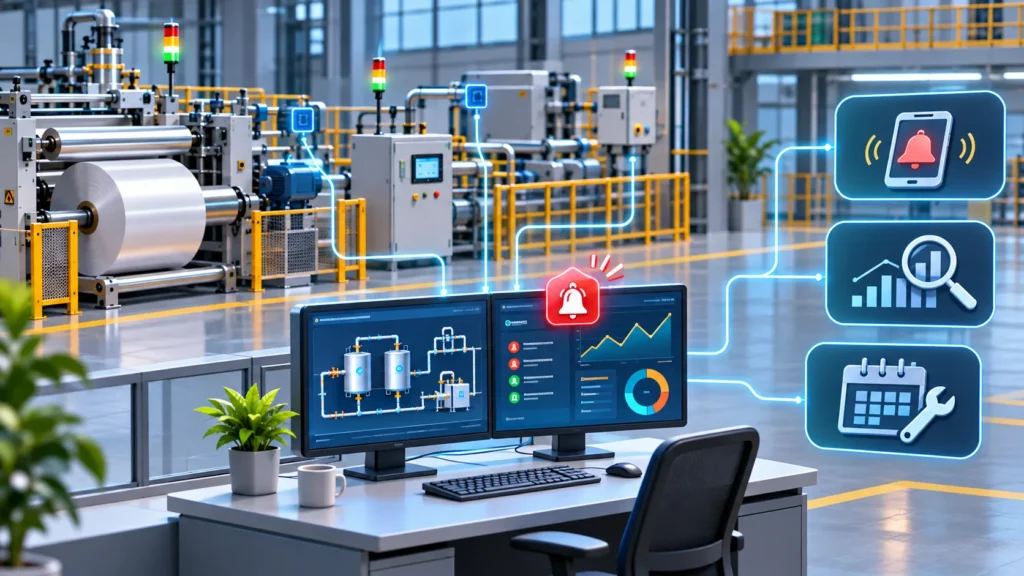
Many plants still rely on operators to record downtime and counts by hand. IIoT replaces that with machine-state and count data collected directly from controllers, which supports consistent OEE calculation and faster identification of recurring stops.
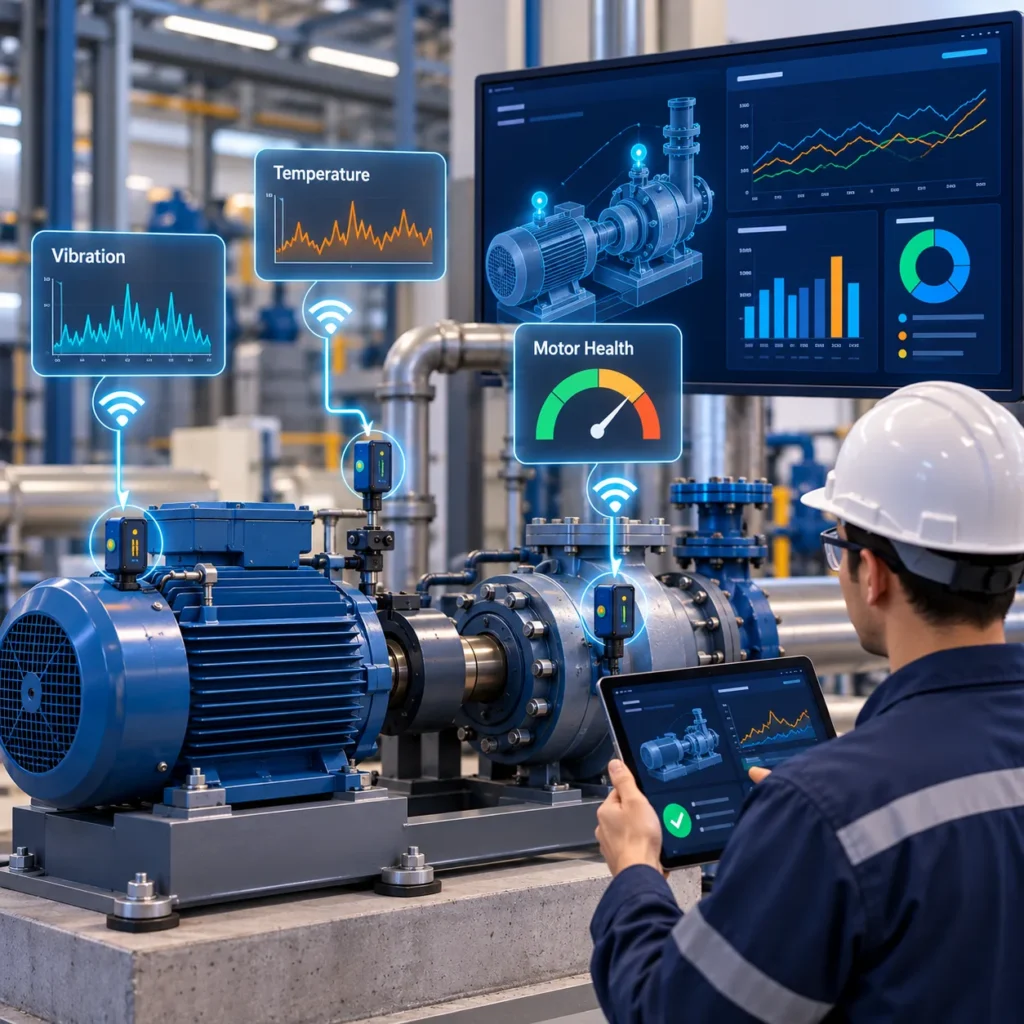
Condition monitoring and maintenance
Sensors on motors, pumps and drives can track vibration and temperature over time. Maintenance teams can then plan work around equipment condition instead of only calendar schedules. The value depends on good data and on acting on it.
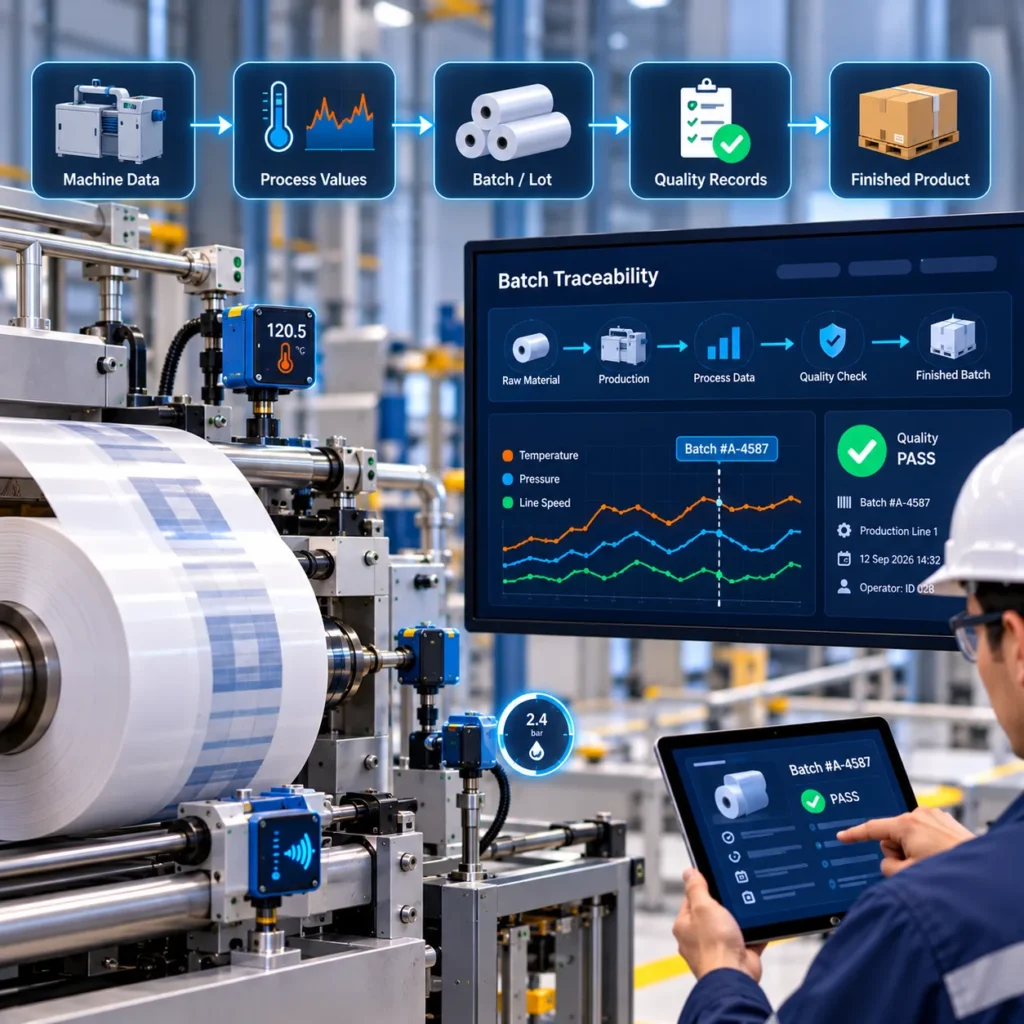
Quality and traceability
Linking process values to batches or lots lets quality teams see which conditions were present when a defect occurred. This is as much a data-modeling task as a sensing task.

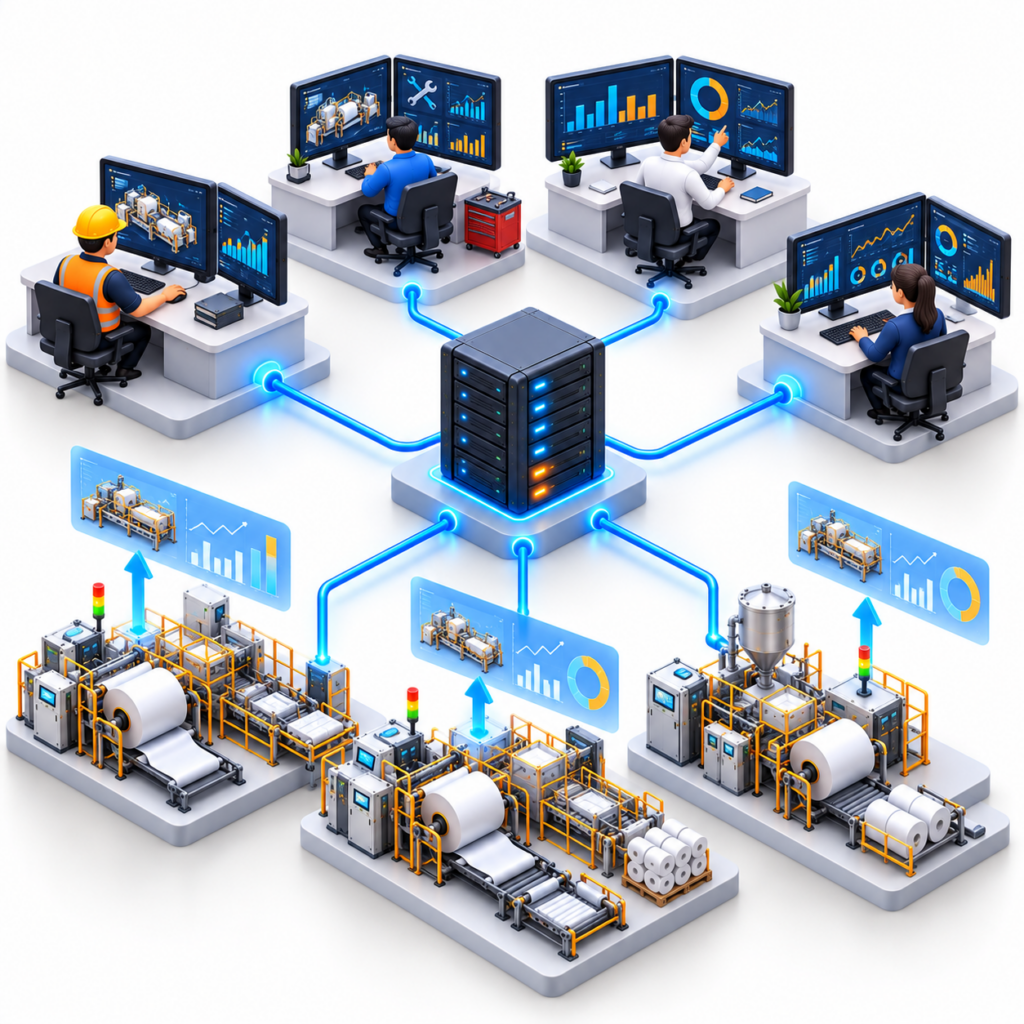
Multi-site visibility
When each plant publishes data in a consistent structure, corporate teams can compare performance across sites without rebuilding reports by hand. Deloitte’s finding that many manufacturers are adopting data and architecture standards points in this direction.
Example
Scenario: A US packaging plant runs three filling lines with PLCs from more than one vendor.
Current problem: Operators log downtime on paper, so reasons are inconsistent and supervisors see problems hours later.
IIoT approach: Machine states and counts are read from each PLC, published through a common protocol layer, and stored on an industrial platform. Operators select downtime reasons on a screen.
Data collected: Run and stop states, production counts, reject counts and downtime categories.
Possible outcome: Supervisors see line status in near real time, and maintenance can rank stoppages by frequency. No specific savings are claimed, because results depend on data quality, process and how teams respond.
Challenges and Risks
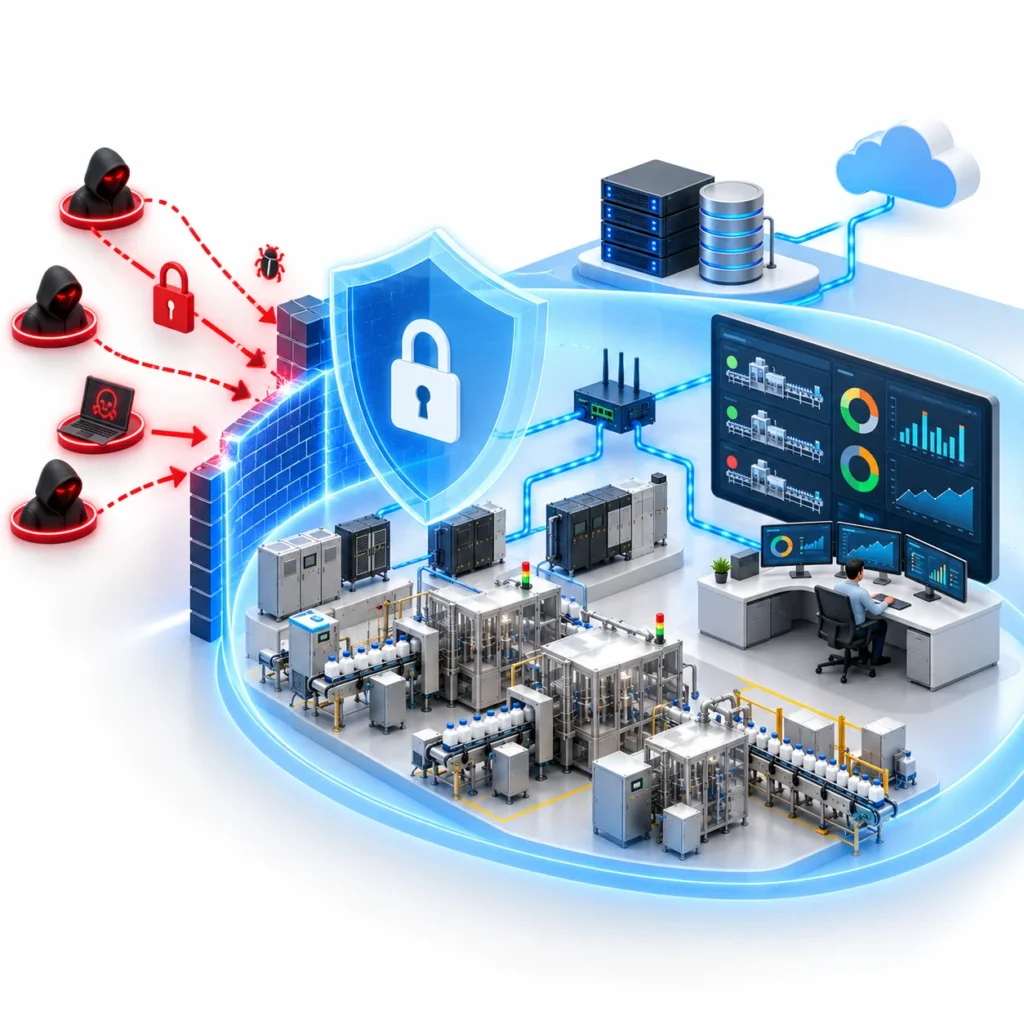
Cybersecurity
More connected devices expand the cyberattack surface. Deloitte found 65% rank operational risk as a top concern, while 55% strongly worry about unauthorized OT access. NIST SP 800-82 Rev. 3 offers OT-specific guidance on threats, vulnerabilities and security safeguards.
Skills and workforce
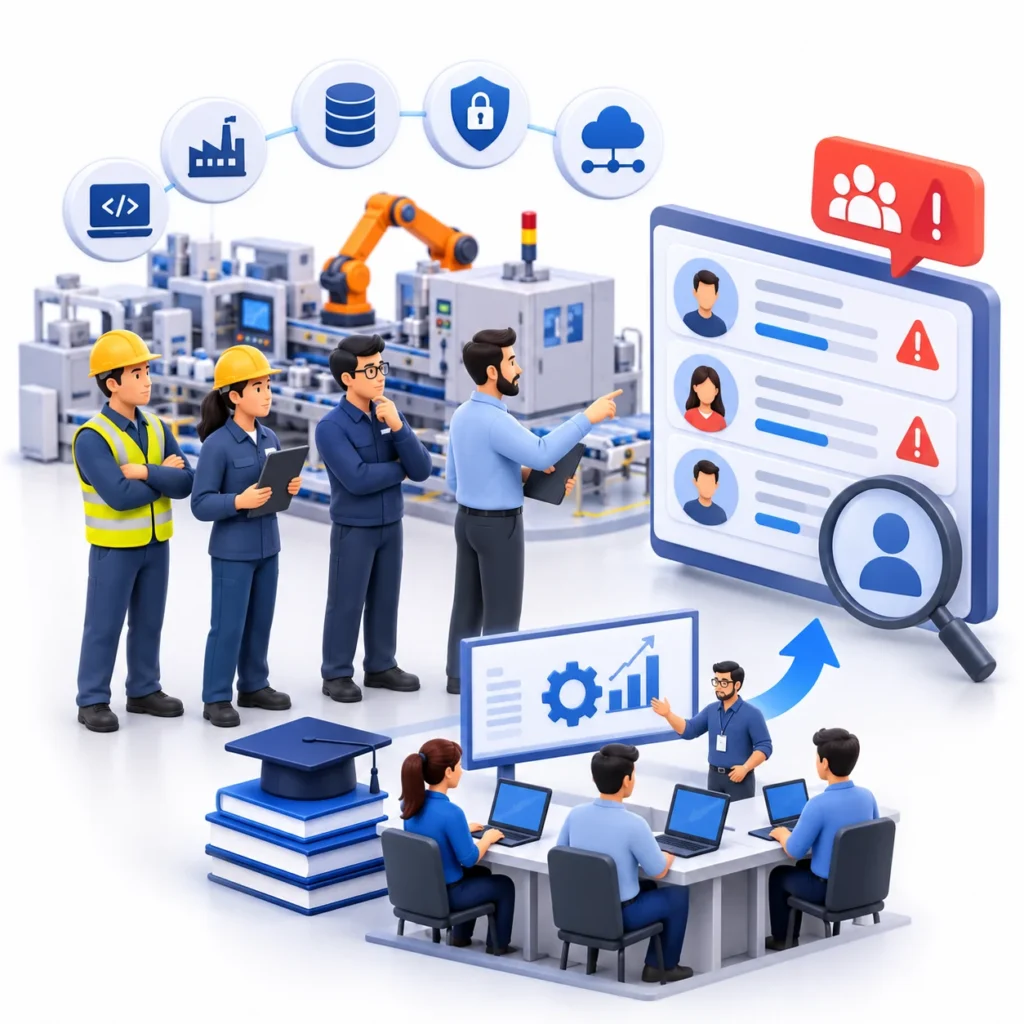
Between 69% and 72% of Deloitte’s respondents reported moderate to significant difficulty hiring for IT, OT, data science, application development and cybersecurity roles. IIoT projects need people who understand both plant floors and networks.
Legacy equipment and integration
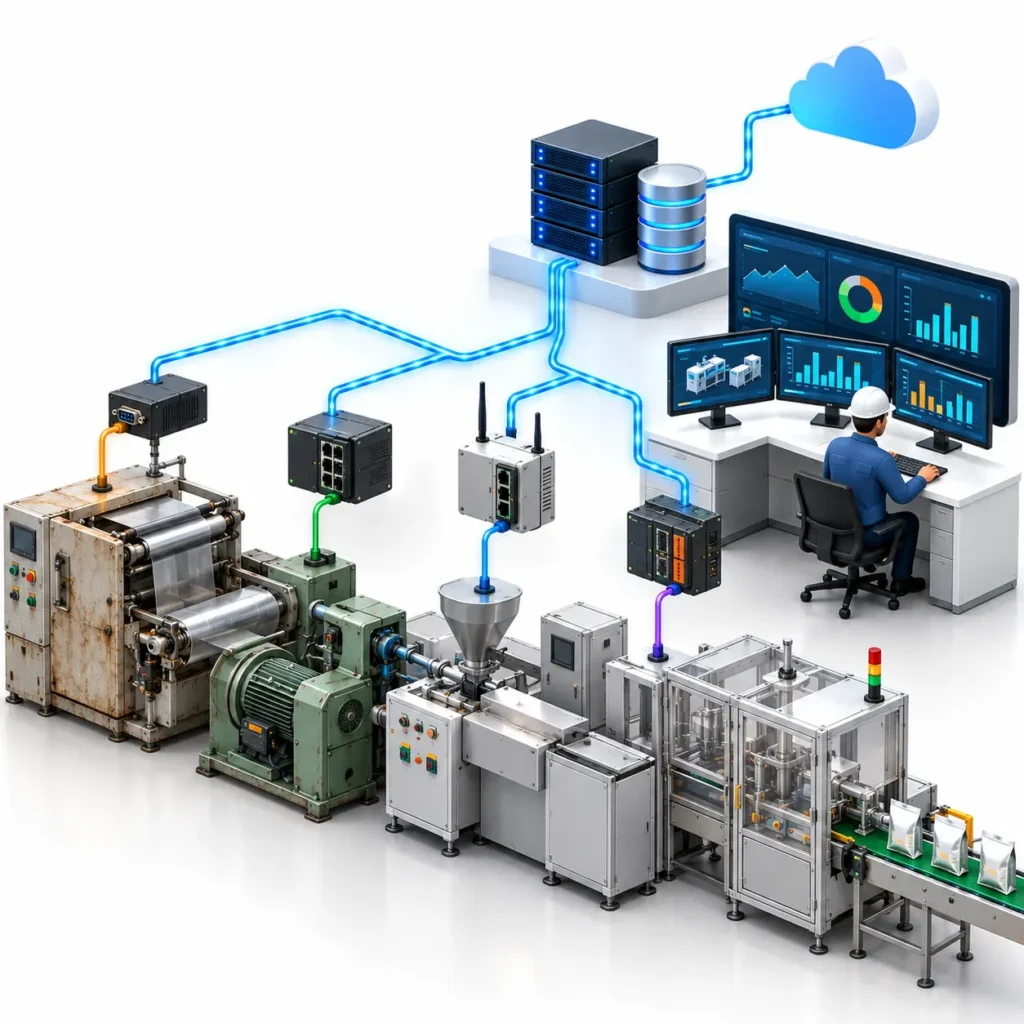
Older machines may have no network interface or may use proprietary protocols, so gateways or controller upgrades may be required. This is a common practical constraint in brownfield plants (analysis).
Data quality and ownership
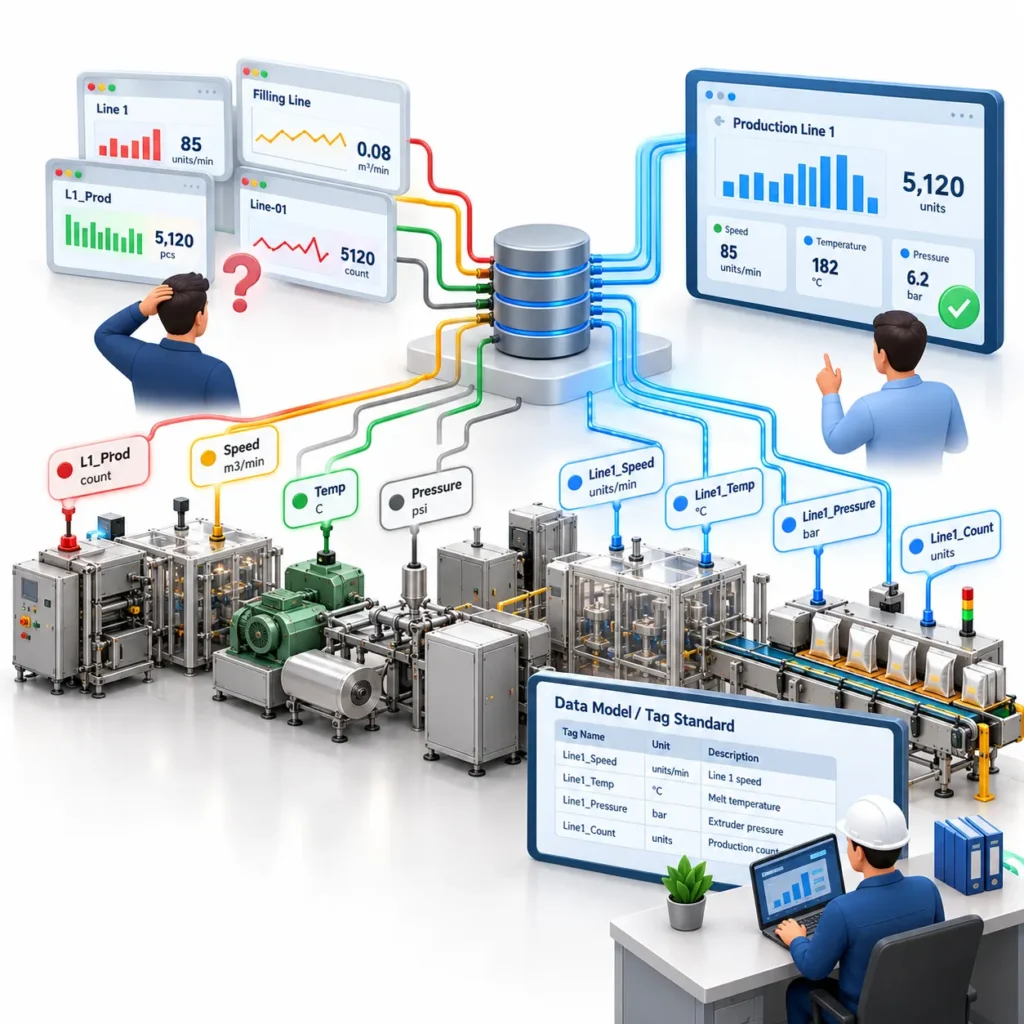
Collecting data does not make it useful. Without consistent tag naming, units and context, dashboards disagree and trust erodes.
When IIoT May Not Be the Right Next Step
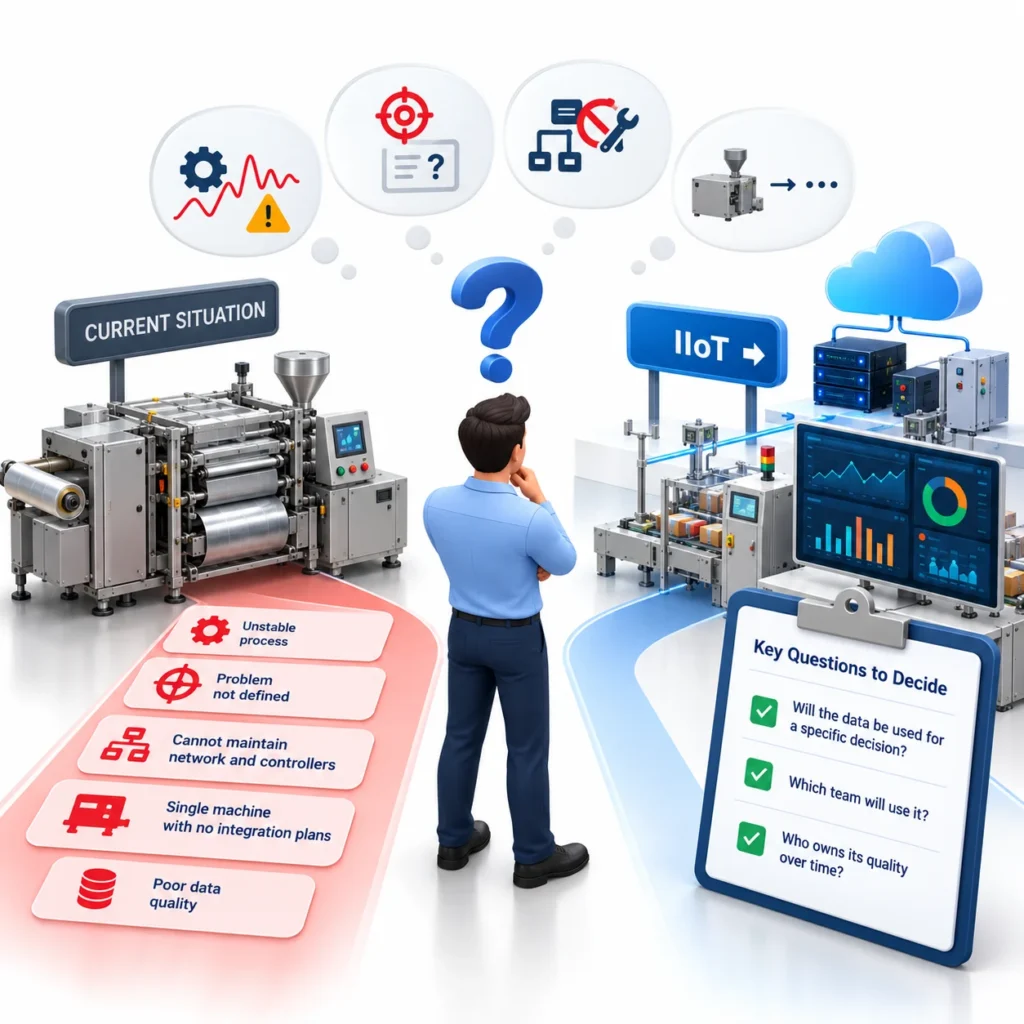
IIoT is not the answer to every plant problem. It may be premature if the underlying process is unstable, if the production problem has not been defined, or if the plant cannot yet maintain its own network and controllers. A plant with one standalone machine and no plans to connect other systems may get more value from better operator procedures or basic controller upgrades first. Connecting poor data does not improve it. The sensible test is whether the data will be used for a specific decision by a specific team, and whether someone owns its quality over time (analysis).
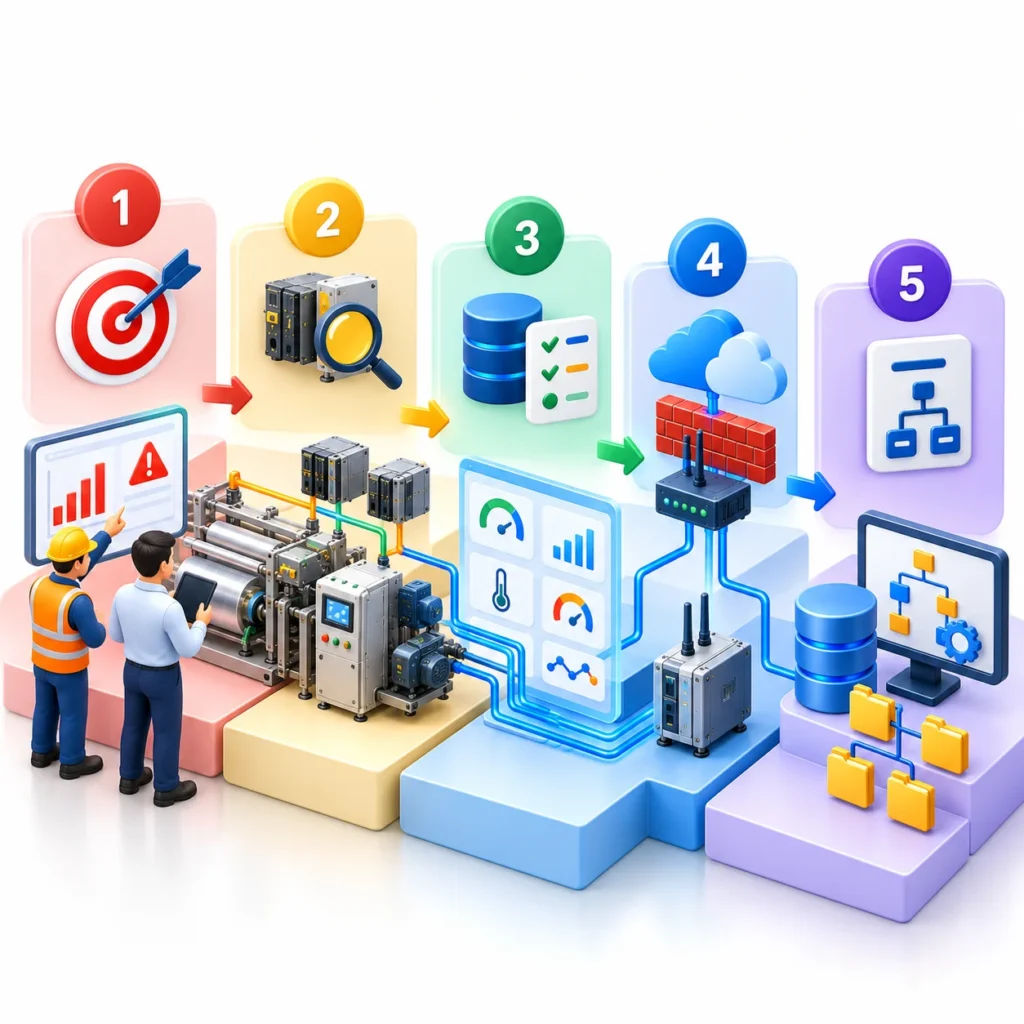
A Practical Starting Checklist
- Define one production problem, such as unplanned downtime or missing traceability.
- Inventory the machines, controllers and protocols involved.
- List the few data points needed to answer the problem.
- Decide how data will leave the control network, and who owns the network boundary.
- Define a naming and data model before building screens.
- Apply OT security guidance, such as NIST SP 800-82r3, from the start.
- Start with one line, measure the result and expand.
Conclusion
IIoT gives plants a dependable way to turn machine signals into data that operations, maintenance and quality teams can use. The evidence from US manufacturers suggests steady adoption and reported operational gains, but it comes from self-reported surveys of large companies, so treat it as direction, not guarantee. For most plants, value depends less on how many sensors are installed and more on a clear production problem, a consistent data model, and security planned from the start. Legacy equipment, scarce skills and cost all affect scope. For plants assessing IIoT or OT-IT
Contact our IIOT specialists directly:
Email: sales@ingsol.com
Phone (India): +91 95608 11774
Phone (US): +1 347 570 2629
Our engineers will review your current setup and outline a practical upgrade path built for your plant.