
TimescaleDB
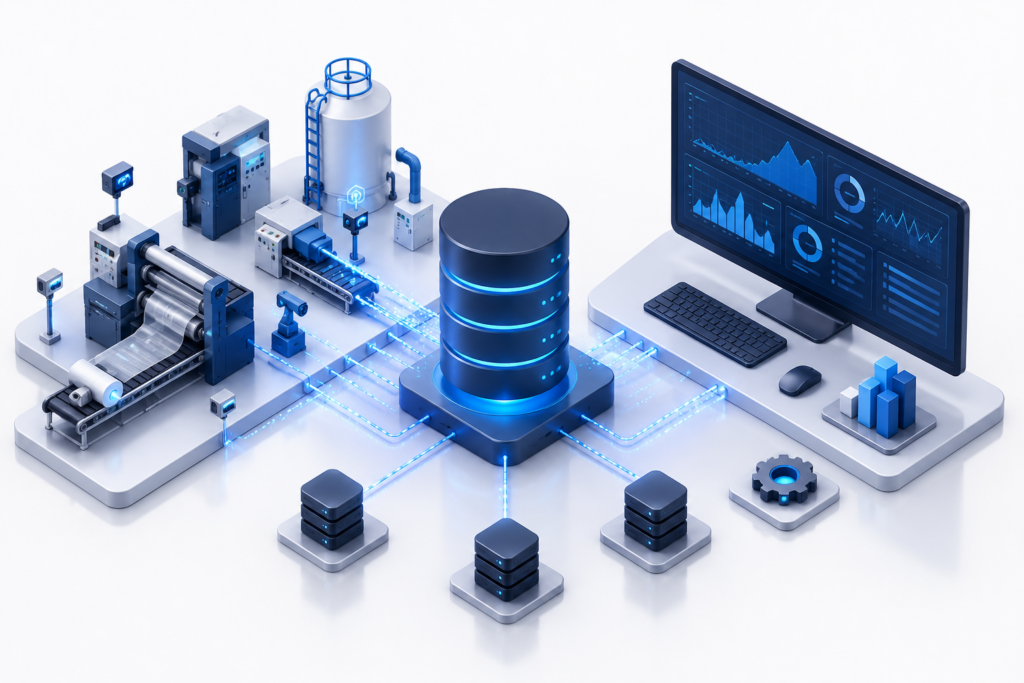
TimescaleDB: Storing the Data Your Factory Generates Every Second
A single production line can generate millions of data points daily. Even a modest sensor set adds up fast. Storing that volume reliably is one challenge. Querying it quickly months later is another. This differs completely from storing a normal business record. INGSOL uses TimescaleDB to solve both problems. TimescaleDB forms part of our data infrastructure for factories. This page explains what TimescaleDB is. It also shows how INGSOL uses TimescaleDB. Finally, it explains how TimescaleDB fits our wider stack.
What Is TimescaleDB?
TimescaleDB is an open-source time-series database. It extends PostgreSQL directly. Engineers purpose-built it for continuous, timestamped data. This includes data from industrial sensors, PLCs and control systems. It stores this data efficiently at scale. In addition, it stays fully compatible with standard SQL. Therefore, teams can query it using familiar tools.
However, TimescaleDB is not a general-purpose application database on its own. It also does not replace PostgreSQL, since it builds directly on top of it. Instead, its role is specific. It makes high-volume, time-stamped data fast to write. It keeps that data efficient to store. It also keeps queries quick, even after months or years.
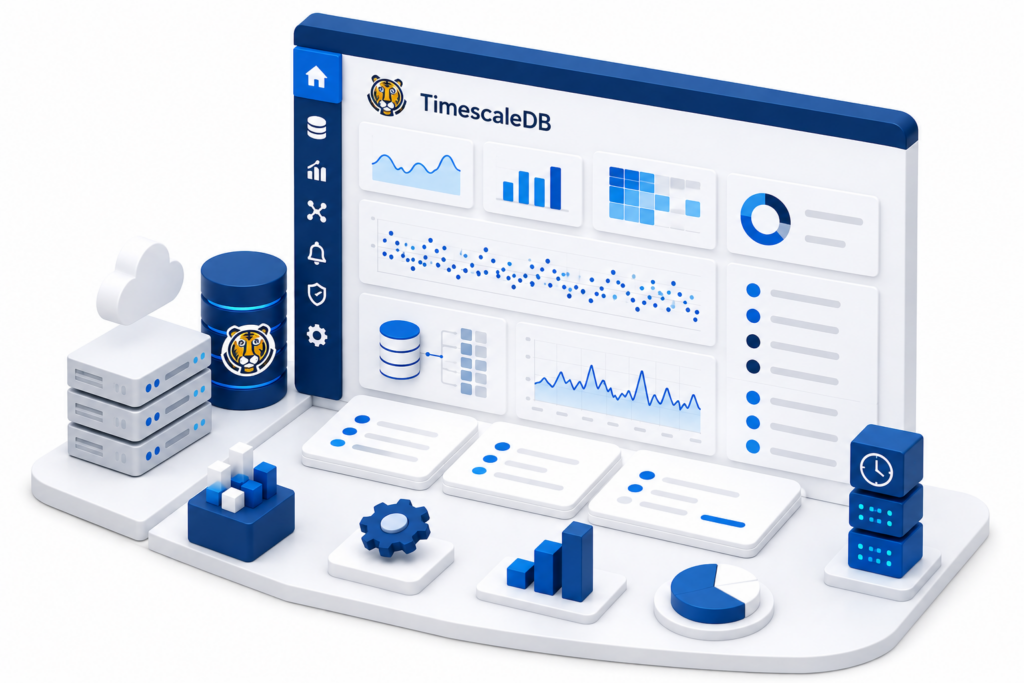
Why INGSOL Includes TimescaleDB in the Stack
Built for high-volume time-series data:
INGSOL organises data automatically into hypertables. These partition by time. As a result, queries across large sensor datasets stay fast. This holds true even as the dataset grows into billions of rows.
Full SQL compatibility:
Because TimescaleDB is a PostgreSQL extension, it supports standard SQL. Therefore, it works with joins and existing PostgreSQL tools. You avoid needing a separate, unfamiliar query language.
Native compression:
It compresses older time-series data automatically. This reduces storage costs. However, historical sensor data stays available for analysis. Teams never need to delete it.
Continuous aggregates:
Continuous aggregates pre-compute rollups, such as hourly or daily averages. As a result, dashboards and reports stay responsive. They never need to recalculate raw data each time.
Open source:
Because TimescaleDB is open-source and built on PostgreSQL, it avoids vendor lock-in. Therefore, your factory never depends on one proprietary database.
Where INGSOL Applies Analytics

Sensor and Process Data Storage
INGSOL stores continuous readings in TimescaleDB. These include temperature, pressure, vibration and tension data. As a result, you get a reliable, queryable history. This replaces a stream of data that is shown once, then lost.

OEE and Production History
The database stores time-stamped equipment states and production counts. It also stores downtime events. Therefore, it forms the basis for OEE calculations. It also supports historical trend analysis by line and equipment.

Energy Consumption Tracking
INGSOL stores energy readings at the asset level as time-series data. This lets teams calculate energy use per unit of output over time. It also helps identify inefficient equipment. In addition, it flags unusual consumption patterns quickly.

Feeding Analytics and Dashboards
It serves as a primary data source for Grafana dashboards. It also feeds INGSOL’s predictive maintenance and process optimisation models. As a result, these models get the historical depth they need. They can then identify meaningful trends, not just short-term noise.

Long-Term Historian Function
Because TimescaleDB retains and compresses historical data efficiently, it supports long-term work. This includes trend analysis, quality investigations and compliance reporting. These tasks need data going back months or years. They cannot rely on just the most recent shift.

TimescaleDB Within the INGSOL Technology Stack
TimescaleDB sits alongside PostgreSQL for structured production and configuration data. TimeBase handles particularly demanding, high-frequency workloads instead. Data reaches TimescaleDB from Ignition, ThingsBoard and Node-RED integration flows. Grafana dashboards and Ignition’s own tools then present it to users. Together, this gives factories one coherent data layer. Teams avoid running a separate database for every application.
Why Manufacturers Choose INGSOL's TimescaleDB Implementation
Because TimescaleDB is an open-source PostgreSQL extension, you avoid vendor lock-in. Therefore, your factory never depends on one proprietary time-series database.
INGSOL configures hypertables, compression and continuous aggregates for your plant. This handles the exact sensor and process volumes you generate. It is never a generic default setup.
Full SQL compatibility means your data stays familiar. Your team can query and integrate it with existing reporting tools. You never need a specialised, unfamiliar query language.
INGSOL deploys TimescaleDB within a wider Data and Intelligence capability. Therefore, it supports the dashboards and models built on top of TimescaleDB.
INGSOL implements TimescaleDB as part of a scalable, open data infrastructure. This keeps your factory's sensor and process history accessible. It also keeps that history fast to query. Get in touch to discuss how TimescaleDB fits your technology stack. Alternatively, start with a Digital Transformation Maturity Assessment for your plant.
Our Clients












membership