

Ignition-Based MES Solution: Architecture, Components and Use Cases
An Ignition-based MES solution is a manufacturing execution system built on the Ignition industrial platform from Inductive Automation. Ignition provides machine connectivity, data storage and user interfaces. MES functions such as production tracking, OEE and downtime analysis, and traceability are added through MES modules, commonly from Sepasoft, or through custom engineering.
What Is an Ignition MES Solution?
An MES manages and records production execution on the shop floor. It tracks what is being made, on which machine, in what state, and with what result.
In the ISA-95 model, MES sits at Level 3. It lies between control systems (PLCs, SCADA) and business planning (ERP).
An Ignition MES solution covers these functions in three layers:
- Ignition platform: connectivity, tags, alarms, scripting, databases, web and desktop clients.
- MES modules or custom logic: production orders, OEE, downtime, tracking, quality.
- Integrations: ERP, quality systems, historians and maintenance tools.

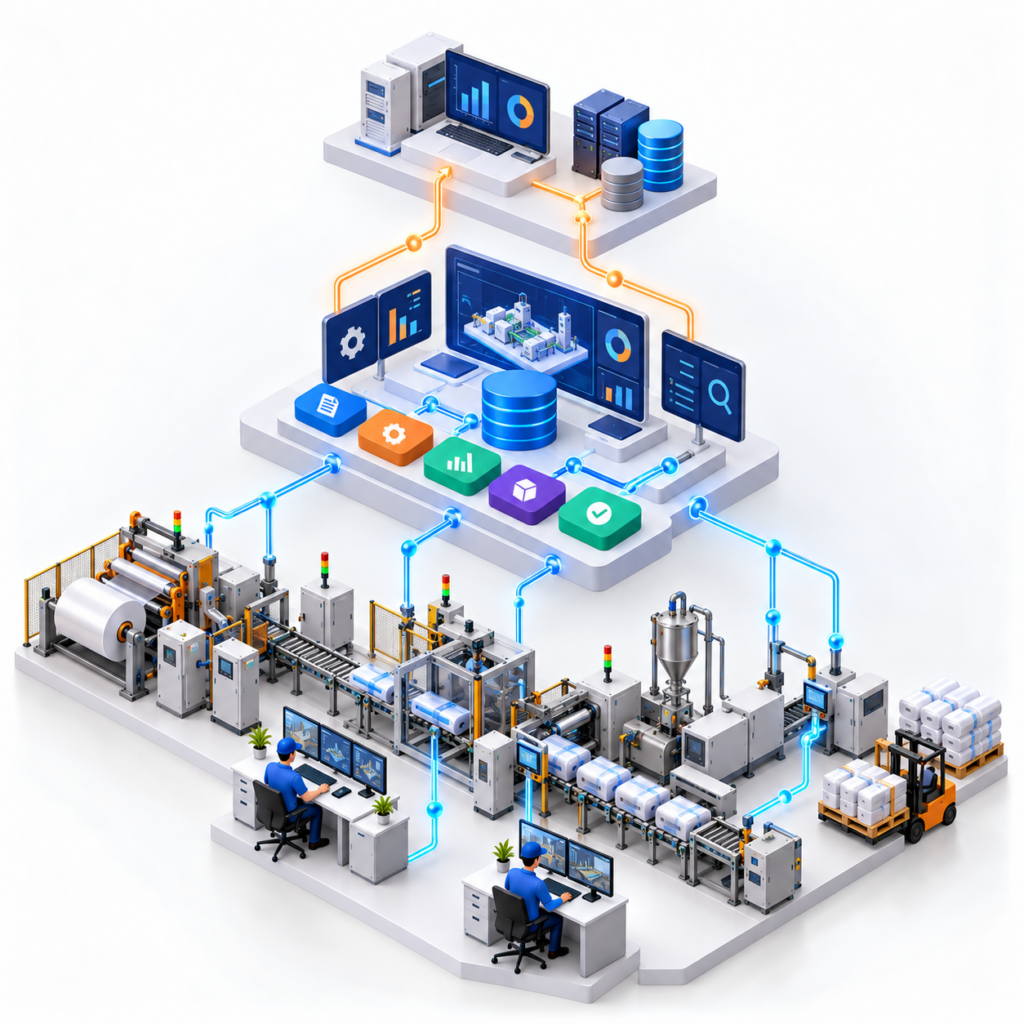
How Does It Work? Architecture
Machine and PLC layer. PLCs hold the real-time machine state, counts and faults.
Connectivity layer. Ignition reads this data through OPC UA, device drivers or MQTT. OPC UA is a vendor-neutral industrial standard maintained by the OPC Foundation.
Gateway and database. The Ignition Gateway runs tag logic, alarms and scripts. A SQL database stores production events, orders and history.
MES layer. This layer turns raw signals into production meaning. For example, “machine stopped” becomes “downtime event, reason: changeover, order 4521.”
ERP layer. ERP sends production orders down and receives confirmations and consumption back up.
Key Capabilities
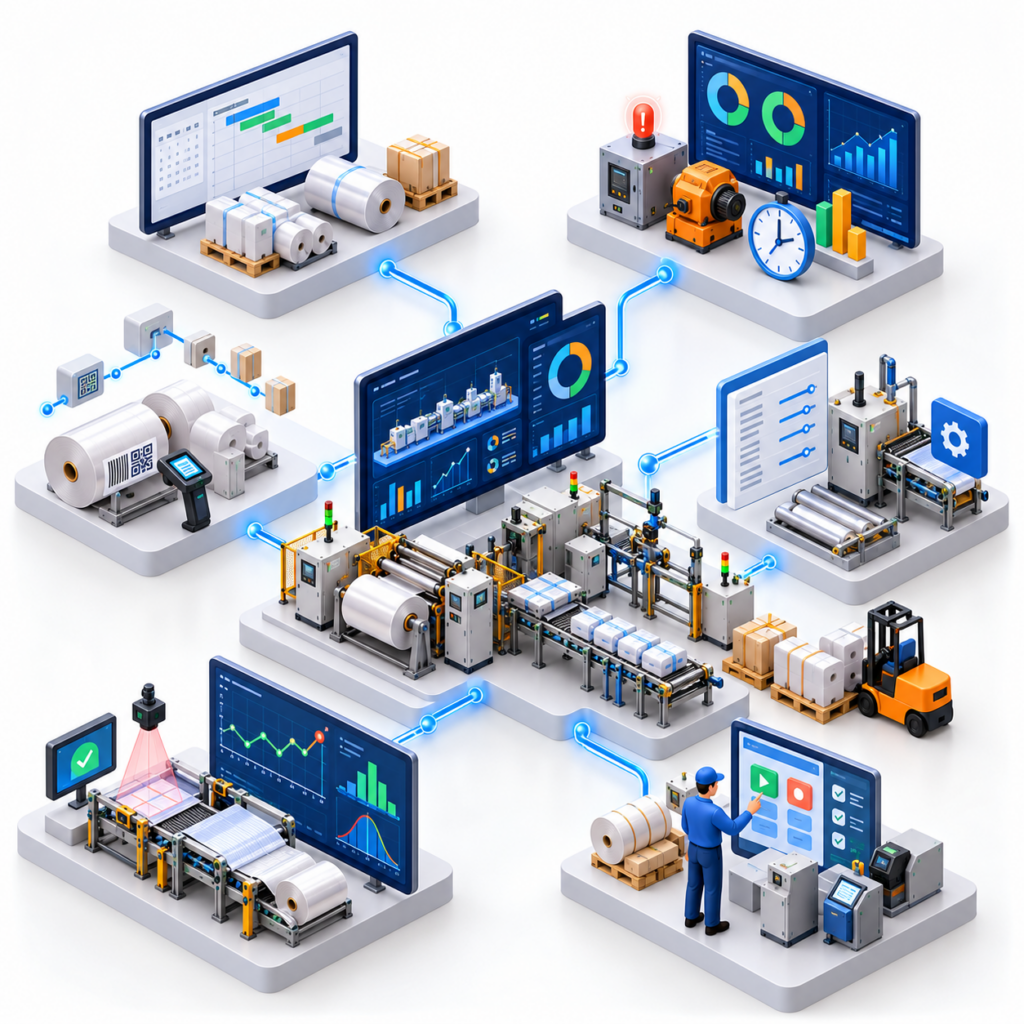
- Production tracking: counts, order progress and schedule status.
- OEE and downtime: availability, performance and quality calculations, with operator-entered or automatic downtime reasons.
- Track and trace: lot, serial and genealogy records.
- Recipe and parameter management: versioned setpoints sent to equipment.
- Quality and SPC: in-process checks and statistical control charts.
- Operator interfaces: screens for order start, downtime reasons and material checks.
Ignition MES vs a Packaged MES
Factor | Ignition-Based MES | Packaged MES |
Starting point | Platform plus modules | Pre-built product |
Flexibility | High, with custom workflows | Moderate, vendor-defined |
Engineering effort | Higher for configuration and design | Lower initially, heavy customization if it doesn’t fit |
Connectivity | Built into the same platform | Often separate integration |
Best fit | Unique processes, brownfield plants, phased rollout | Standard, regulated or highly templated processes |
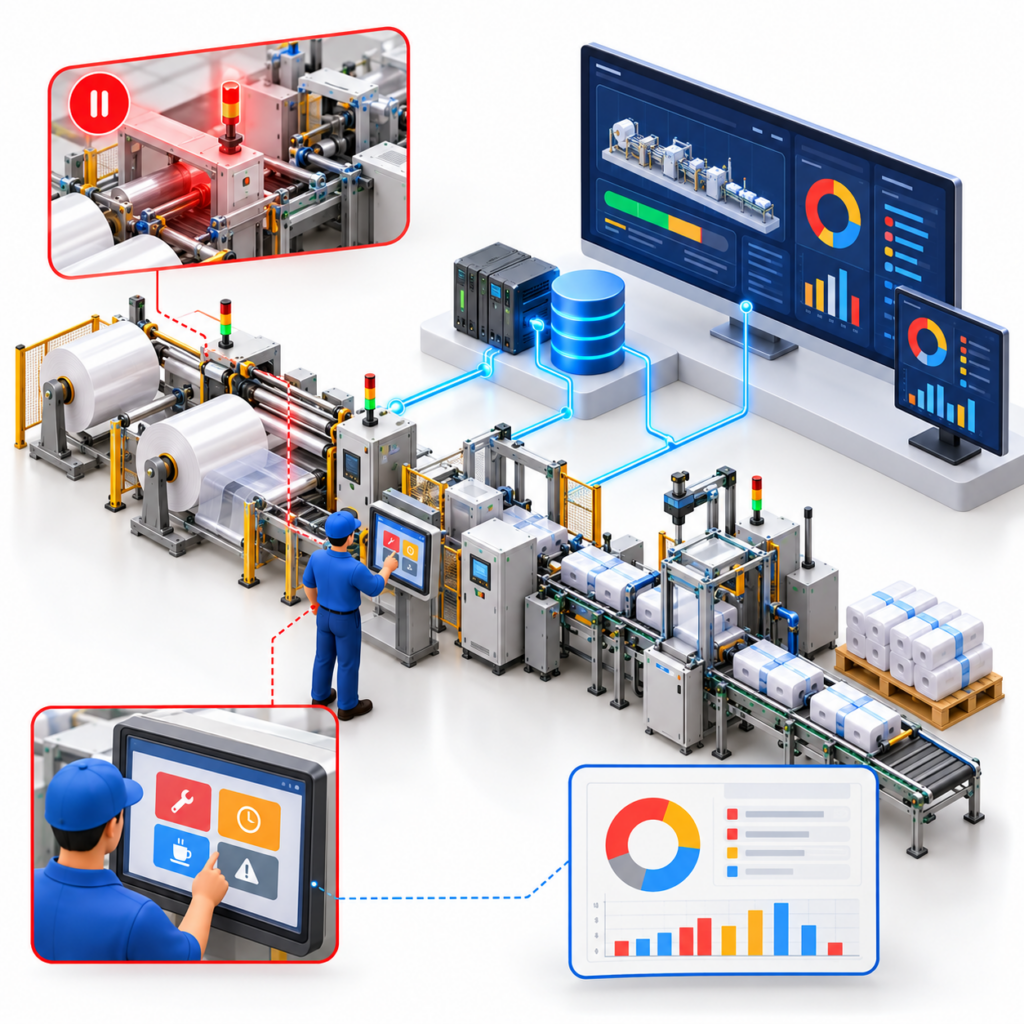
Example: Packaging Line Downtime
- Situation: A packaging plant records downtime on paper at shift end.
- Problem: Reasons are inconsistent, and short stops are missed.
- Approach: Machine-state and count signals are read from the PLC through OPC UA into Ignition. When the line stops, the operator screen prompts for a reason.
- Data captured: Machine state, counts, order number, downtime reason and duration.
- Outcome: Supervisors see current order progress and a downtime breakdown. Any improvement would need to be measured against a baseline from that plant.
Benefits and Challenges
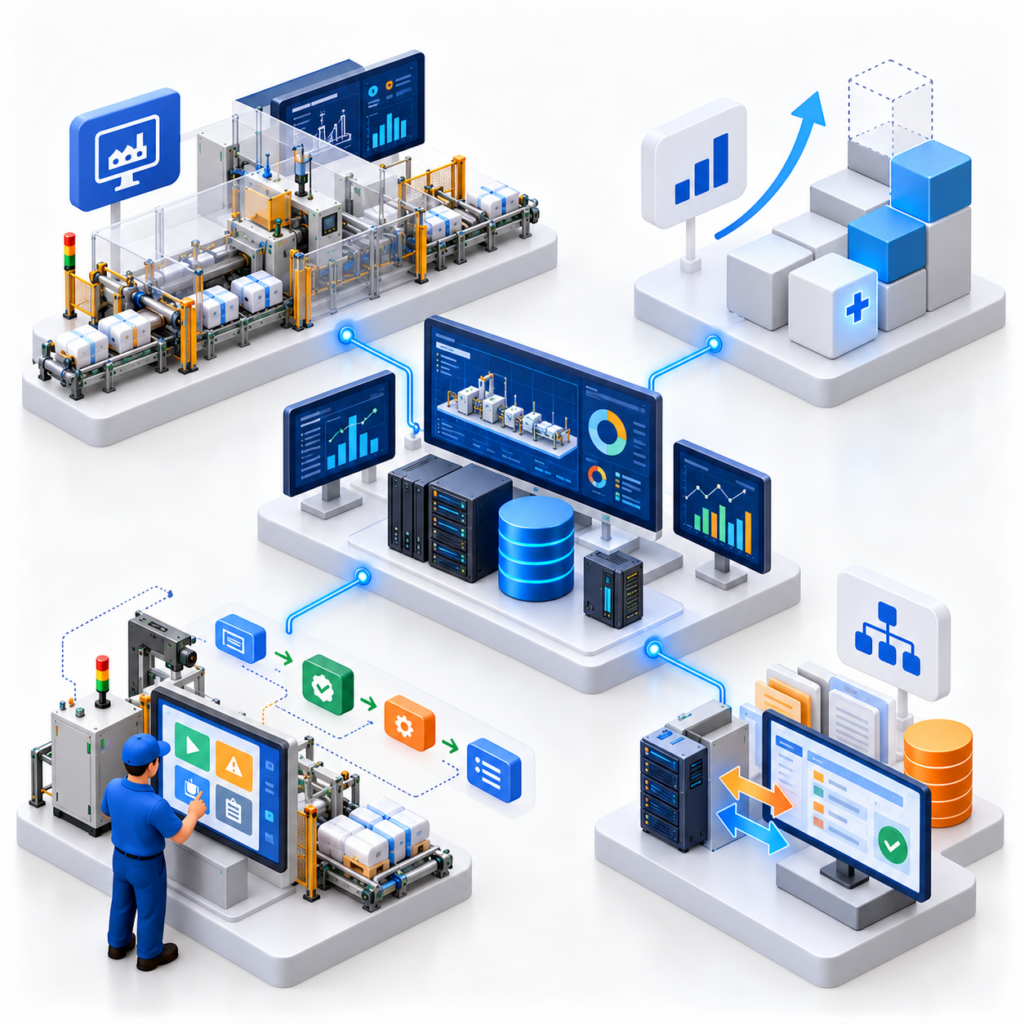
Benefits
- Machine connectivity, SCADA-style visualization and MES live on one platform.
- You can start small and add functions as needs grow.
- Workflows can be adapted to the actual process.
- ISA-95-aligned structures support integration with ERP.
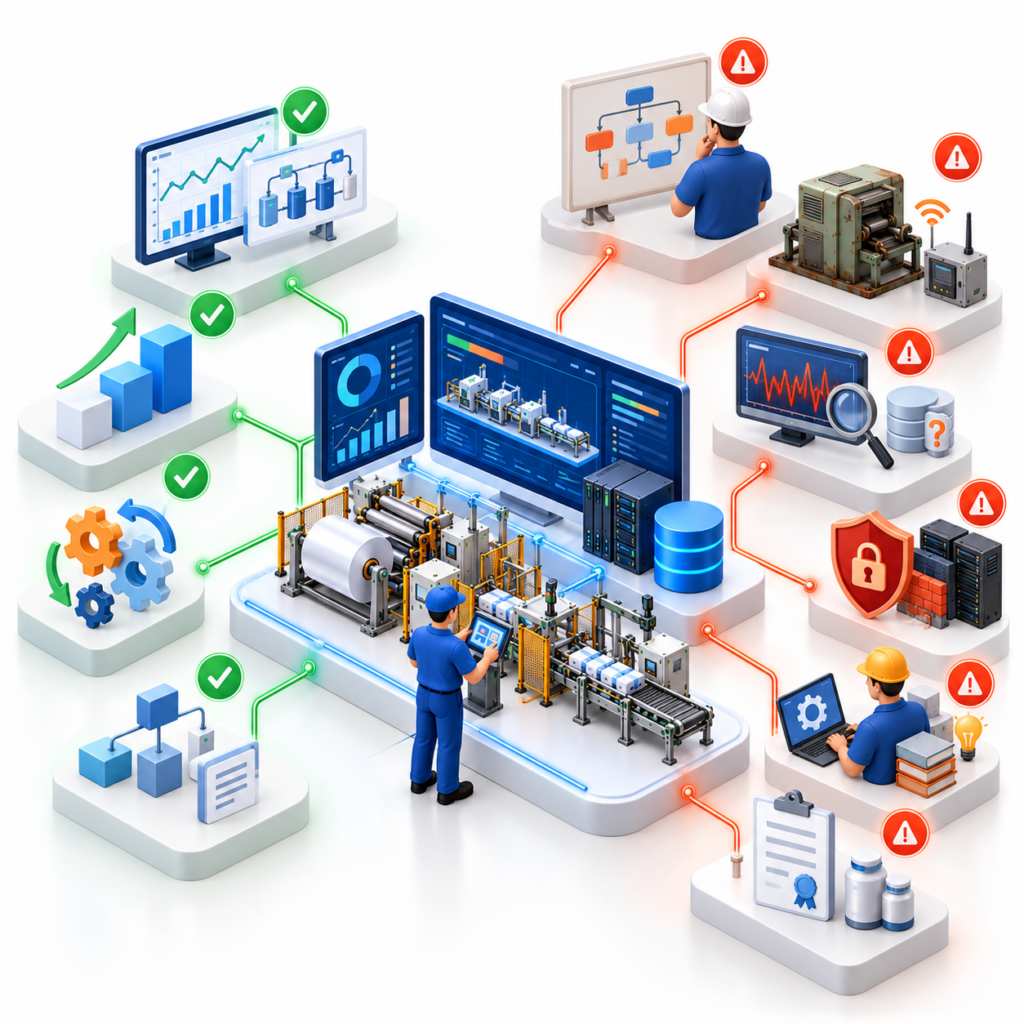
Challenges
- Design effort: the plant must define its own data model, events and workflows.
- Legacy equipment: older machines may need gateways or added sensors.
- Data quality: inconsistent signals or tag naming undermine OEE accuracy.
- Cybersecurity: OT-IT connections need segmentation and access control.
- Skills: long-term support needs engineers who know both the platform and manufacturing operations.
- Compliance: heavily regulated industries need validation planning and should check requirements early.
When It Fits, and When It May Not
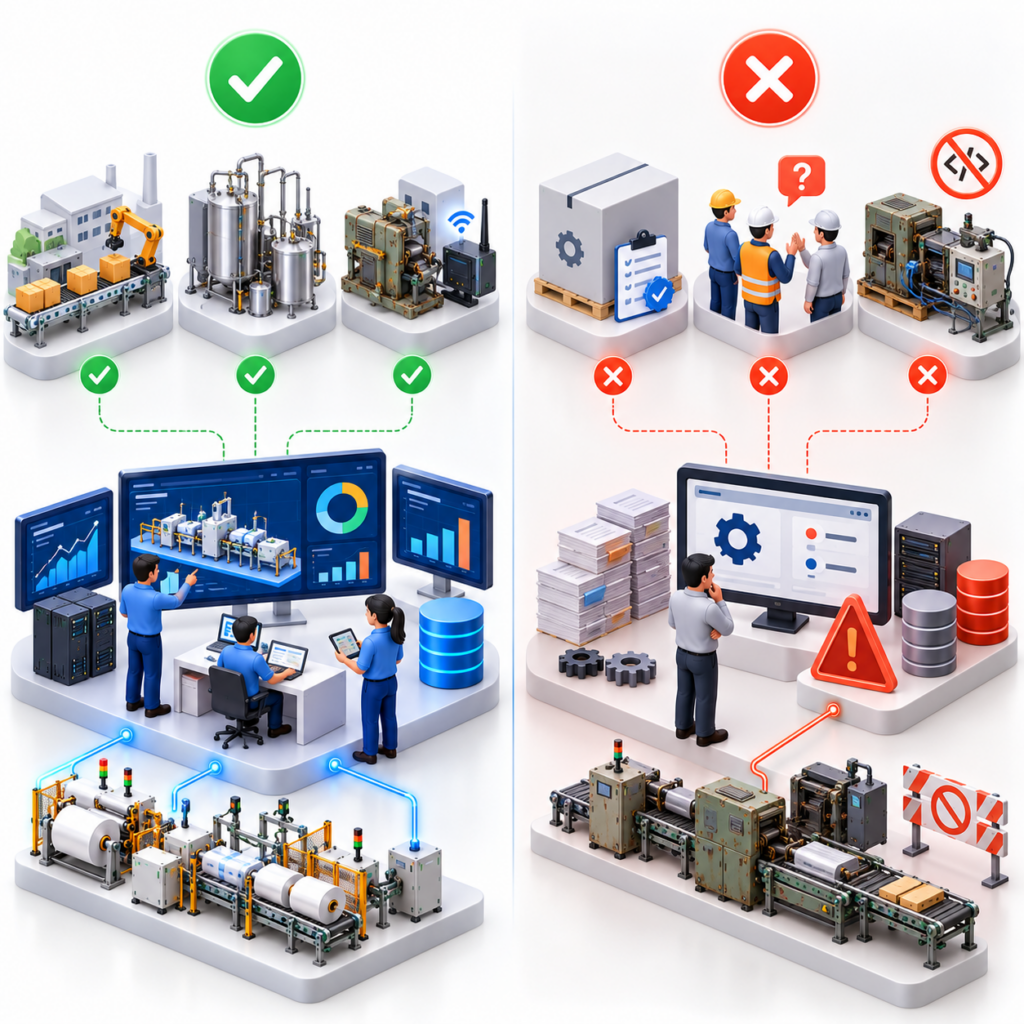
Often a good fit: discrete or batch manufacturing, brownfield plants with mixed equipment, and companies wanting phased digital transformation.
May not fit: plants wanting a fixed, vendor-validated package with minimal configuration, or teams without engineering resources to maintain it.
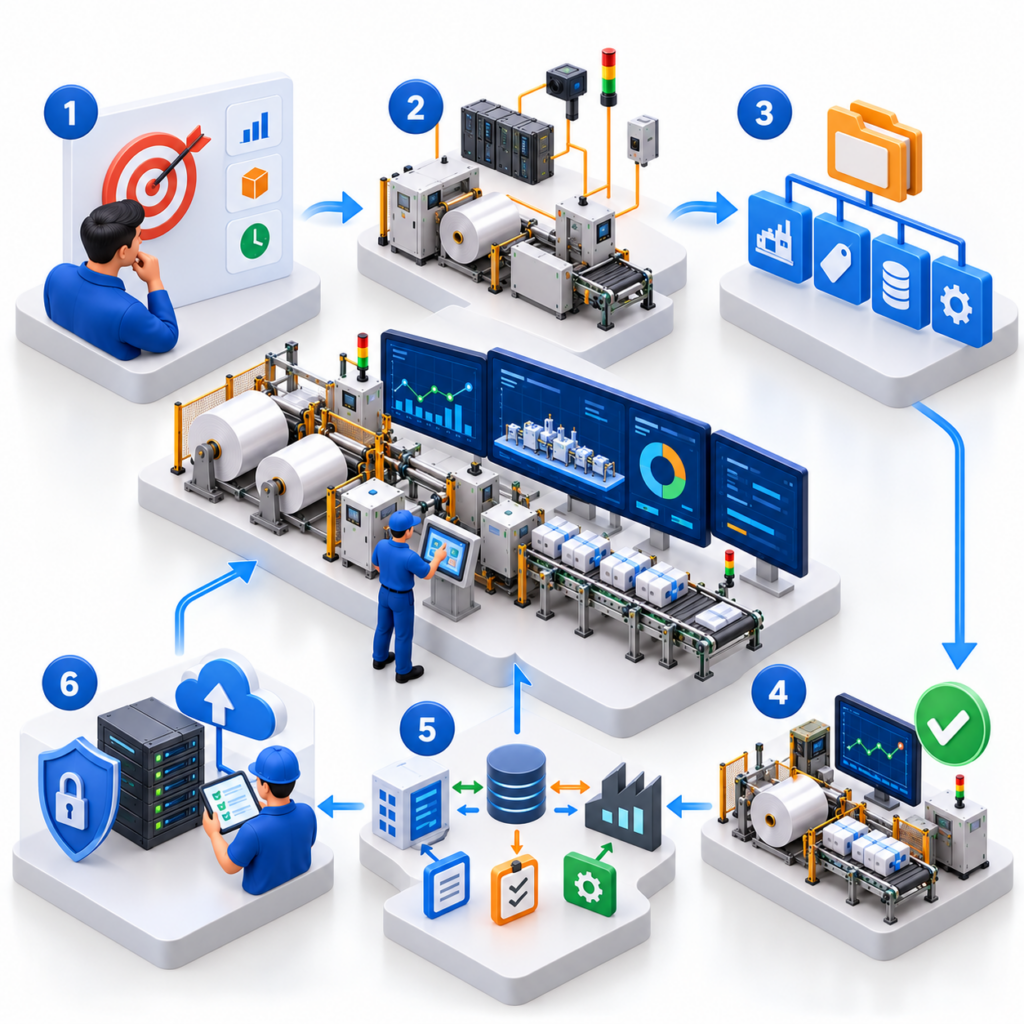
Implementation Checklist
- Define the problem first (visibility, traceability or downtime).
- Map machines, signals and existing systems.
- Agree on a standard data model and naming convention.
- Pilot on one line before scaling.
- Define ERP integration points and data ownership.
- Plan security, backup and support responsibilities.
Conclusion
An Ignition-based MES solution gives manufacturers a flexible way to add production execution to a platform that already handles machine connectivity, data and visualization. Its strength is adaptability: you can start with one line and one problem, such as downtime or traceability, and extend from there.
That flexibility comes with responsibility. The plant must define its data model, integrations, security and support ownership, and regulated industries need to plan validation early. If your process is standard and you want a fixed, vendor-validated package, a packaged MES may suit you better. If your equipment is mixed and your workflows are specific, an Ignition-based approach deserves serious evaluation.
Contact our Ignition MES specialists directly:
Email: sales@ingsol.com
Phone (India): +91 95608 11774
Phone (US): +1 347 570 2629
Our engineers will review your current setup and outline a practical upgrade path built for your plant.