
Cost of ignition scada for mid size plant
An Ignition SCADA system for a mid-size plant has a software cost that is easy to calculate and a project cost that is not. Inductive Automation publishes its list prices, and licensing is per server, so the software portion of a typical single-site system lands in the low tens of thousands of US dollars. Engineering, hardware and integration are scoped separately and vary widely with the plant
What Is Ignition SCADA Architecture?
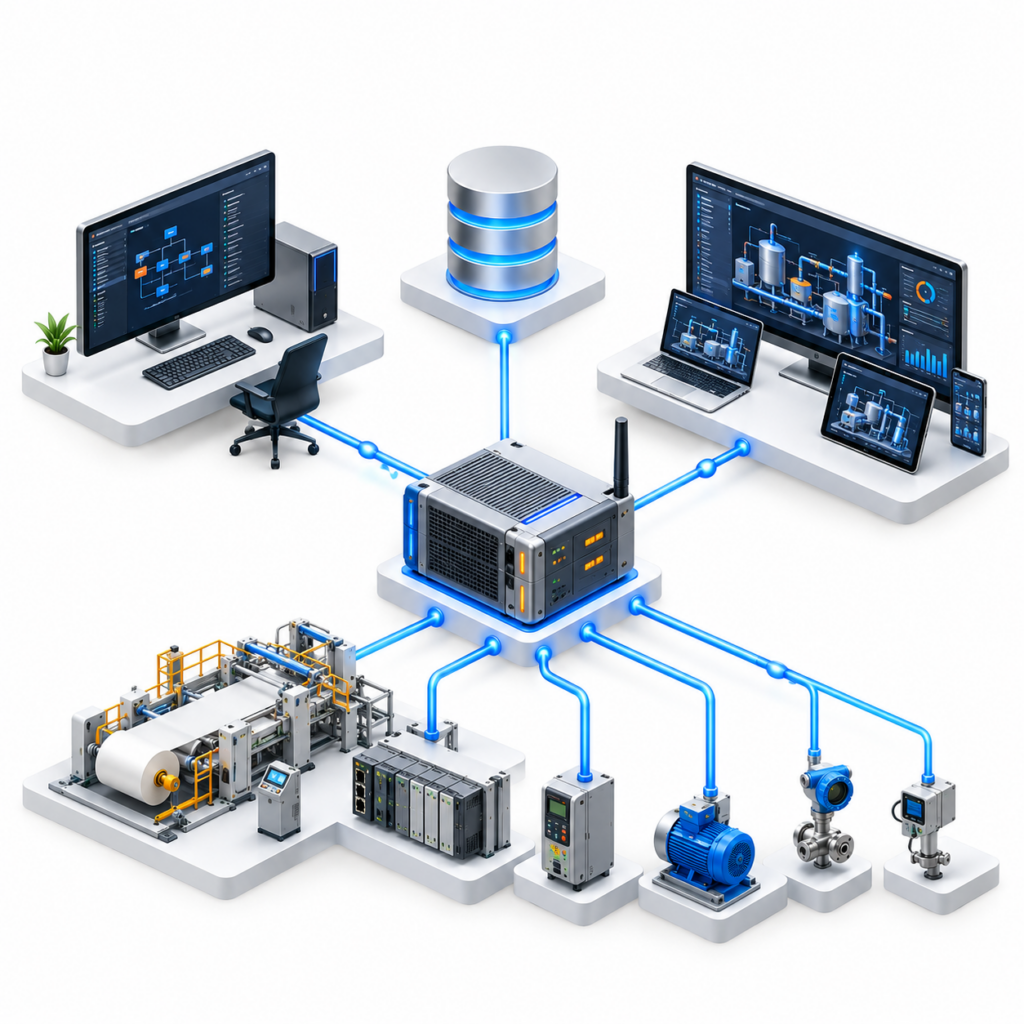
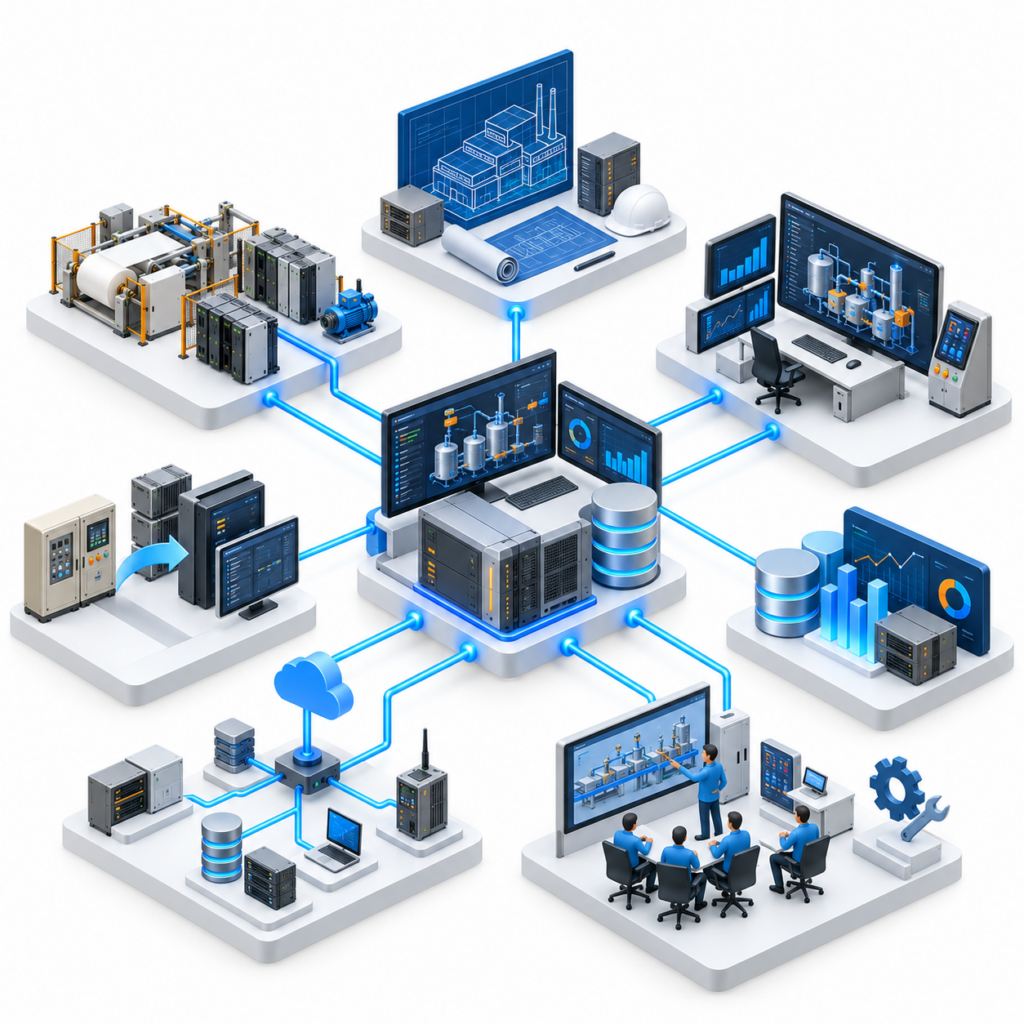
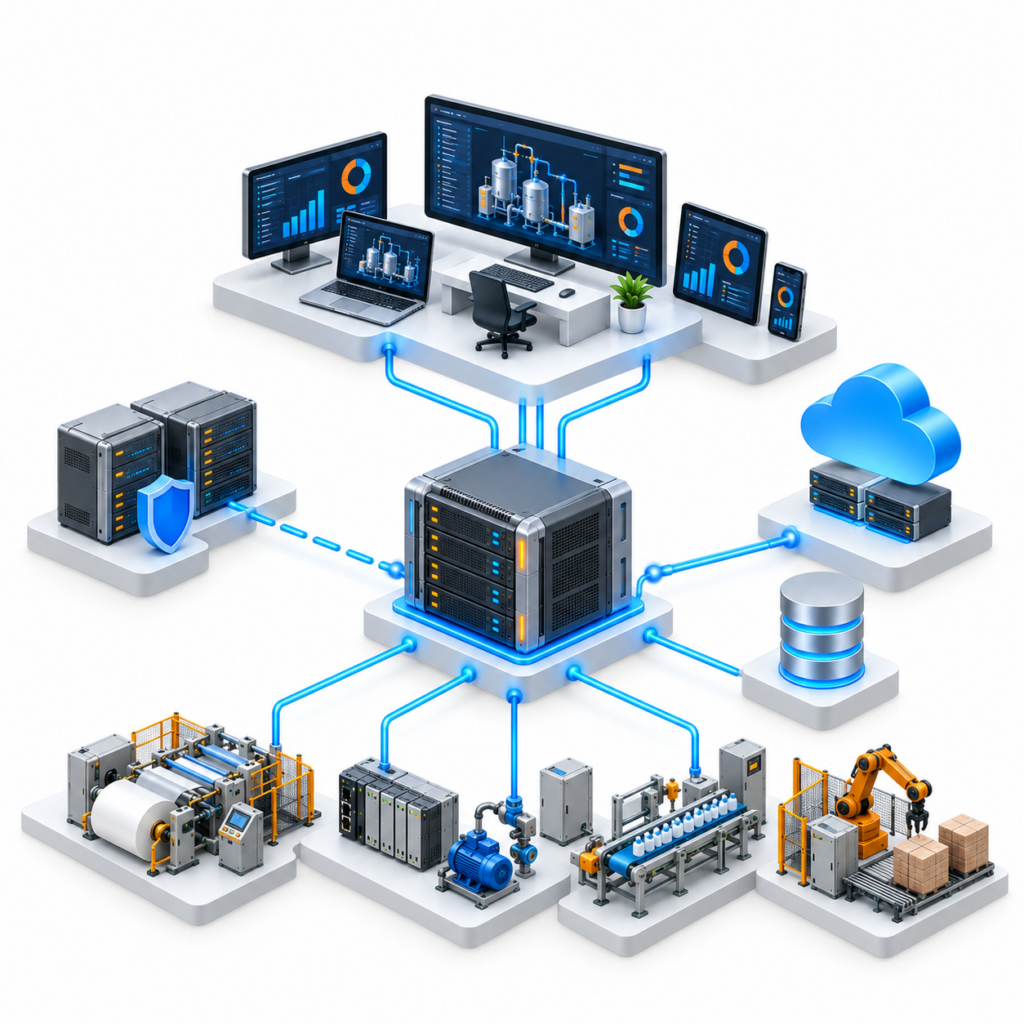
Ignition SCADA architecture is the way one or more Ignition Gateways are arranged to connect to field devices, store data and serve operator screens. Inductive Automation uses the term system architecture for how the Gateway or Gateways are set up in a facility. The Gateway is the Ignition server, and everything else connects to it
Core building blocks
- Field devices: PLCs, drives, meters and instruments on the machines.
- Gateway: the Ignition server. It includes a built-in OPC UA server for device connectivity, holds tags, alarms and security, and runs the modules you license.
- Database: a SQL database, or the Historian modules, that stores history, alarms and production data.
- Designer: the engineering tool where developers build tags, screens, scripts and alarm logic.
- Clients: web-launched operator screens that connect to the Gateway. Licensing allows unlimited clients, so adding operators does not add license cost.
.
How Does It Work? Architecture
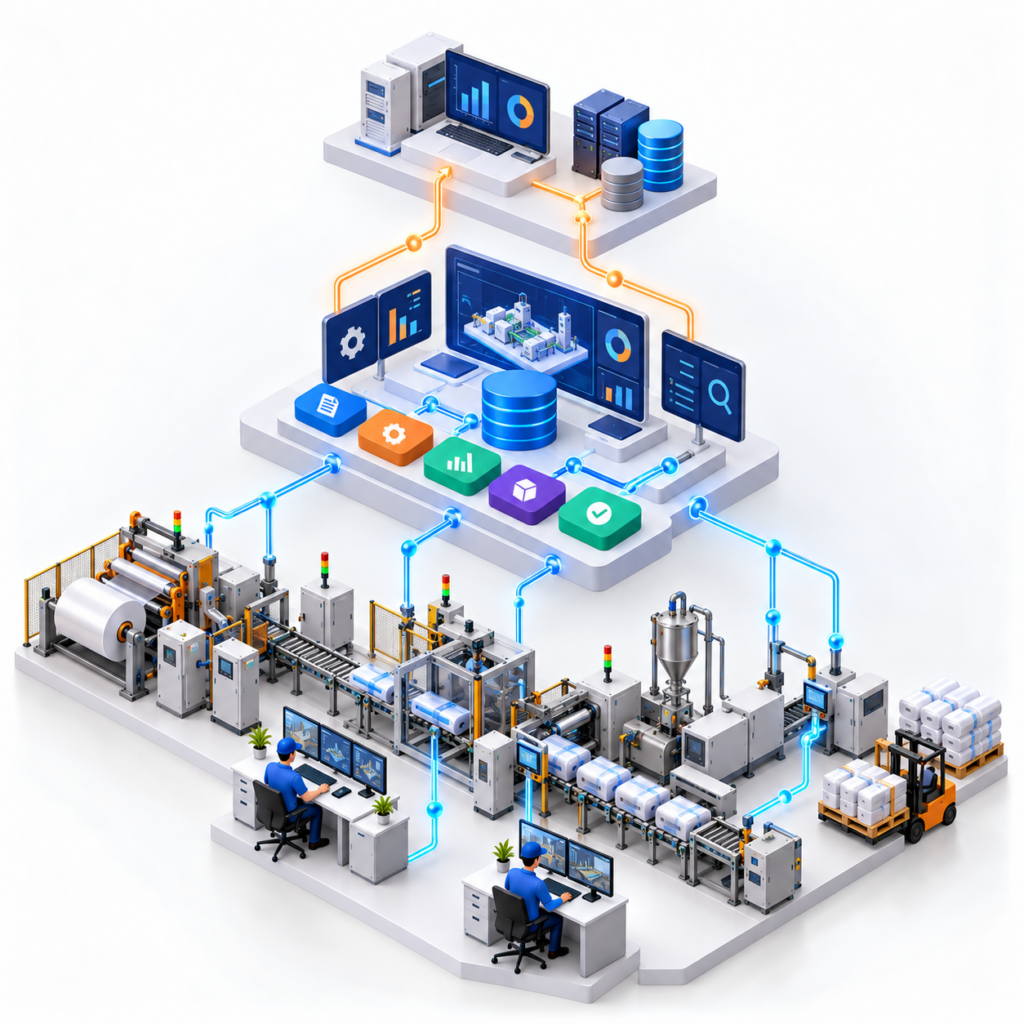
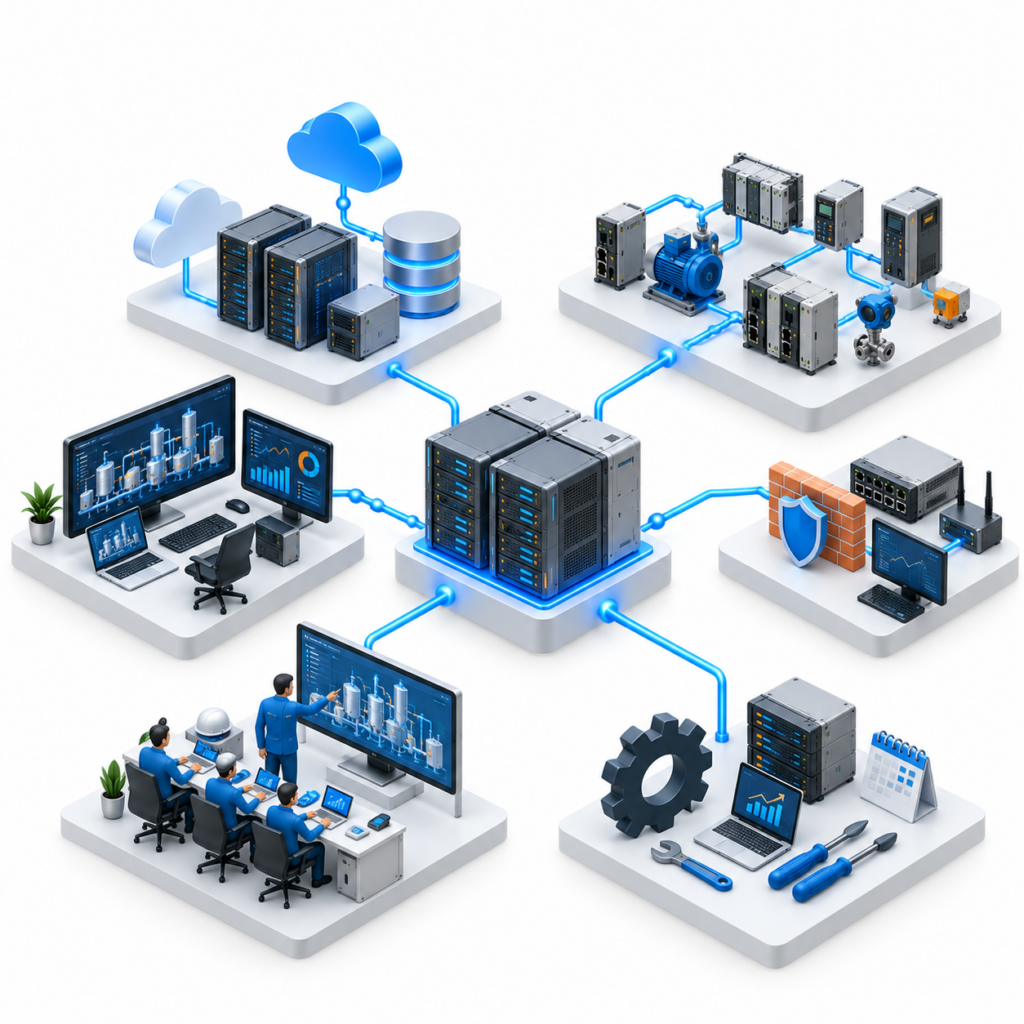
Machine and PLC layer. PLCs hold the real-time machine state, counts and faults.
Connectivity layer. Ignition reads this data through OPC UA, device drivers or MQTT. OPC UA is a vendor-neutral industrial standard maintained by the OPC Foundation.
Gateway and database. The Ignition Gateway runs tag logic, alarms and scripts. A SQL database stores production events, orders and history.
MES layer. This layer turns raw signals into production meaning. For example, “machine stopped” becomes “downtime event, reason: changeover, order 4521.”
ERP layer. ERP sends production orders down and receives confirmations and consumption back up.
Common architectures
Architecture | How it is arranged | Typical fit | License impact |
Standalone | One on-premise Gateway connected to a SQL database, PLCs and clients | Where most users start; a single plant | One server license |
Redundant pair | A master and a backup Gateway | Processes where downtime is costly | Both nodes need a license |
Scale-out | A front-end Gateway hosts clients; one or more back-end Gateways handle PLC communication and history | Large plants with many devices, tags and clients | One license per Gateway |
Hub and spoke | Each site runs its own Gateway; a central hub collects history | Multi-site companies | One license per Gateway |
In a scale-out system, Gateways share tags over the Gateway Network, and performance is improved by adding another Gateway where needed. In hub and spoke, store-and-forward prevents data loss when a connection to the database drops, and each site keeps running with its own history, alarms and clients if the hub is unreachable.
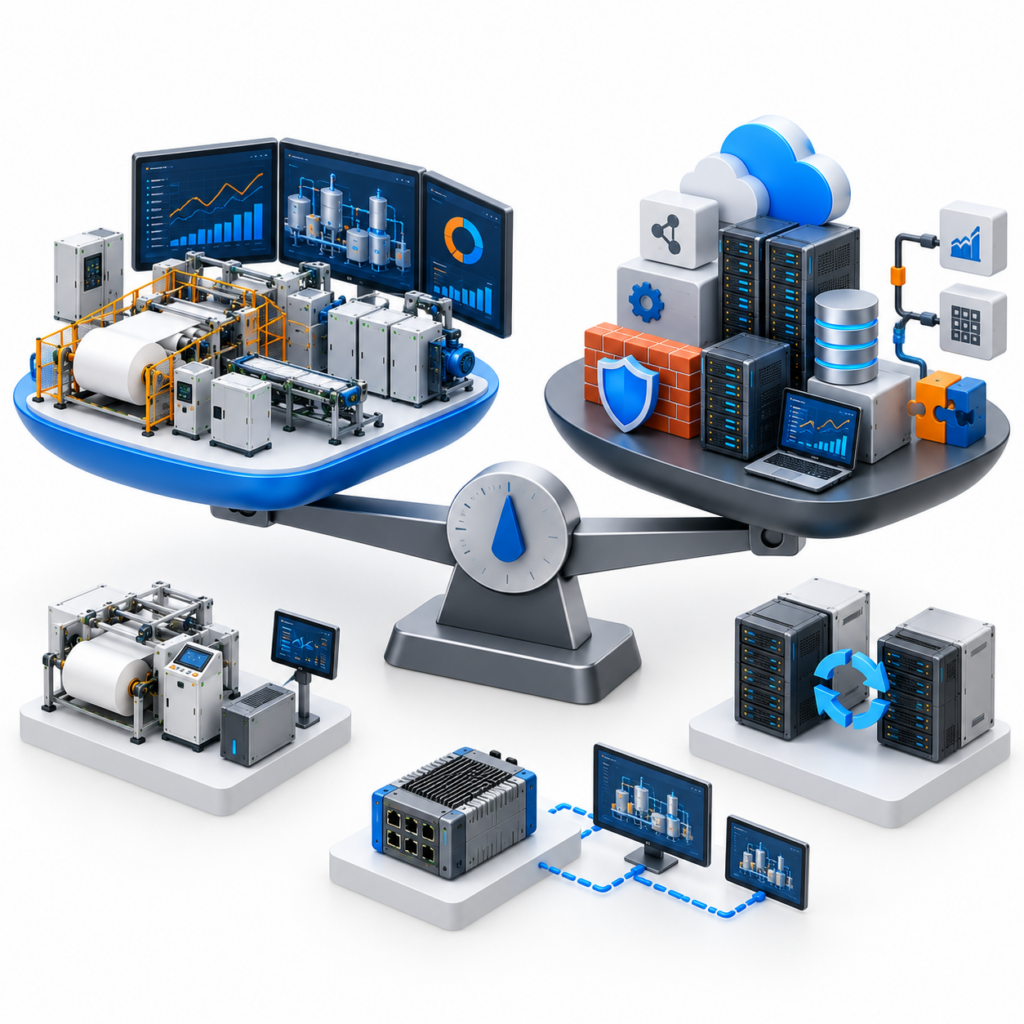
Analysis: for a mid-size plant, a standalone Gateway is the usual starting point. Add redundancy when an outage would stop production or lose data, and move to scale-out only when one server can no longer carry the devices, tags and clients. Design the architecture first, because it decides how many licenses you buy.
Ignition SCADA Services
Ignition is a platform, so most projects combine software with engineering services. The main service areas are:
Service | What it involves | Typical output |
Architecture and sizing | Choose standalone, redundant or scale-out; size servers, databases and networks | Architecture diagram and license list |
Device connectivity | Connect PLCs and legacy equipment through OPC UA and device drivers | Tag structure and tested connections |
Application development | Build HMI screens, alarms, trends, reports and user roles | Ignition project |
Historian and data | Configure history, database tables and production or downtime data | Data model and historian setup |
Migration | Inventory screens, tags and alarms of an older SCADA, then plan the cutover | Migration plan and parallel run |
Integration | Connect MES, ERP, databases and MQTT-based IIoT platforms | Documented interfaces |
Training and support | Operator and engineer training, site acceptance testing, support plan | Trained team and handover |
None of these has a published price, so service cost is scoped per project. INGSOL’s work spans SCADA, MES, IIoT, OT-IT integration and brownfield modernization, which are the areas these services draw on.
Ignition SCADA Starting Price
Starting point | What you get | List price (USD) |
Platform only | Core Gateway; add modules later | $1,200 |
Platform + Application Building suite | Web-based screens (Perspective) and reporting | $14,700 |
+ Industrial Historian suite | Adds stored history | $18,200 |
+ Alarm Management suite | Adds alarm notification | $21,400 |
Ignition’s starting price is US$1,200 for the platform license, based on the vendor’s published list price. That covers the core Gateway only; operator screens, reporting, historian and alarm notification are added as modules or suites.
The totals are our calculations from published prices, before support, taxes, hardware and services. Annual support adds 16% to 24% of the retail price; on the $14,700 option that is $2,352 to $3,528 a year.
You do not have to buy everything at once. Modules and suites can be added later, and if you convert modules into a suite you pay the suite’s retail price minus the retail value of the modules you already own. A free, fully functional trial lets you prototype first, and Ignition Edge suits small, single-project needs. Confirm current prices and module needs with Inductive Automation or an integrator before budgeting.
How Is Ignition SCADA Priced?
Ignition is licensed per server, not per tag, client or designer. One server license gives unlimited clients, tags and connections, so cost does not rise as you add screens, operators or data points. Standard Ignition and Ignition Edge licenses are perpetual, one-time purchases, while Ignition Cloud Edition carries a usage-based fee.
The limit is hardware, not the license: a server can be overloaded if pushed too hard, so large plants often use several servers, and each server needs its own license.
In practice, a mid-size plant’s software cost is built from four parts: the platform license, the modules it needs, an optional redundant license, and an annual support plan.
Ignition Module and Suite Prices (Published List Prices)
These are the platform and Solution Suite prices shown on Inductive Automation’s pricing page, in US dollars.
Item | List price (USD) | Includes |
Ignition platform (server license) | $1,200 | Core gateway |
Application Building suite | $13,500 | Perspective, Reporting |
Industrial Historian suite | $3,500 | Historian Core, SQL Historian |
Alarm Management suite | $3,200 | Alarm, SMS, Twilio and Voice Notification |
DataOps suite | $5,500 | Event Streams, SQL Bridge, Web Development |
Enterprise Integration suite | $4,100 | Cirrus Link MQTT Engine and Transmission, Kafka and MongoDB connectors |
Prices change, and other individual modules (such as Vision) are priced separately, so confirm current figures on the official price list before budgeting. Your quote may also differ through a distributor or integrator, in a different currency, or with taxes added.
Budget for a Mid-Size Plant
Example (hypothetical, not an INGSOL project): a single-site plant with several production lines, mixed PLC brands, web-based operator screens, reports, trend history and alarm notification. Because tags and clients are unlimited, the license price does not depend on how many signals the plant has.
Line item | One server | Redundant pair |
Platform + Application Building + Historian + Alarm Management | $21,400 | up to $42,800 |
Annual support (TotalCare, 20%) | $4,280 | $8,560 |
Annual support range (BasicCare 16% to PriorityCare 24%) | $3,424–$5,136 | $6,848–$10,272 |
Analysis: the license fee for a single server is about US$21,400 at list price, and a redundant pair roughly doubles it, because the backup node generally needs most or all of the same modules. Support is 16%, 20% or 24% of retail software price, billed annually, for BasicCare, TotalCare and PriorityCare respectively. Skipping support has a cost too: a major version upgrade without it costs 65% of current retail price, which would be about $13,910 on the single server above.
The example excludes the Vision module, DataOps and Enterprise Integration suites, which would be added only if the plant needs SQL integration or MQTT-based data sharing with enterprise systems.
Project Costs That Are Not in the License Quote
The license is only part of the budget. These items depend on your plant and cannot be priced reliably without scoping:
- Server infrastructure: physical or virtual servers, operating system, backup and, for redundancy, a second node.
- Device connectivity: drivers, OPC UA servers or gateways for PLCs and older equipment, especially in brownfield plants with mixed protocols.
- Engineering: tag structure, screens, alarm design, historian configuration, reports and testing.
- Networking and cybersecurity: segmentation, remote access and user management between OT and IT networks.
- Training and commissioning: operator training, site acceptance testing and handover.
- Ongoing maintenance: support plan, upgrades and changes as production evolves.
One industry comparison site notes that multi-server high availability, thin-client concurrency, notification options and integrator implementation raise total cost. We found no reliable public benchmark for implementation cost, so any figure quoted without a scope should be treated cautiously.
Ignition Cost Model vs Tag-Based SCADA Licensing
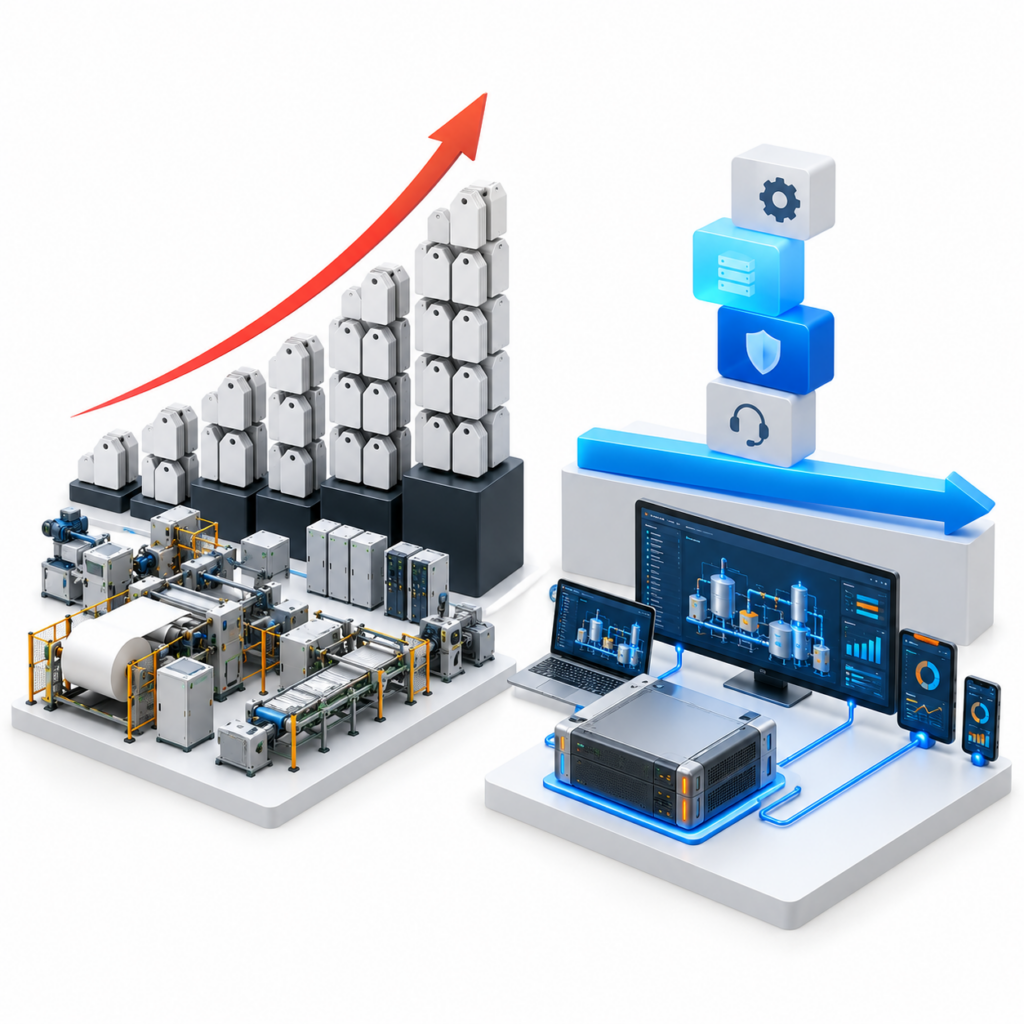
Many SCADA products price by I/O tag count, so cost grows with plant size. For example, one comparison source lists VTScada runtime licensing from about US$3,395 at 1,000 I/O points, with development and other features adding cost. ICONICS pricing is quote-based and typically driven by tag counts, client licenses and add-on modules. Ignition’s model shifts the variable cost from tag volume to modules, redundancy and support. Neither approach is universally cheaper; the comparison depends on tag count, number of sites and required features.
Limitations and Trade-Offs
doubles license cost. Small installations such as a single-machine HMI may not need a full gateway license; Ignition Edge is limited to one project, one tag provider and two concurrent client views. Costs also rise when a plant needs many modules, remote access, or complex integration with ERP and MES systems.
What to Define Before Requesting a Quote
- Number of servers and whether redundancy is required
- Modules needed: visualization, historian, alarming, integration
- PLC brands, protocols and legacy equipment to connect
- Number of screens, reports and user roles
- Hosting model: on-premise, virtual or cloud
- Support level and upgrade policy
- Training needs and who will maintain the system
Conclusion
For a mid-size plant, Ignition’s published pricing makes the software line of the budget unusually easy to estimate: a per-server license, the modules you need, support and, if required, a second server for redundancy. The harder number is the project around it. Machine connectivity, screen and alarm design, infrastructure and training depend on your plant, and they are where a detailed scope matters most. Before comparing quotes, define your servers, modules, equipment and support needs, then test your assumptions with the free trial. If you are scoping an Ignition SCADA project, INGSOL can help map your machines, data and workflows to a realistic budget.
Contact our Ignition SCADA specialists directly:
Email: sales@ingsol.com
Phone (India): +91 95608 11774
Phone (US): +1 347 570 2629
Our engineers will review your current setup and outline a practical upgrade path built for your plant.