
The Things Network
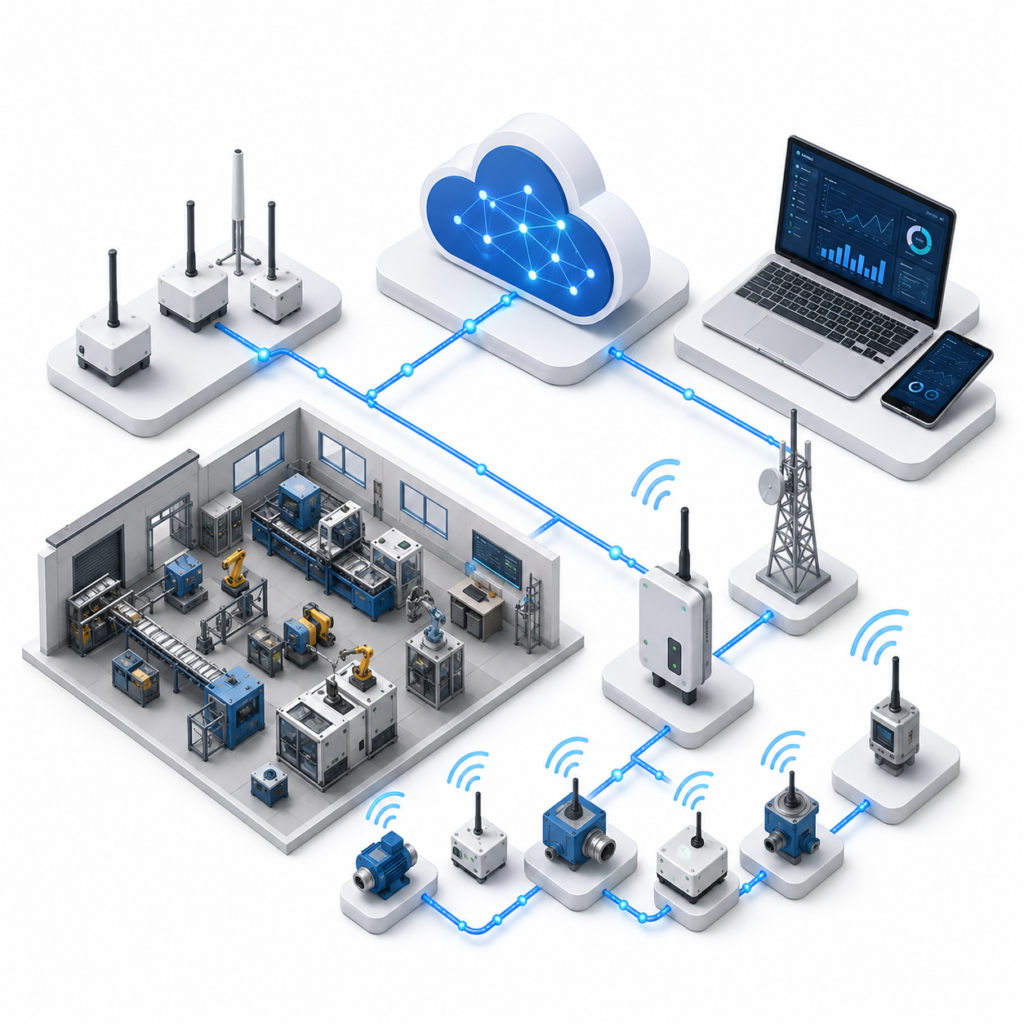
The Things Network: Managing LoRaWAN Connectivity Without Running Your Own Servers
Deploying LoRaWAN sensors across a factory or a group of sites solves the connectivity problem at the device level, but every one of those sensors still needs somewhere to send its data, securely and reliably. The Things Network is the managed LoRaWAN network server INGSOL uses to handle that layer, particularly for manufacturers who would rather not operate their own network infrastructure. This page explains what The Things Network is, how INGSOL uses it, and how it compares with a self-hosted alternative.
What Is The Things Network?
The Things Network (TTN) is a LoRaWAN network server that manages the connection between LoRaWAN sensors, gateways and the applications that consume their data. It authenticates devices, routes incoming sensor data to the correct destination, and provides the management tools needed to operate a LoRaWAN deployment, without the operator having to run and maintain that infrastructure themselves.
The Things Network is not a sensor manufacturer or an analytics platform, and it does not process or visualise data itself. Its role sits specifically at the network layer, between LoRaWAN gateways on one side and applications such as ThingsBoard, a Unified Namespace, or custom integrations on the other.
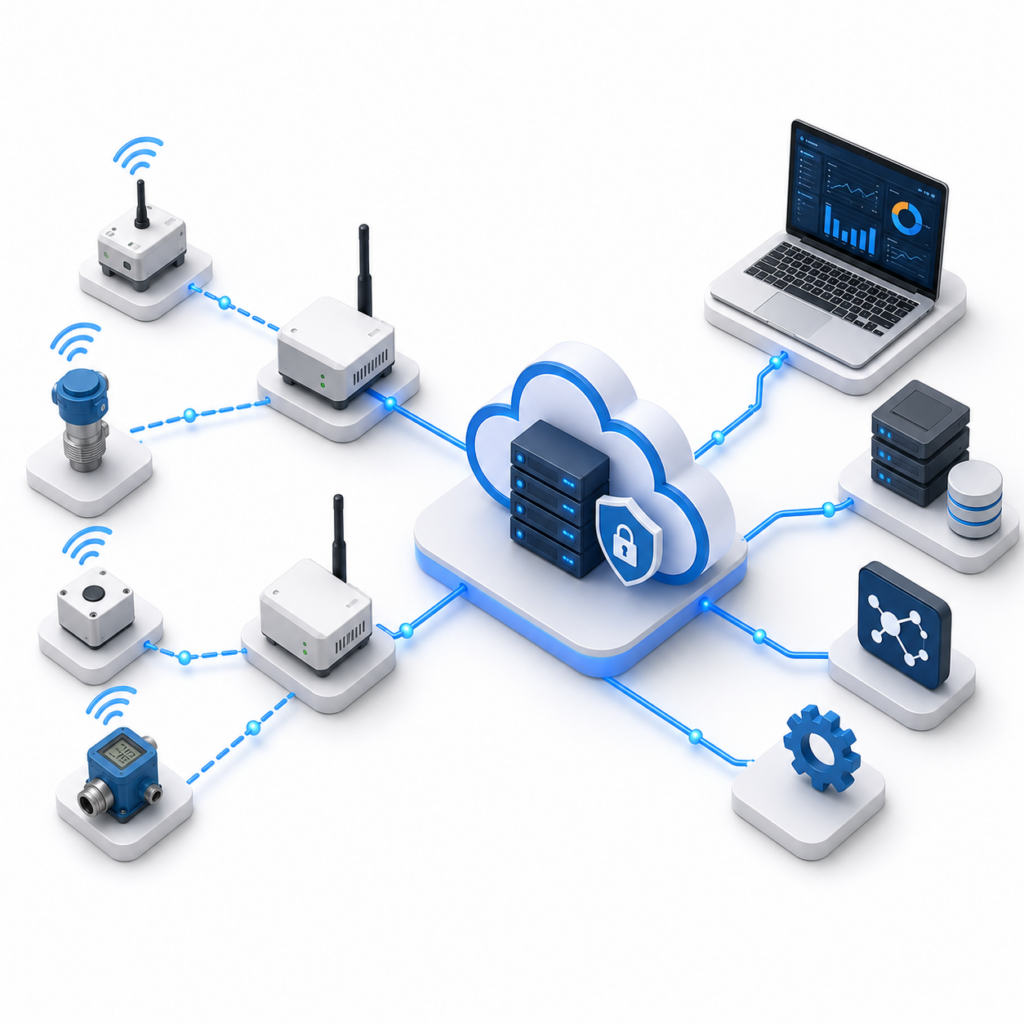
Why INGSOL Uses The Things Network
Managed infrastructure:
As a managed service, The Things Network removes the need to install, patch and maintain your own network server infrastructure, reducing the ongoing operational burden on your IT and OT teams.
Suited to distributed and multi-site deployments:
The Things Network is well suited to organisations with sensors spread across multiple sites, since it provides a consistent, centrally managed network layer without requiring separate infrastructure at each location.
Built on an open standard:
As an implementation of the open LoRaWAN standard, devices and gateways from different manufacturers can connect through The Things Network without proprietary lock-in.
Straightforward integration:
The Things Network integrates with common IoT platforms and supports standard protocols for forwarding data onward, making it straightforward to connect to ThingsBoard, Node-RED or a Unified Namespace.
Established and widely adopted:
As an established, widely used network server, The Things Network benefits from a large community and a track record across many industrial and non-industrial deployments.
How INGSOL Uses The Things Network in Practice
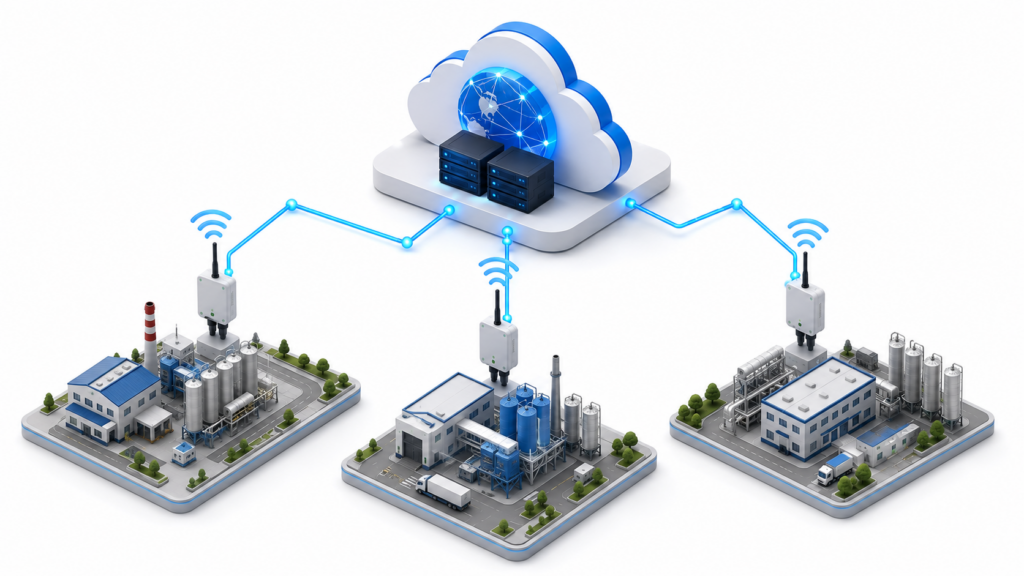
Multi-Site Sensor Connectivity
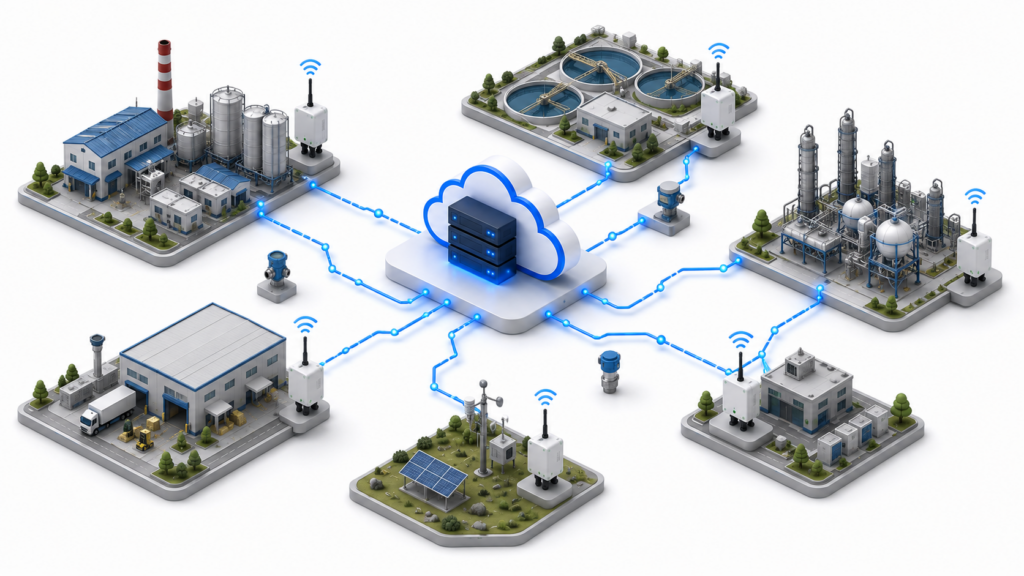
For manufacturers operating several plants or sites, INGSOL deploys The Things Network as a shared network layer, giving every site’s LoRaWAN sensors a consistent way to connect without duplicating network server infrastructure at each location.
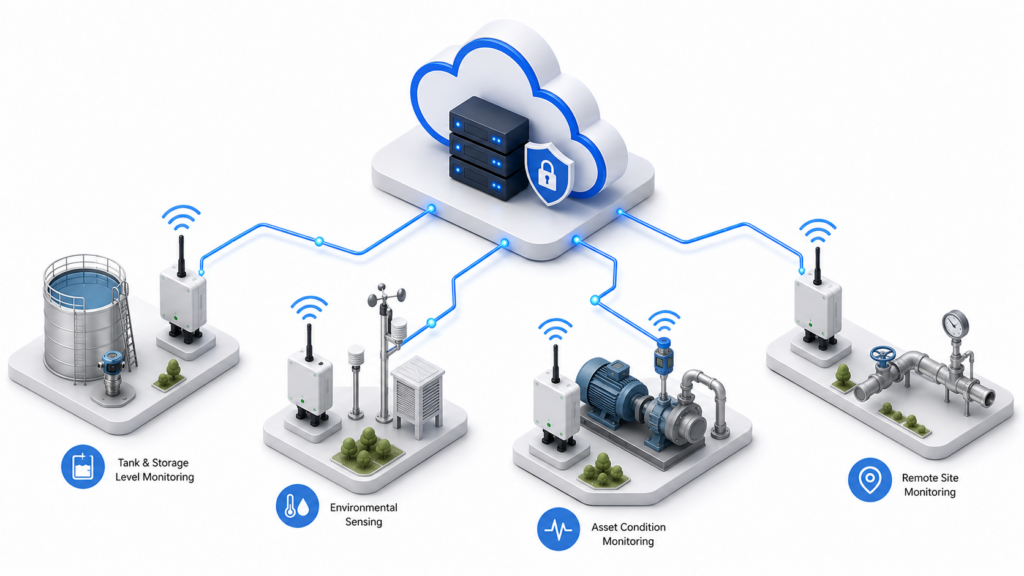
Device Authentication and Management
The Things Network handles device authentication and connection management, giving INGSOL a central point to onboard new sensors, monitor connectivity, and manage device credentials across a deployment.
Routing Data to Applications
Dashboards, or directly into a Unified Namespace where one is in place, with Node-RED handling any additional transformation or routing logic required.
Supporting Remote and Distributed Monitoring
Applications such as tank and storage level monitoring, environmental sensing, and remote asset condition monitoring, described on INGSOL’s LoRaWAN page, rely on The Things Network as the connectivity layer that gets sensor readings from the field into the rest of the technology stack.

The Things Network or ChirpStack: Choosing the Right Network Server
INGSOL supports both The Things Network and ChirpStack, a self-hosted, open-source alternative, and helps manufacturers choose based on their specific requirements. The Things Network suits organisations that prefer a managed service and want to avoid operating their own network server infrastructure. ChirpStack suits organisations with strict data governance requirements, or those that want full control over their LoRaWAN infrastructure on their own premises. Neither option is universally correct, and INGSOL’s assessment of your site, data policies and IT resourcing determines which is the better fit.
The Things Network Within the INGSOL Technology Stack

The Things Network sits between LoRaWAN gateways and sensors on one side, and the rest of INGSOL’s technology stack on the other. Data authenticated and routed through The Things Network typically flows into ThingsBoard for device management, or directly into a Unified Namespace, before reaching PostgreSQL and TimescaleDB for storage. Node-RED handles protocol translation or routing logic where needed, and Grafana or Ignition present the resulting data on dashboards alongside readings from wired and Wi-Fi connected equipment.
Why Manufacturers Choose INGSOL for The Things Network Deployment
INGSOL recommends The Things Network or ChirpStack based on an honest assessment of your site, governance requirements and IT resourcing, not a default preference.
Device onboarding, authentication and application integration are configured to reduce the ongoing management overhead on your team.
The Things Network is integrated into the same ThingsBoard, Unified Namespace and dashboard architecture used for wired and Wi-Fi connected equipment, avoiding a separate, disconnected system.
As an implementation of the open LoRaWAN standard, The Things Network avoids dependence on a single proprietary sensor or gateway manufacturer
INGSOL uses Node-RED to wire together SCADA, IoT platforms, databases and APIs across your factory, keeping integration logic visible, maintainable and adaptable as your systems evolve. Get in touch to discuss how Node-RED fits your technology stack, or a Digital Transformation Maturity Assessment for your plant.
Our Clients

















membership