
LoRaWAN
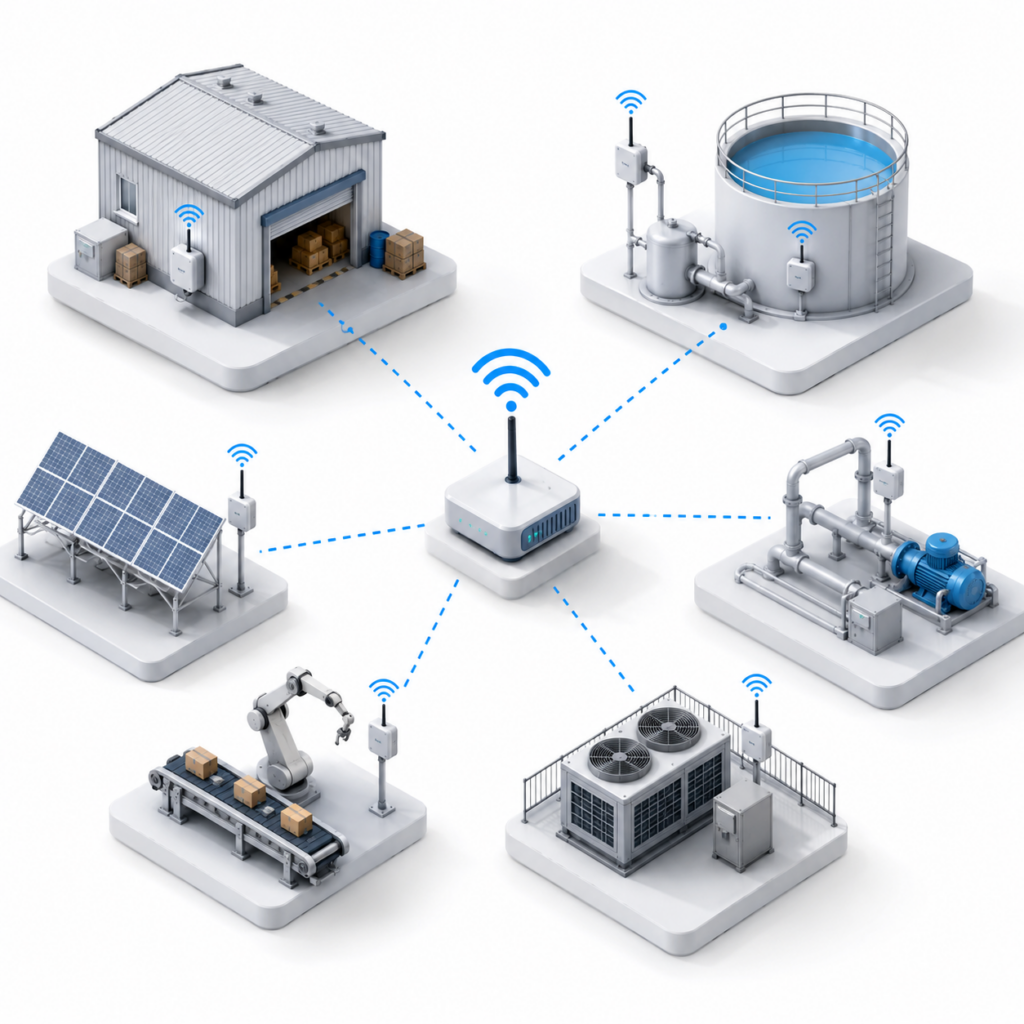
LoRaWAN: Connecting the Parts of Your Factory Wires Can't Reach
Not every sensor a factory needs sits near a network cable. Storage yards, remote tanks and outdoor equipment all share one problem. Running power and network cable to every point proves expensive or impractical. INGSOL uses LoRaWAN to solve this challenge. LoRaWAN forms part of our technology stack for factories of every kind. This page explains what LoRaWAN is. It also shows where LoRaWAN fits. Finally, it explains how INGSOL deploys LoRaWAN.
What Is LoRaWAN?
LoRaWAN, short for Long Range Wide Area Network, is a wireless communication protocol. Engineers designed it for sending small amounts of data over long distances. It also uses very little power. As a result, battery-powered sensors can transmit readings across a site. This works between buildings, too. Neither Wi-Fi’s range limits nor cellular’s power demands apply here.
However, LoRaWAN is not designed for high-speed or high-volume data. It also does not replace wired networks or Wi-Fi where those make sense. Instead, LoRaWAN occupies a specific, useful niche. This covers infrequent, small readings from sensors that are numerous or hard to reach. It also suits sensors that must run on battery power for years without maintenance.
Why INGSOL Uses LoRaWAN
Long range:
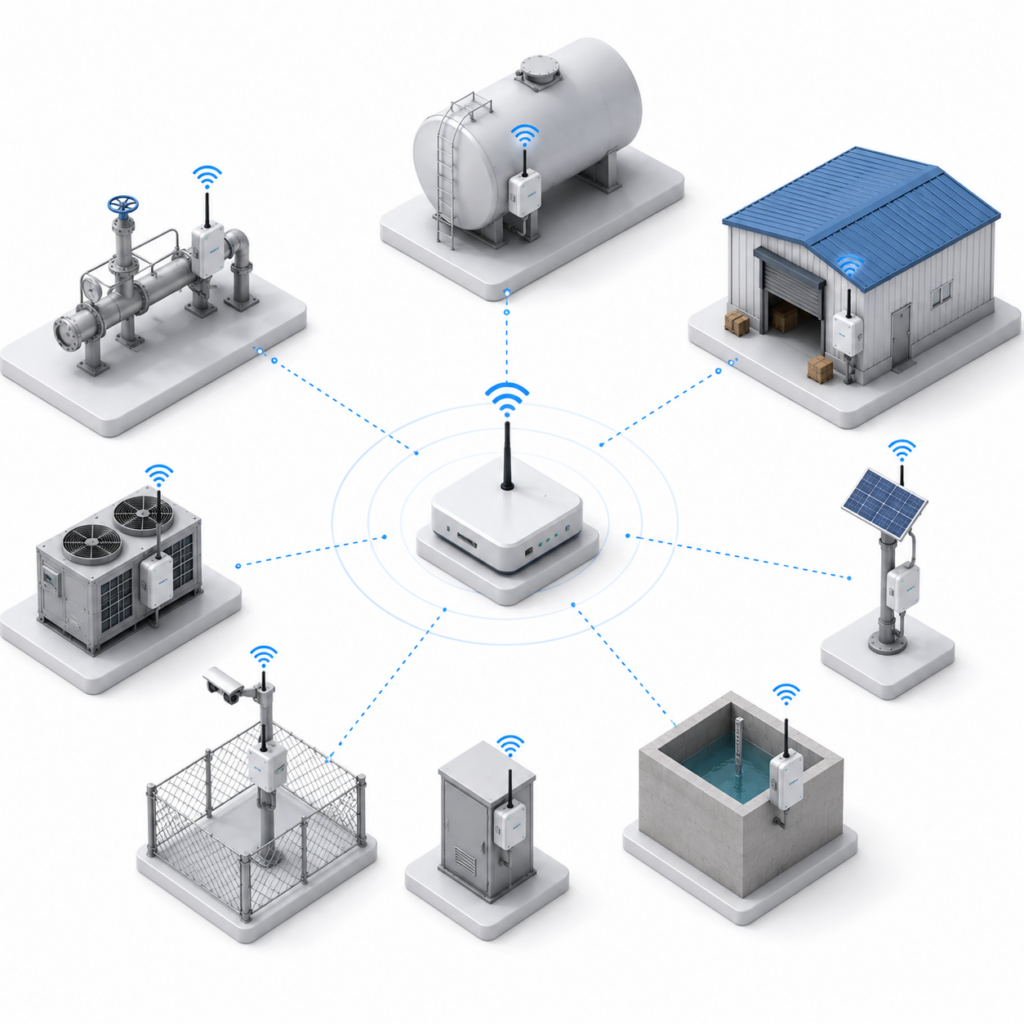
Long range is one of its defining strengths. It can transmit data over distances measured in kilometres. This works well in open or semi-open industrial environments. Therefore, it goes far beyond typical Wi-Fi range.
Very low power consumption:
Sensors designed for LoRaWAN can often run for years on a single battery, making them practical for locations where running mains power is impractical.
Cost-effective for wide coverage:
These networks need only a modest number of gateways for wide coverage. Therefore, you avoid the cost of extensive cabling or dense Wi-Fi infrastructure.
Good building and obstacle penetration
Its signals penetrate typical industrial obstacles reasonably well. This includes some building structures, too. As a result, coverage works well across sprawling or multi-building sites.
Open standard:
Because LoRaWAN is an open standard, devices from different manufacturers can interoperate. Therefore, you avoid dependence on a single proprietary wireless system.
Network Servers: The Things Network and ChirpStack
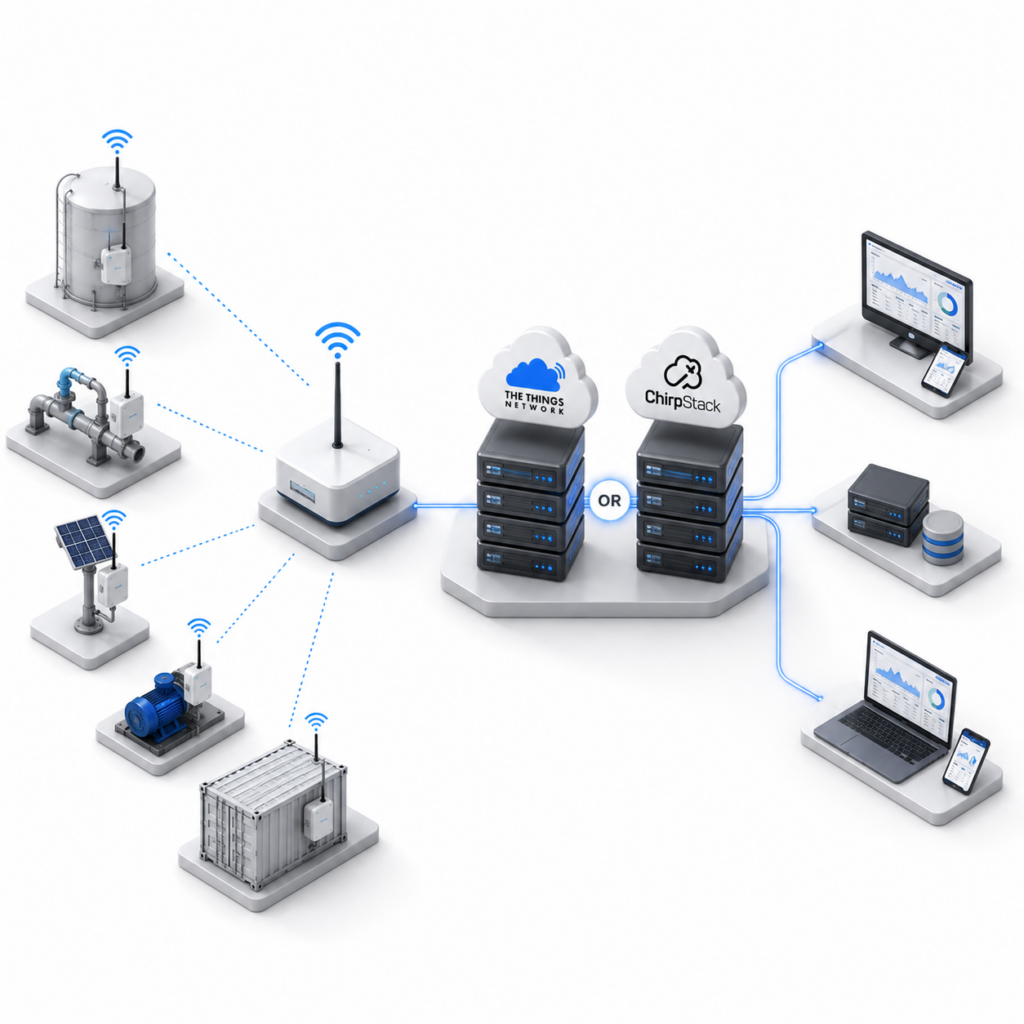
A deployment needs a network server to manage device connections. This server also routes incoming data to the applications that use it. INGSOL deploys this using The Things Network or ChirpStack. The Things Network suits distributed or multi-site sensor deployments well. ChirpStack, by contrast, is a self-hosted, open-source alternative. This fits factories that need full control over their infrastructure on-premises. The right choice depends on your site’s connectivity requirements. Existing infrastructure and data governance preferences matter, too.
Where LoRaWAN Fits in a Factory or Manufacturing Plant
Tank and storage level monitoring:
Storage tanks located away from the main production area need monitoring. LoRaWAN tracks liquid, gas and raw material levels there effectively.
Environmental monitoring:
Warehouses, yards and outdoor storage areas need environmental monitoring, too. LoRaWAN tracks temperature, humidity and air quality across these spaces.
Remote asset condition monitoring:
Mobile or remote equipment often sits away from wired infrastructure. LoRaWAN supports condition monitoring on generators, pumps or compressors in these locations.
Utility and consumption metering:
Utility meters for water, gas or electricity get distributed across a site. LoRaWAN connects them without running dedicated cabling to each one.
Site security and access sensors:
Large sites often need security sensors across access points, gates and perimeters. LoRaWAN connects these where a wired security network would cost too much.
How LoRaWAN Fits Within the INGSOL Technology Stack
Sensor data collected over LoRaWAN passes through The Things Network or ChirpStack. From there, it typically routes into ThingsBoard for device management. It can also route directly into a Unified Namespace where one exists. Next, data flows into PostgreSQL and TimescaleDB for storage. Node-RED handles any protocol translation or routing logic along the way. Finally, Grafana or Ignition presents the readings on dashboards. This happens alongside data from wired and Wi-Fi equipment.

Why Manufacturers Choose INGSOL for LoRaWAN Deployment
INGSOL specifies gateway placement and device selection around your site's actual layout. This covers obstacles and coverage requirements specifically. Therefore, your LoRaWAN network never follows a generic deployment template.
INGSOL works with both The Things Network and self-hosted ChirpStack. As a result, your LoRaWAN architecture matches your data governance and connectivity requirements.
LoRaWAN devices integrate into the same ThingsBoard, Unified Namespace and dashboard architecture. This applies equally to wired and Wi-Fi sensors. Therefore, you avoid a separate, disconnected monitoring system.
Because LoRaWAN is an open wireless standard, it avoids vendor lock-in. Therefore, your factory never depends on a single proprietary sensor or gateway manufacturer.
INGSOL designs and deploys LoRaWAN networks that bring remote sensors into your data architecture. This happens without the cost of extending wired infrastructure everywhere. Get in touch to discuss how LoRaWAN fits your technology stack. Alternatively, start with a Digital Transformation Maturity Assessment for your plant.
Our Clients

















membership