
TIMEBASE
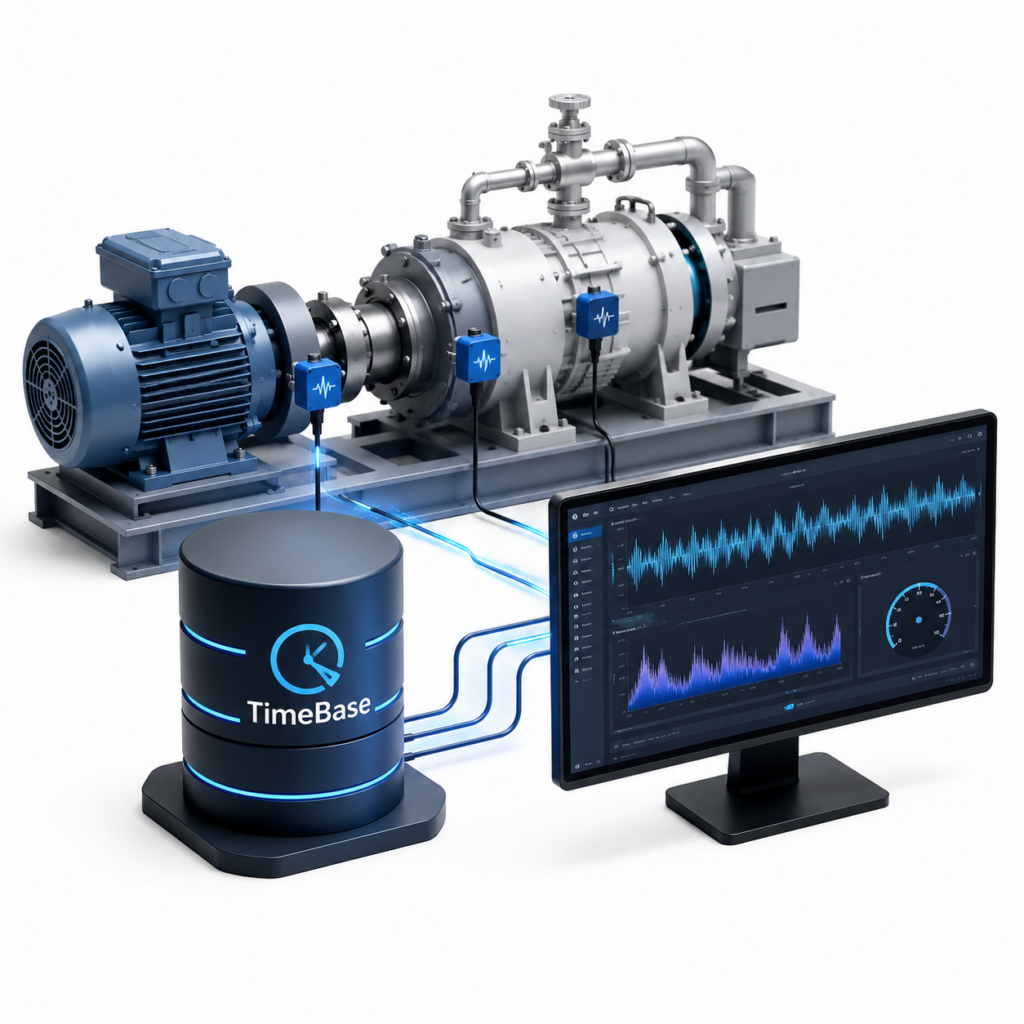
TimeBase: Capturing Data at the Speed Your Equipment Runs
Most factory data arrives at a manageable pace. This includes production counts, batch records and hourly energy readings. A standard database handles this comfortably. The write and query load stays light and predictable. However, a smaller set of applications runs much faster. Examples include high-speed vibration analysis and sub-second control loops. These generate far more data far faster. Therefore, they need a database built for that pace. INGSOL uses TimeBase for these demanding workloads. TimeBase forms part of our wider data infrastructure. This page explains what TimeBase is. It also shows when INGSOL uses TimeBase. Finally, it explains how TimeBase fits our stack.
What Is TimeBase?
TimeBase is a high-performance time-series database. Engineers designed it for very high-frequency, timestamped data. It captures, stores and queries this data with minimal latency. TimeBase handles continuous streams arriving many times per second. As a result, that data stays available for immediate analysis. General-purpose databases often struggle under this kind of load. Write speed and query latency both degrade as volume climbs.
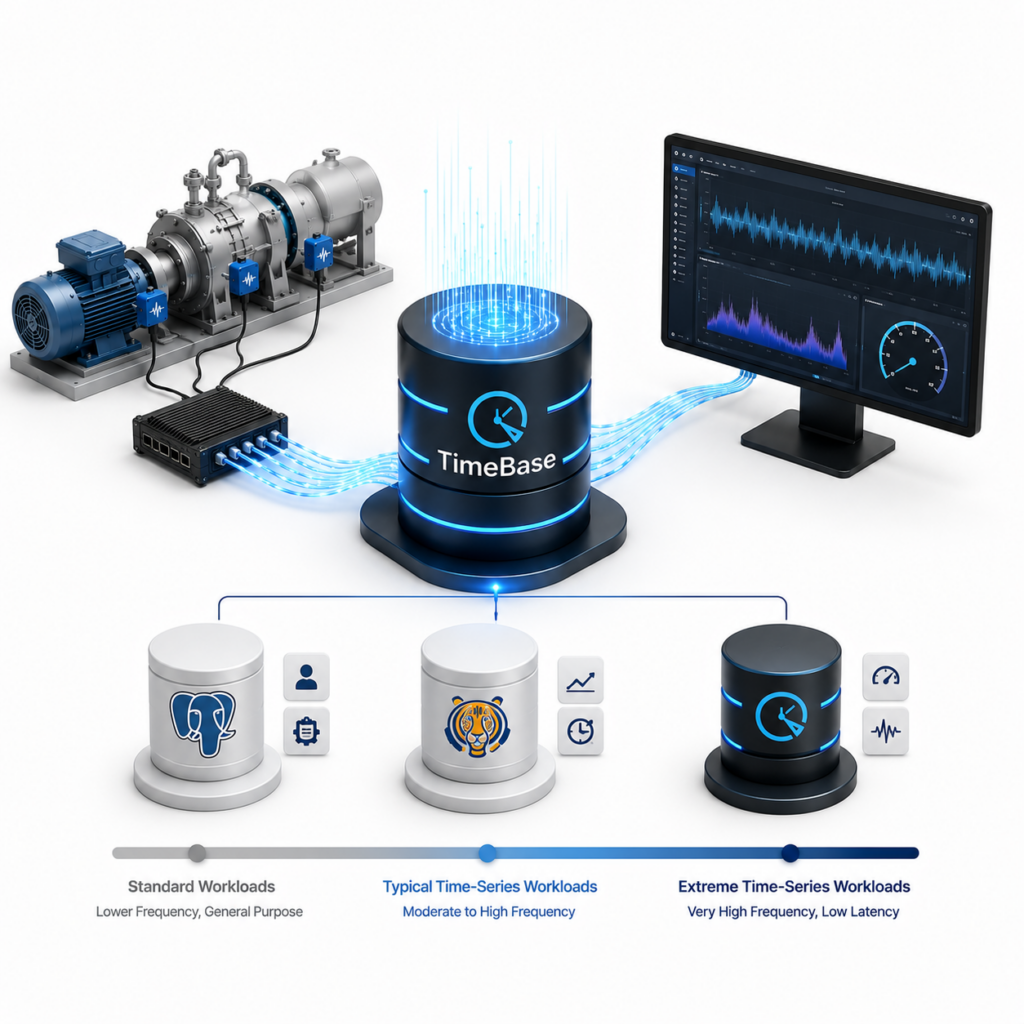
However, TimeBase is not a general replacement for PostgreSQL or TimescaleDB. INGSOL does not use it for every kind of industrial data. Instead, it earns its place in specific situations. This happens when data frequency and query speed exceed standard limits. Therefore, TimeBase complements the rest of the data infrastructure, rather than replacing it.
Why INGSOL Includes TimeBase in the Stack
Built for extreme write and query speed:
TimeBase ingests very high volumes of timestamped data with minimal delay. This suits sensor streams that update many times per second. Standard databases usually handle updates every few seconds or minutes instead.
Low-latency access to fresh data:
For applications such as vibration monitoring, speed matters most. High-speed line diagnostics also depend on fast access. The time between a reading and its analysis needs to stay short.
Efficient storage of dense data:
TimeBase stores high-frequency data efficiently. Therefore, storage stays practical even as high-resolution data accumulates over time. This matters most for plants running continuous monitoring across many assets at once.
Fits alongside the rest of the stack:
INGSOL uses TimeBase alongside PostgreSQL and TimescaleDB, not instead of them. As a result, a plant never needs one database for every workload.
How INGSOL Uses TimeBAse in Practice
High-Frequency Vibration and Condition Monitoring
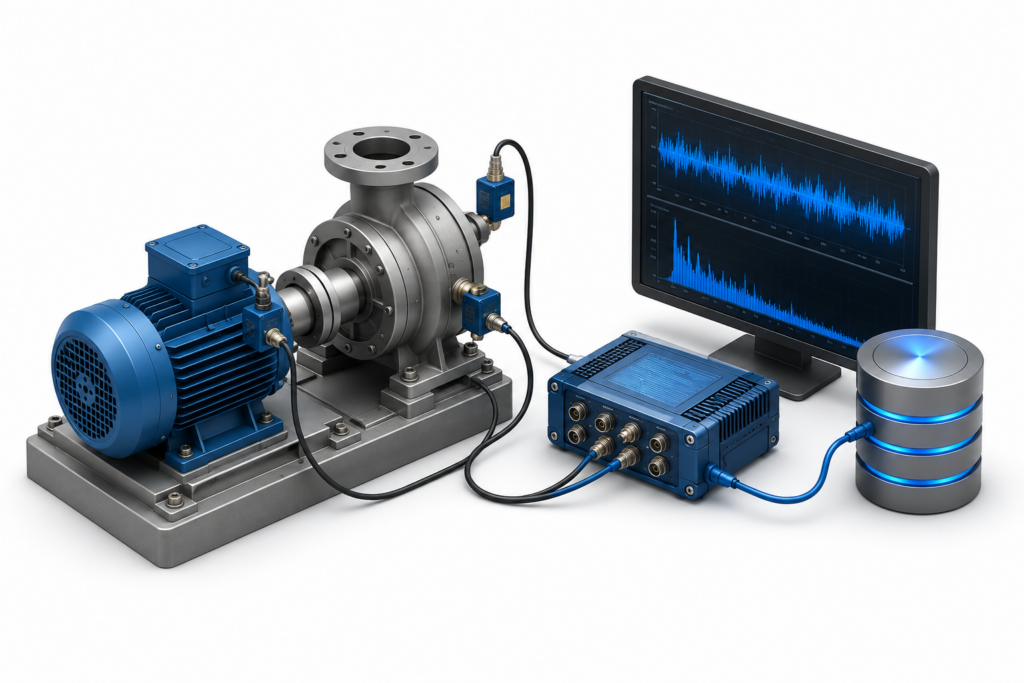
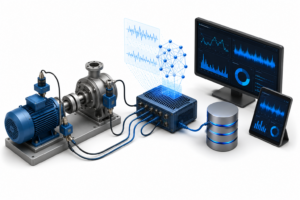
Predictive maintenance models often depend on high-sampling vibration data. This data reveals early signs of bearing wear, imbalance or misalignment. INGSOL uses TimeBase to capture and store this data at full resolution. Therefore, teams get reliable early detection. They avoid downsampling data to a rate a general database handles.
High-Speed Line and Process Diagnostics
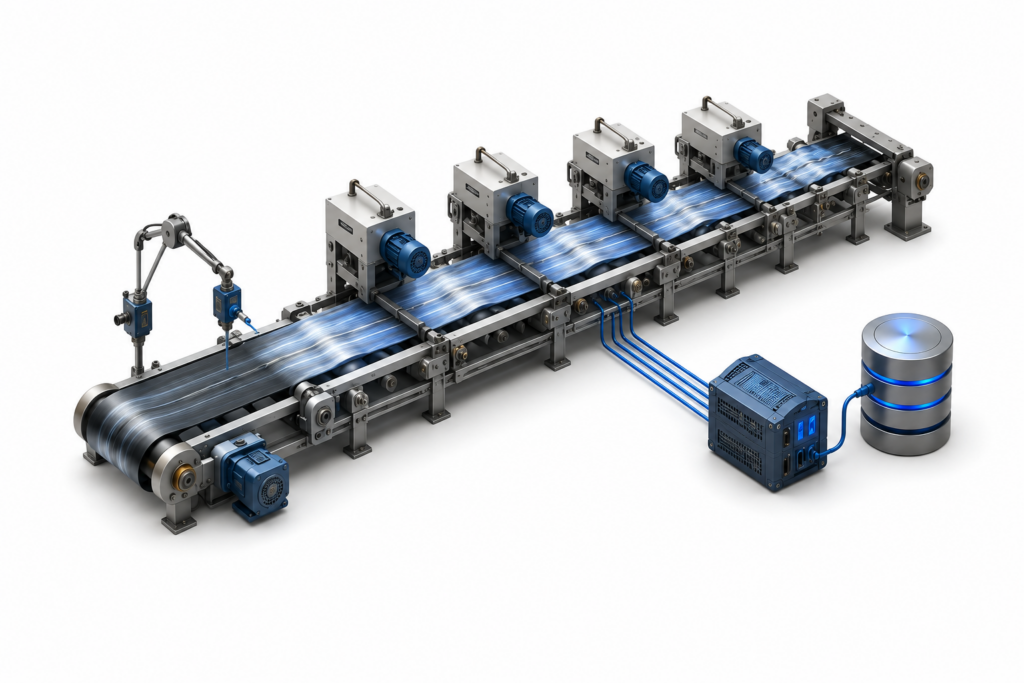
Fast-cycling machinery and high-throughput lines run at high speed. As a result, they generate diagnostic data faster than standard reporting intervals capture. TimeBase supports this kind of high-resolution diagnostic capture. This proves useful when investigating intermittent faults. These faults often only appear at a granular time scale. A fault lasting only milliseconds can otherwise go unnoticed. Engineers can then trace the exact sequence of events. This makes root-cause analysis far more precise.
Supporting Advanced Predictive Models
INGSOL’s industrial AI and predictive maintenance models need fine-grained trends. This includes trends in vibration, temperature or current draw. TimeBase provides the underlying data resolution these models need. It also delivers the query performance they require. This data then feeds the analytics and dashboards built on top.
TimeBase Alongside TimescaleDB and PostgreSQL
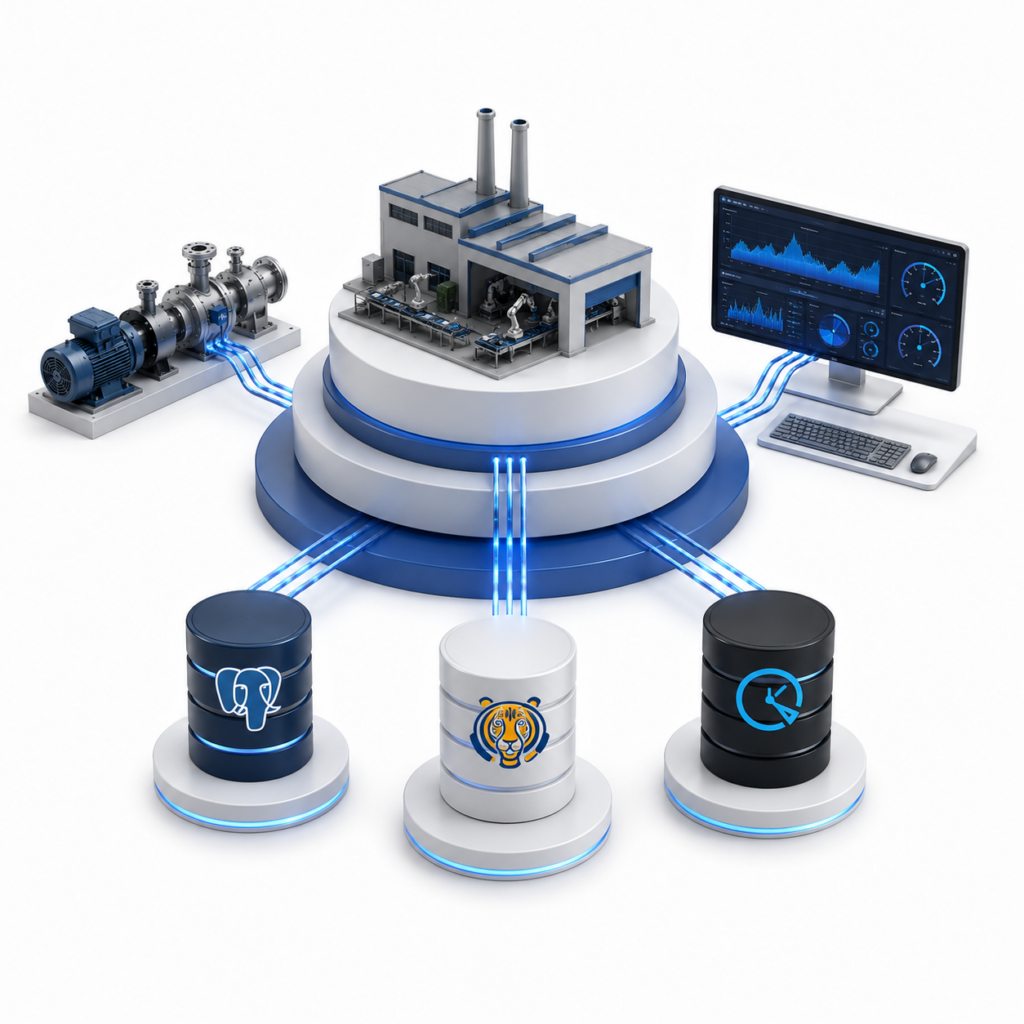
INGSOL selects the right database for each workload. We never default to one technology across the board. PostgreSQL holds structured production, asset and configuration data. TimescaleDB handles most general time-series data instead. This includes sensor readings, OEE history and energy consumption. TimeBase serves a smaller set of applications. These need data frequency and latency beyond what TimescaleDB optimises for. As a result, this layered approach avoids unnecessary cost. A factory only pays for high-performance capability where it actually needs it. It also avoids the opposite risk. No workload gets stuck on a database too slow for its needs. INGSOL reviews this balance during the initial systems audit. Therefore, the right technology serves the right workload from day one.
TimeBase Within the INGSOL Technology Stack
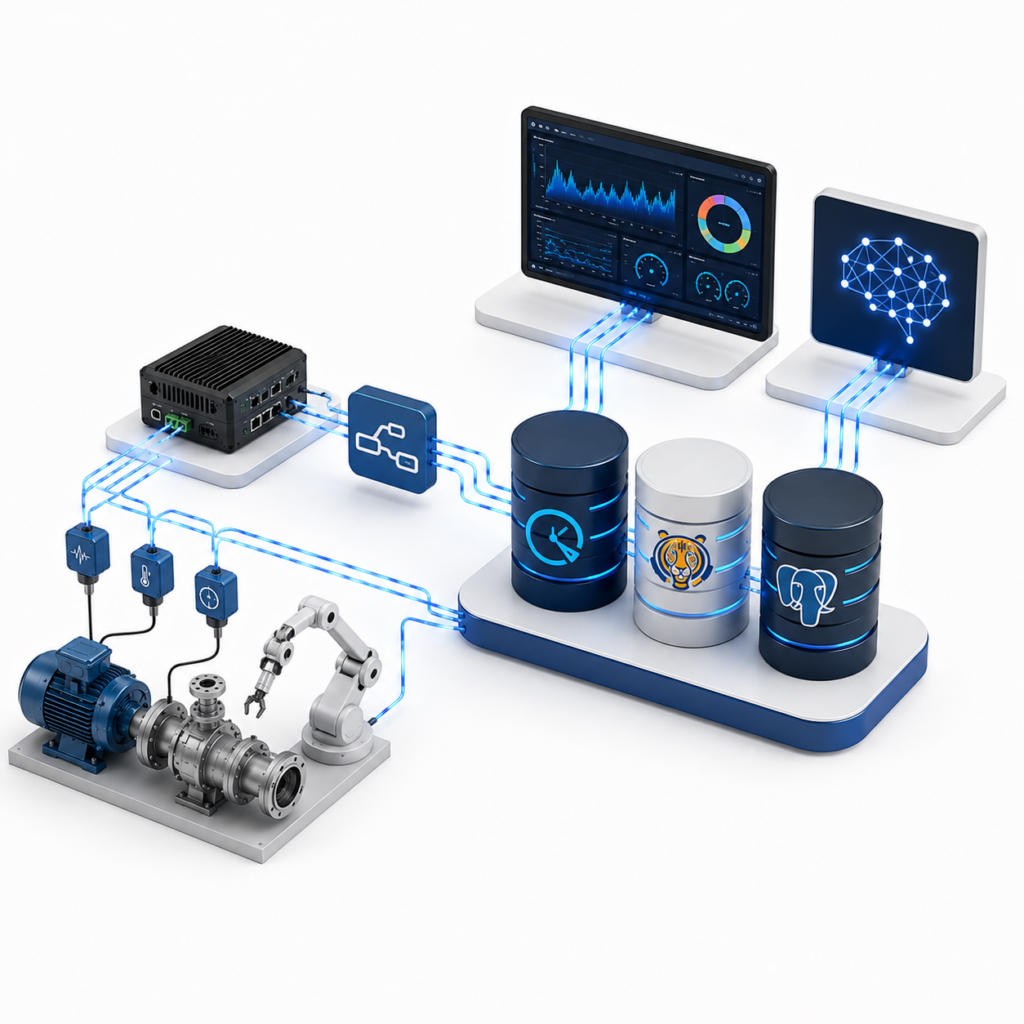
TimeBase sits within INGSOL’s data infrastructure layer, alongside PostgreSQL and TimescaleDB. High-frequency data typically reaches TimeBase directly from edge devices. It can also arrive through Node-RED integration flows. This data then feeds predictive maintenance models and Grafana dashboards. These depend on fine-grained, low-latency data. Therefore, demanding workloads stay isolated from general reporting. Neither one slows the other down.
Why Manufacturers Choose INGSOL's TimeBase Implementation
INGSOL introduces TimeBase only where a workload genuinely requires it. This avoids unnecessary complexity for data that TimescaleDB or PostgreSQL already handle well.
High-frequency data capture is specified around the specific failure modes and diagnostic needs of your equipment, not a generic sampling rate.engineers specify high-frequency data capture around your equipment's failure modes. They also consider your specific diagnostic needs, not a generic sampling rate. A gearbox prone to bearing wear may need constant vibration capture. A stable, low-risk asset may need far less. This targeted approach keeps the deployment practical and cost-effective.
INGSOL deploys TimeBase within a wider Data and Intelligence and industrial AI capability. Therefore, high-frequency data feeds directly into the predictive models. It also feeds the dashboards built on top.
INGSOL deploys TimeBase where standard time-series storage falls short. This gives your predictive maintenance and diagnostic applications the resolution they need. Get in touch to discuss how TimeBase fits your technology stack. Alternatively, start with a Digital Transformation Maturity Assessment for your plant.
Our Clients














membership