
NODE-RED
Node-RED: Wiring Your Factory's Systems Together
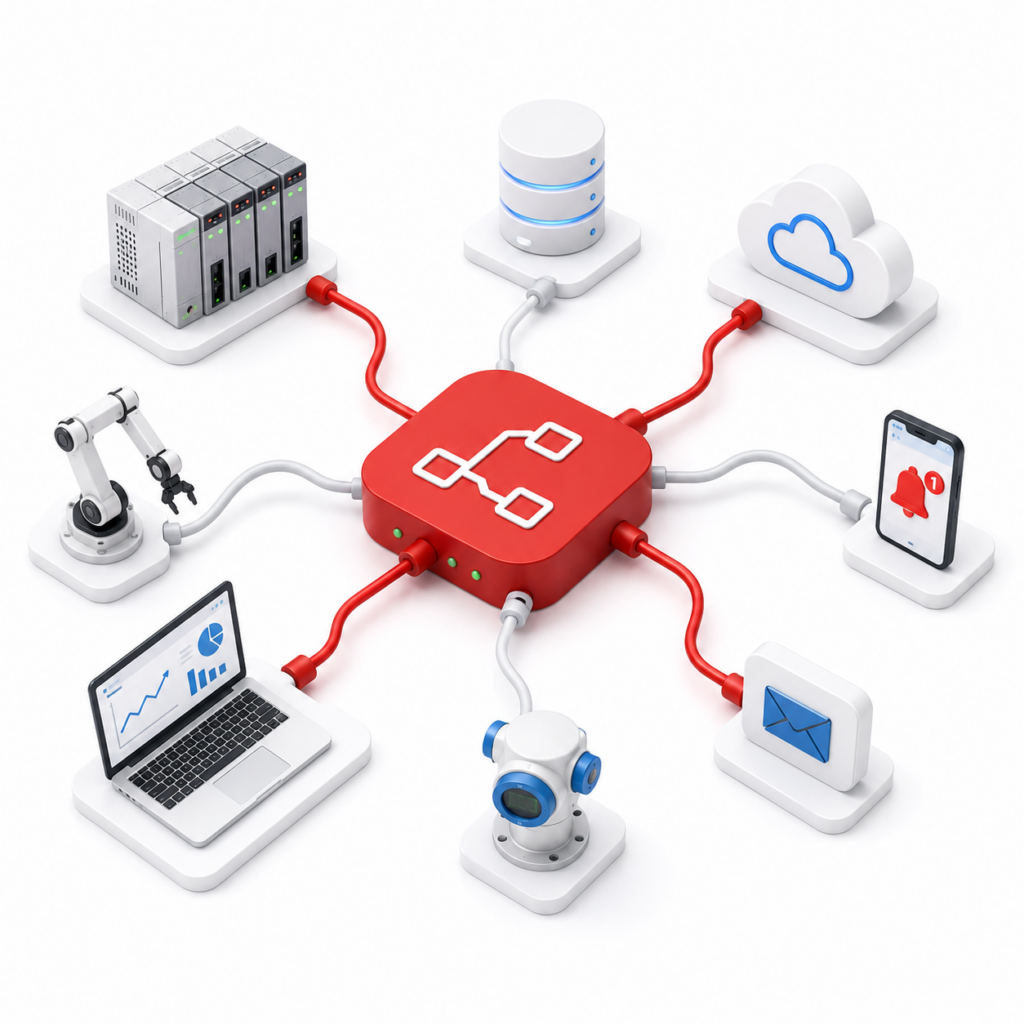
Every digital transformation project runs into the same question. How does data actually move between systems? A PLC, a database and a cloud API rarely speak the same language. INGSOL uses Node-RED to connect them all. Therefore, nobody needs bespoke, hard-to-maintain software for every link. This page explains what Node-RED is. It also shows how INGSOL uses Node-RED. Finally, it explains how Node-RED fits our wider stack.
What Is Node-RED?
It is an open-source, flow-based development tool. Engineers originally built it for wiring together hardware and online services. It provides a visual, browser-based editor. Individual processing steps, called nodes, connect into flows there. These flows move, transform and route data between systems. As a result, the logic reads as a diagram, not custom code.
However, Node-RED is not a database, a SCADA platform or a dashboarding tool. It also does not replace the systems it connects. Instead, its role covers integration and automation logic. It takes data from one system and transforms it as needed. Then, it delivers that data to another system entirely.
Why INGSOL Includes NODE-red in the Stack
Visual, flow-based logic:
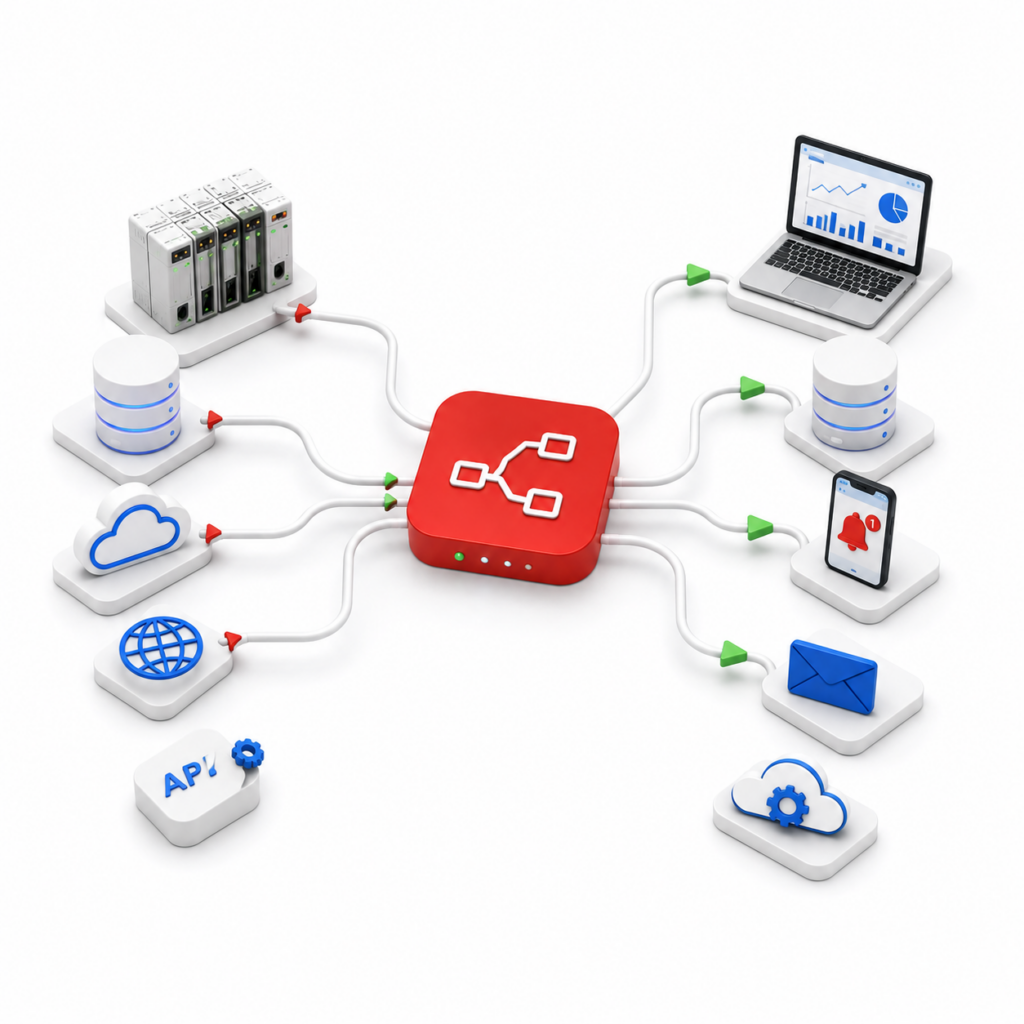
Common integration tasks come as ready-made nodes in Node-RED. This includes connecting to an MQTT broker or calling an API. Writing to a database works the same way. Therefore, typical integration work needs far less bespoke code.
Broad protocol and node support:
It can extend with community and custom nodes. As a result, it adapts to the specific systems already present in a plant.
Fast to build and modify:
Teams build and adjust flows quickly as requirements change. Therefore, lead times drop compared with commissioning custom integration software.
Open source:
Because Node-RED is open-source with a large community, it avoids proprietary dependence entirely.
Runs at the edge or centrally:
It can run on lightweight edge hardware. More capable servers work just as well. As a result, integration logic can sit close to the equipment it serves.
How INGSOL Uses Node-RED in Practice
Protocol Translation and Data Routing
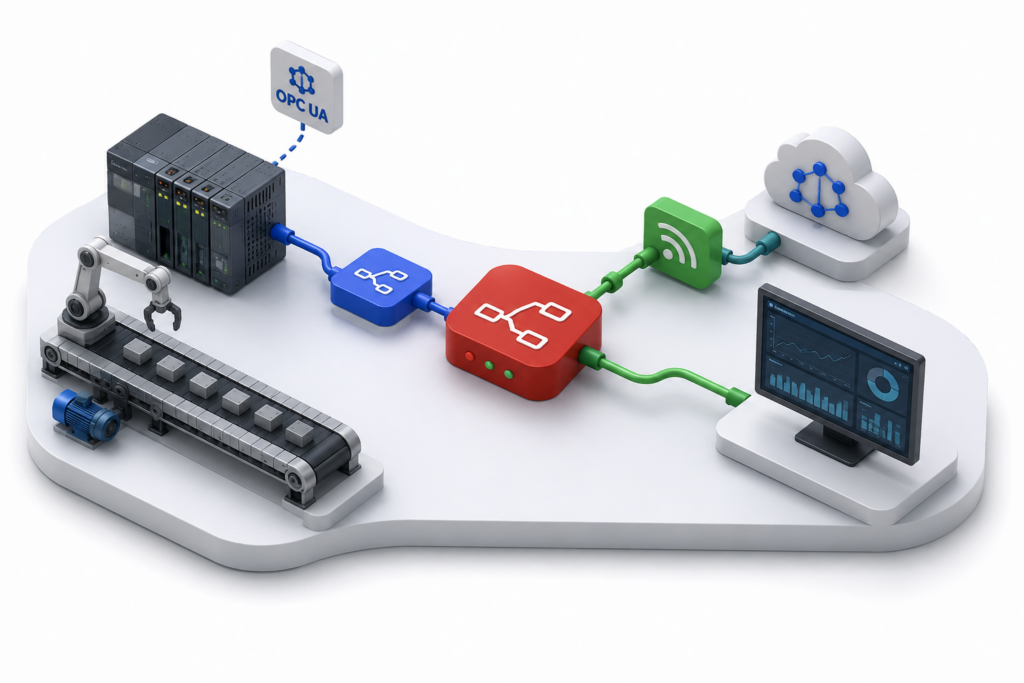
Node-RED flows commonly translate data between protocols. For example, Node-RED republishes an OPC UA tag from a PLC over MQTT. ThingsBoard or a Unified Namespace can then consume it. This happens without custom software for the conversion.
Integration Between SCADA, IoT and Databases
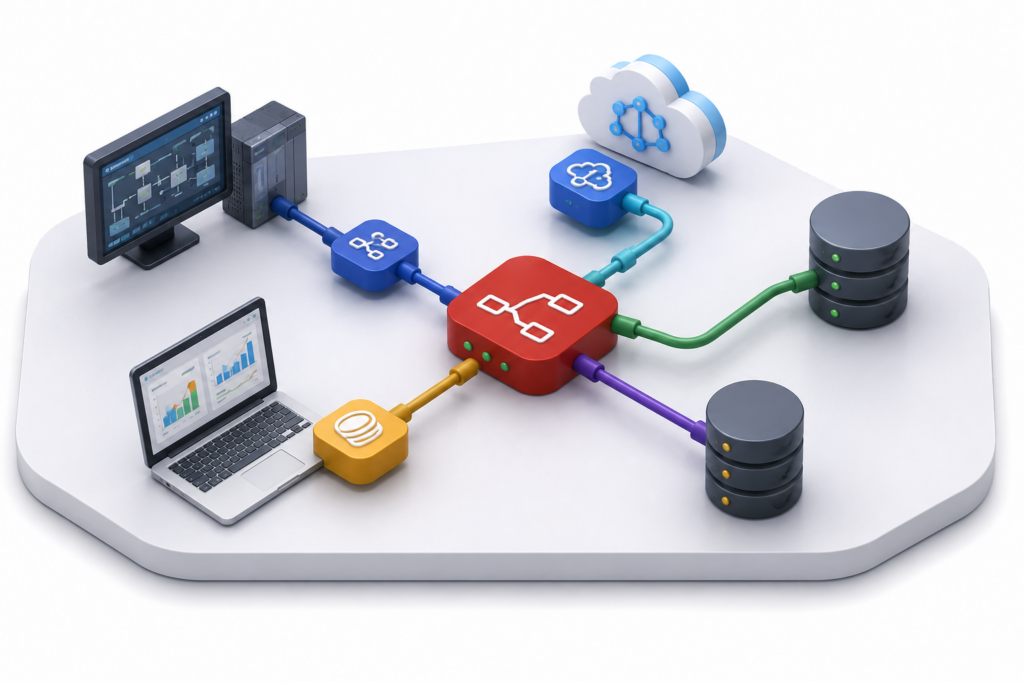
INGSOL uses Node-RED to move data between Ignition, ThingsBoard, PostgreSQL and TimescaleDB. This handles the logic needed to filter, transform or combine data. Multiple sources feed into this flow before storage or display.
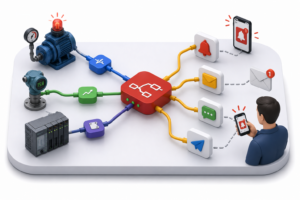
Automated Alerts and Notifications
Flows trigger notifications, emails or messages to operations teams. This happens when specific conditions arise. A sensor reading crossing a threshold counts as one example. Similarly, a device going offline counts. Therefore, the gap closes between an event and the right person finding out.
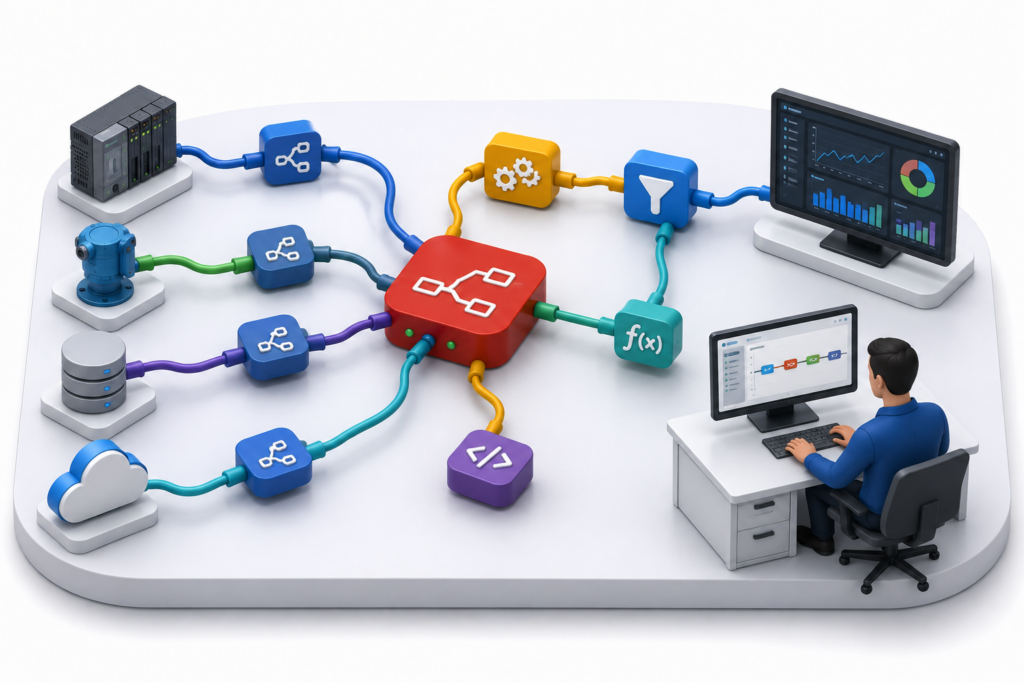
Custom Logic Without Bespoke Software
Sometimes a specific calculation or conditional workflow becomes necessary. In these cases, Node-RED lets teams build this logic visually. As a result, ongoing maintenance drops compared with fully custom software.
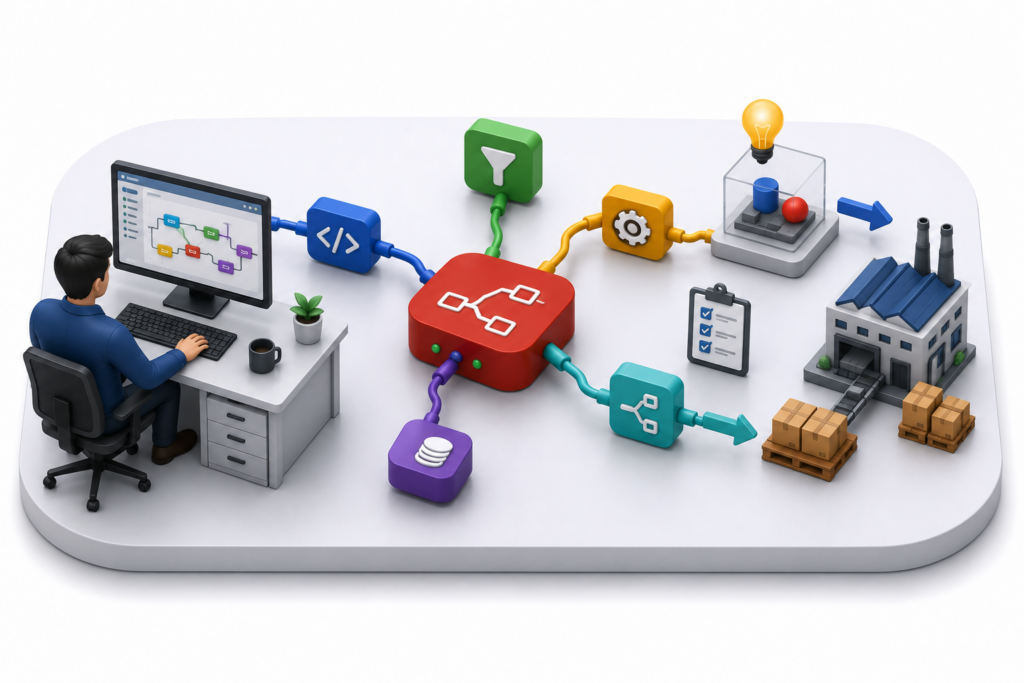
Rapid Prototyping
It also proves useful for rapid prototyping. Teams can test a new integration or workflow quickly. This happens before committing to a permanent implementation elsewhere. Therefore, an approach gets validated with minimal upfront investment.
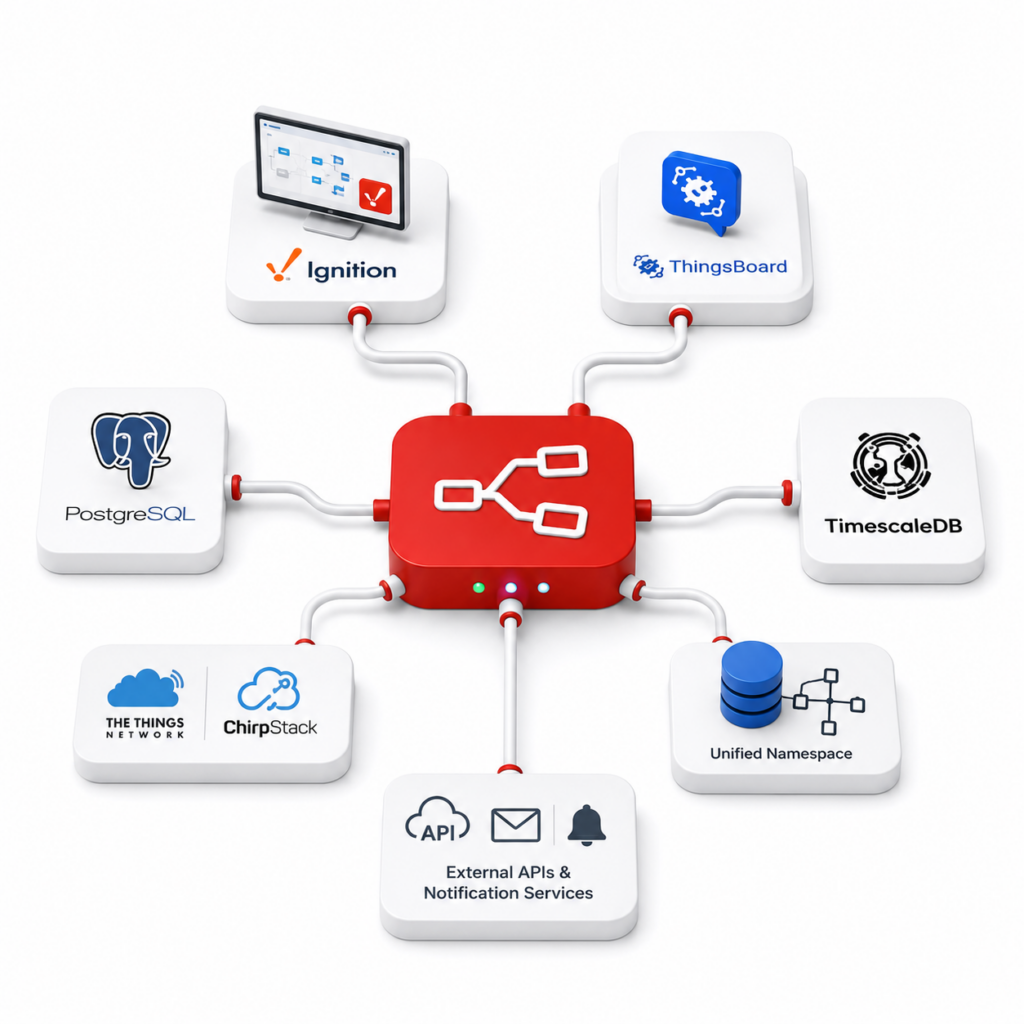
Node-RED Within the INGSOL Technology Stack
Node-RED typically sits between the platforms in INGSOL’s stack. It moves data between Ignition, ThingsBoard, PostgreSQL, TimescaleDB and external APIs. In addition, it complements LoRaWAN network servers, such as The Things Network and ChirpStack. This happens by routing incoming sensor data onward. It also supports Unified Namespace architectures directly. Node-RED handles protocol translation and data shaping before publishing there. Therefore, this makes Node-RED the connective layer that keeps the stack talking. Nobody needs a growing web of one-off, custom interfaces.
Why Manufacturers Choose INGSOL's node-RED Implementation
Engineers who understand the connected systems design each flow. Therefore, integration logic reflects how your plant actually operates. Nobody works from a generic template here.
Because Node-RED is open-source, it avoids dependence on one proprietary platform. In addition, flows remain visible and editable, not hidden inside custom code.
visual flows stay easier to review and hand over as time passes. This holds true compared with bespoke scripts. As a result, undocumented integration logic becomes far less likely.
INGSOL deploys Node-RED within a wider Communication and Integration capability. This also spans our Data and Intelligence capability. Therefore, it fits into a coherent architecture, not an isolated tool.
INGSOL uses Node-RED to wire together SCADA, IoT platforms, databases and APIs. This keeps integration logic visible, maintainable and adaptable as systems evolve. Get in touch to discuss how Node-RED fits your technology stack. Alternatively, start with a Digital Transformation Maturity Assessment for your plant.
Our Clients


















membership