ThingsBoard
ThingsBoard: Managing Devices and Data Across Your Factory
Connecting a handful of sensors is simple. However, managing hundreds of them across multiple lines or sites is a different problem. You need consistent dashboards, alerts and access control. INGSOL uses the ThingsBoard IoT Platform to solve this. It forms a core part of our technology stack for factories and manufacturing plants. This page explains what ThingsBoard is. It also shows how INGSOL uses it. Finally, it explains how ThingsBoard fits alongside the rest of our stack.
What Is ThingsBoard?
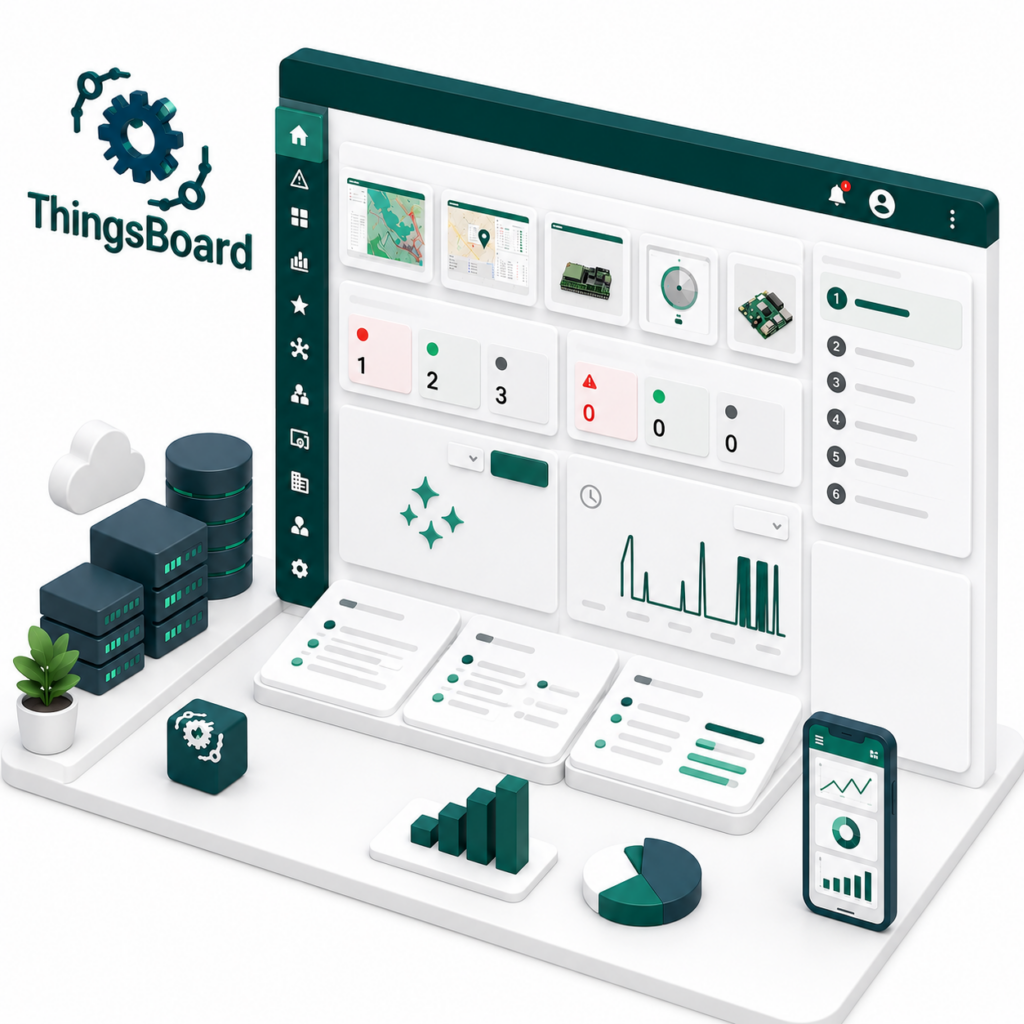
ThingsBoard is an open-source Internet of Things platform. It handles device management, data collection, processing and visualization. In addition, it sits between individual sensors and gateways on one side. On the other side, it connects to dashboards, rules and integrations. Because of this, teams can deploy it in the cloud or on-premises.
However, ThingsBoard does not replace SCADA or an MES. It also does not perform supervisory control of machinery on its own. Instead, it manages large numbers of connected devices consistently. It ingests their data, applies rules and alerts, and presents results through configurable dashboards. This works whether devices sit on one line or across multiple sites.
Why INGSOL Includes ThingsBoard in the Stack
Open source and self-hostable:
Because ThingsBoard is open-source, it avoids locking your factory into one proprietary IoT vendor. In addition, you can self-host it for full control over your data.
BUILT FOR DEVICE SCALE:
INGSOL builds device profiles, telemetry ingestion and dashboard configuration around the ThingsBoard IoT Platform. As a result, these tools manage thousands of connected sensors without a redesign as your deployment grows.
PROTOCOL FLEXIBILITY:
ThingsBoard connects over MQTT, HTTP, CoAP and other standard protocols. It also integrates with LoRaWAN network servers, such as The Things Network and ChirpStack. Therefore, wide-area sensor deployments fit into the same platform.
RULE ENGINE FOR AUTOMATION:
Built-in rule chains configure alerts, notifications and automated actions from incoming device data. Because of this, teams avoid the need for separate custom software.
ACCESS CONTROL AND MULTI-TENANCY:
Multi-tenancy and role-based access control support factories that need to separate data. This applies by site, department or customer.
How INGSOL Uses ThingsBoard in Practice
Device Management
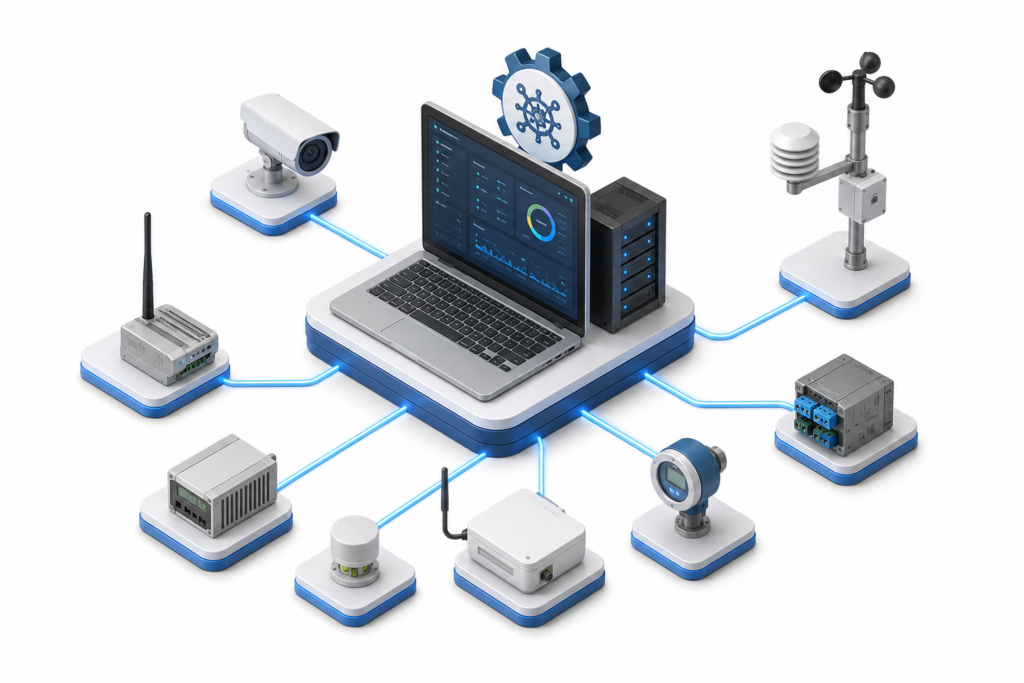
ThingsBoard provides a central point for registering, monitoring and managing sensors, gateways and edge devices. It also tracks device status, firmware and connectivity. As a result, teams can identify a fault with a specific sensor or gateway quickly. They no longer need to discover it through missing data downstream.
Data Ingestion and Processing
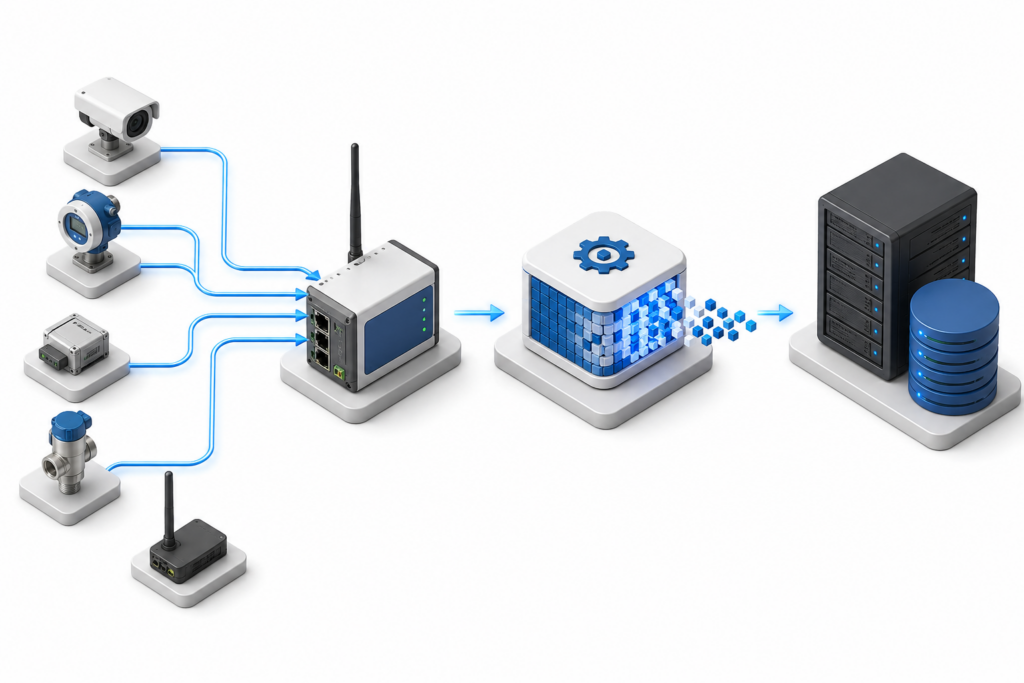
Telemetry from connected devices flows into ThingsBoard in real time. There, the platform filters, transforms and routes it onward. It sends data to INGSOL’s data infrastructure, including PostgreSQL and TimescaleDB, for longer-term storage and analysis.
Dashboards and Visualisation
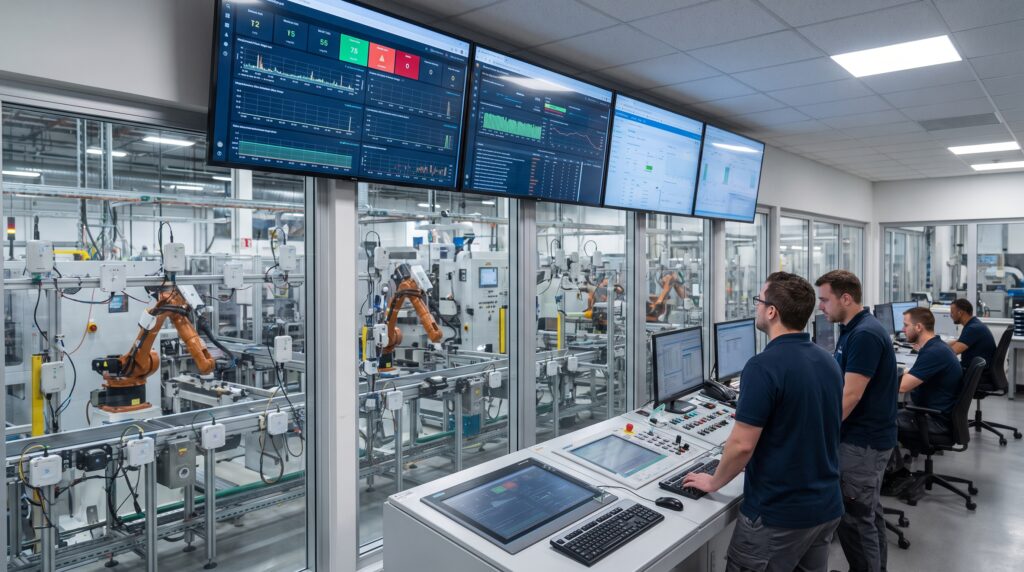
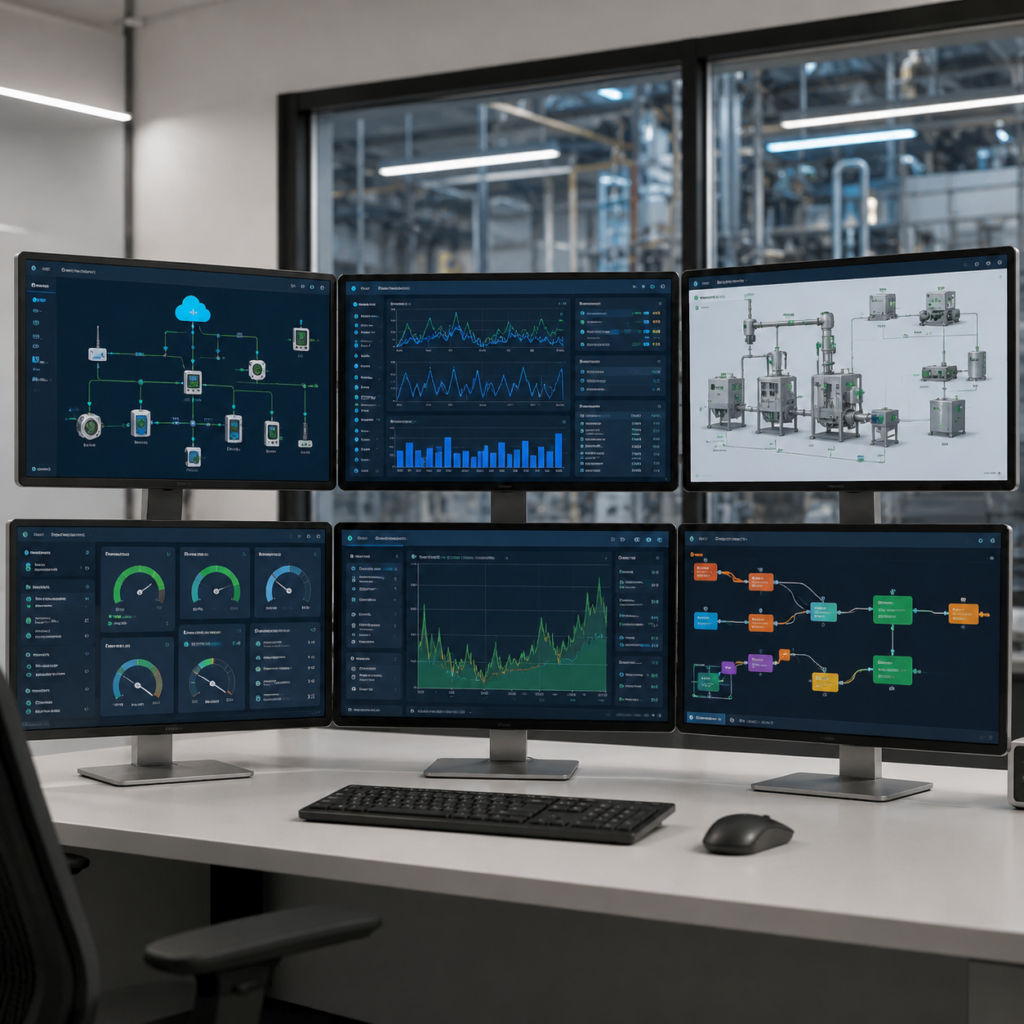
ThingsBoard’s dashboard builder gives operators and supervisors a configurable, real-time view of connected devices. It also shows their telemetry. This complements the wider visualization INGSOL builds in Grafana and Ignition for plant-level and enterprise dashboards.
Alerts and Rule-Based Automation
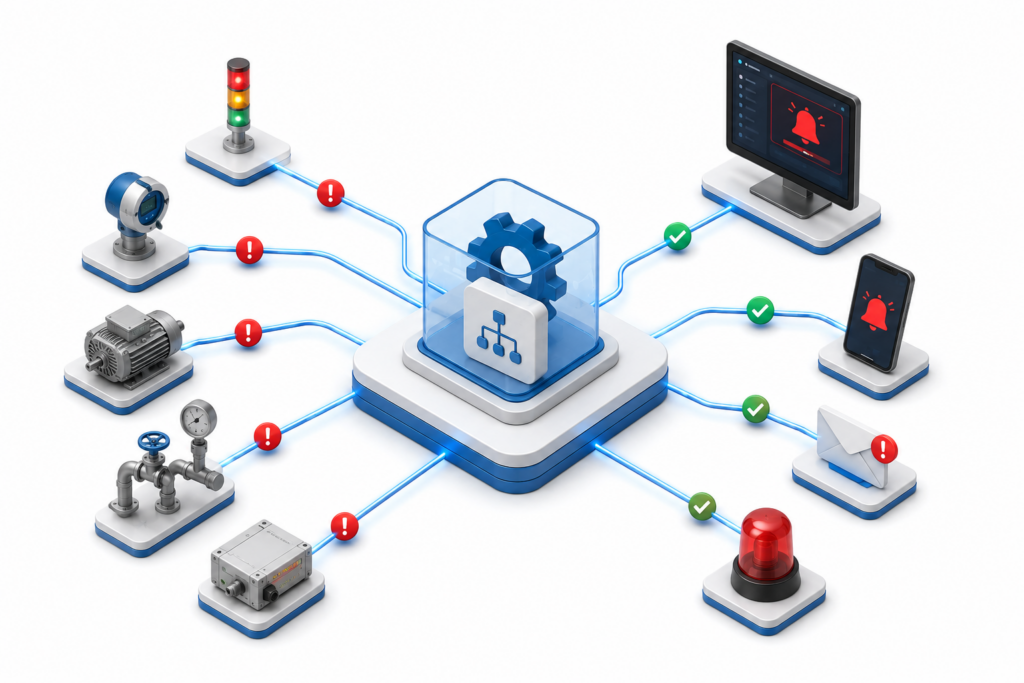
INGSOL configures automated alerts and actions using ThingsBoard’s rule engine. For example, the system can flag a sensor reading outside its expected range. It can also trigger a notification when a device goes offline. As a result, teams close the gap between an issue occurring and someone finding out about it.
LoRaWAN and Wide-Area Sensor Integration
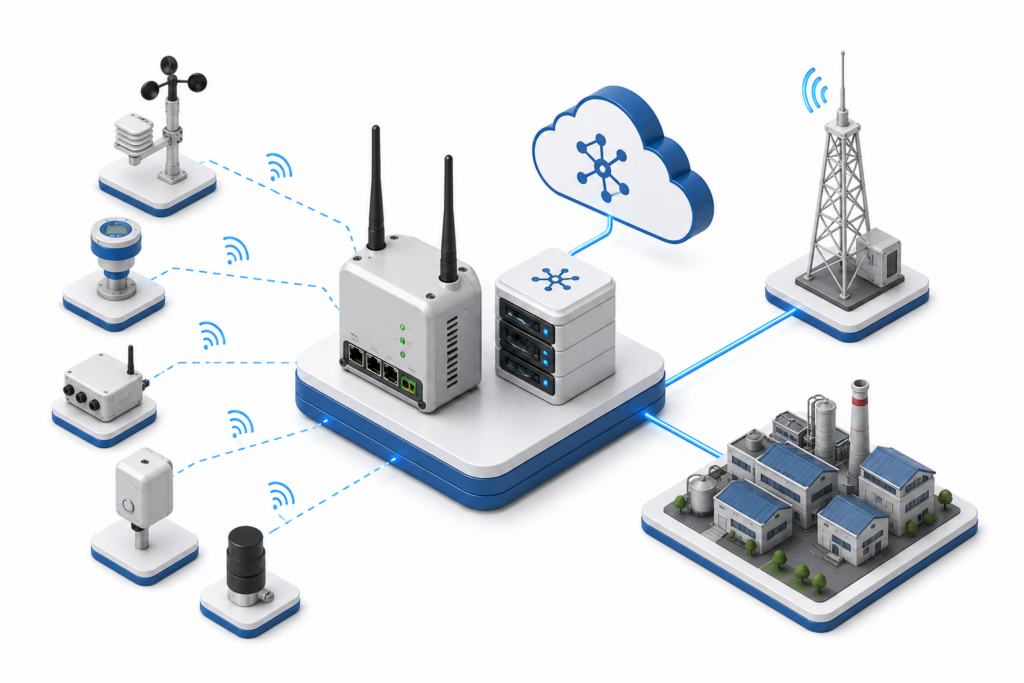
Some factories spread sensors across large sites, yards or remote equipment. For these cases, INGSOL integrates ThingsBoard with LoRaWAN network servers, including The Things Network and ChirpStack. Therefore, low-power, wide-area sensor data flows into the same platform as wired & Wi-Fi devices.
ThingsBoard Within the INGSOL Technology Stack
The ThingsBoard IoT Platform sits alongside Ignition, our core SCADA and MES platform. ThingsBoard handles device-level IoT management, while Ignition manages supervisory control and shopfloor execution. Data captured through ThingsBoard flows into PostgreSQL and TimescaleDB for structured storage. TimeBase remains available for higher-frequency workloads. In addition, Grafana provides dashboarding and trend analysis. Node-RED handles integration logic between ThingsBoard, other platforms and downstream systems. Together, this combination gives factories a coherent IoT and SCADA architecture. It relies entirely on open, interoperable technology, rather than one closed platform.
Why Manufacturers Choose INGSOL's ThingsBoard Implementation
Engineers who understand your equipment and processes deploy and configure ThingsBoard. Therefore, the setup reflects your actual operations, not just the software platform.
Because ThingsBoard is open-source, your factory can self-host it. This gives you full ownership and control over device data.
INGSOL configures device management, dashboards and rules to scale with your operation. As a result, deployment can grow from a single pilot line to a multi-site rollout without a platform change.
INGSOL implements the ThingsBoard IoT Platform as part of a wider capability. This spans Hardware and Edge, Communication and Integration, and Data and Intelligence. Therefore, it works with the rest of your architecture, rather than in isolation.
INGSOL implements ThingsBoard as part of an open, scalable IoT and SCADA architecture. This works for factories and manufacturing plants of any size. Get in touch to discuss how ThingsBoard fits your technology stack. Alternatively, start with a Digital Transformation Maturity Assessment for your plant.
Our Clients





membership