
SCADA Systems for Manufacturing & Industrial Plants

SCADA Systems: Real-Time Control and Visibility for Your Factory
SCADA Systems let you see and control your process in real time. In addition, you can work from the control room or remotely. A well-designed SCADA Systems deployment changes outcomes for factories everywhere. It often means catching a problem as it starts. The alternative costs material and downtime after the fact. This page explains what SCADA Systems are. It also shows where they fit alongside IIoT and MES. Finally, it explains how INGSOL designs, retrofits and supports SCADA Systems.
What Is SCADA?
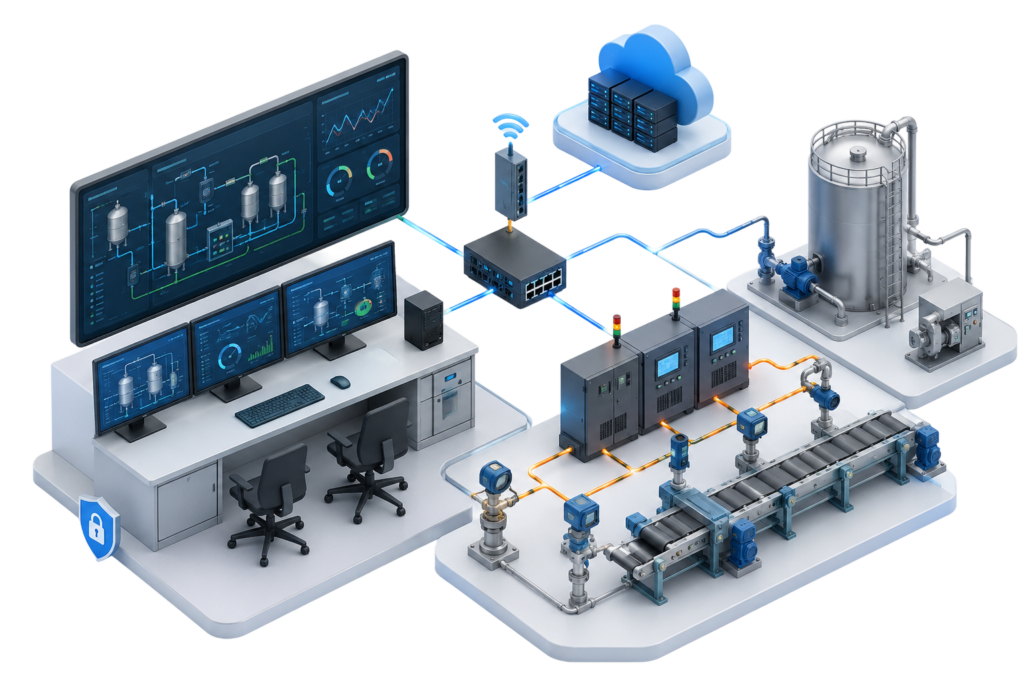
Supervisory Control and Data Acquisition, or SCADA Systems, monitor industrial processes remotely. They use real-time data from sensors and field devices. SCADA Systems give operators a live view of process values. They also show equipment status and alarms. In addition, they provide the interface for control commands. In addition, these commands go back to PLCs and field equipment.
However, SCADA Systems are not a cybersecurity solution on their own. They also do not replace field engineers or a wider digital strategy. Instead, SCADA Systems deliver specific, essential capabilities. It gives real-time process visibility and remote monitoring. It integrates with PLCs and sensors directly. It also logs historical data for troubleshooting, compliance and improvement. As a result, this works across almost any manufacturing environment.
Why SCADA Matters for Factories and Manufacturing Plants
Manufacturers across industries depend on tight process control. This spans speed, temperature, pressure and quality parameters. Without reliable SCADA Systems in place, several problems appear.
Fragmented visibility
Operators rely on local panels and manual walk-throughs. As a result, they lose time and situational awareness.
No remote oversight
Managers cannot see conditions unless they stand on the floor. Therefore, response to developing issues slows down.
Scattered control across lines
Plants add equipment over time. Consequently, they end up with disconnected panels instead of one system.
Difficult troubleshooting
Without a central historian, diagnosing faults means piecing together memory. Data should do this work instead.
Alarm fatigue
Without consistent management, nuisance alarms overwhelm operators. Meanwhile, the alarms that matter get missed.
A well-designed SCADA Systems deployment solves each problem directly. It gives everyone a shared, accurate picture of the process. This holds true regardless of sector or product.
How INGSOL Delivers SCADA Systems
INGSOL first audits existing PLCs, drives, sensors and control philosophy. This happens before any screen gets designed. In addition, we identify what data exists and what is missing. We also find where current visibility falls short. This covers every production line and utility.
Next, INGSOL designs SCADA Systems architecture and HMI screens. We build around how operators actually work. In addition, this includes clear process mimics and sensible alarm priorities. Layouts surface the parameters that matter most. This works for extrusion, lamination, machining, assembly or batch production.
INGSOL then integrates SCADA Systems with PLC and drive systems. We work with Siemens, Mitsubishi Electric and Allen-Bradley. Open protocols include OPC UA, Modbus TCP/IP, EtherNet/IP and PROFINET. Where instrumentation is missing, we specify and retrofit sensors. This closes data gaps, even on legacy equipment.
Process data then flows to a historian. As a result, trends, batch records and alarm history stay available. Teams use this for troubleshooting and quality investigations. Data never gets lost once a shift ends.
Finally, INGSOL deploys SCADA Systems with security built in. Network segmentation and access control start from day one. As a result, authorised staff get secure remote visibility. This works across single or multiple sites. OT systems stay protected from unnecessary risk.
SCADA, IIoT and MES: How They Work Together
SCADA Systems, IIoT and MES serve different, complementary roles. SCADA Systems provide real-time control at the process level. IIoT extends connectivity to a wider sensor network. It often feeds analytics and cloud platforms. MES sits above both layers. It translates ERP orders into shopfloor execution. It also enforces quality and traceability. INGSOL designs SCADA Systems within this wider architecture from the start. Therefore, it integrates cleanly with IIoT and MES as you grow. It never becomes another disconnected system to maintain.
Built on Open, Production-Proven Technology
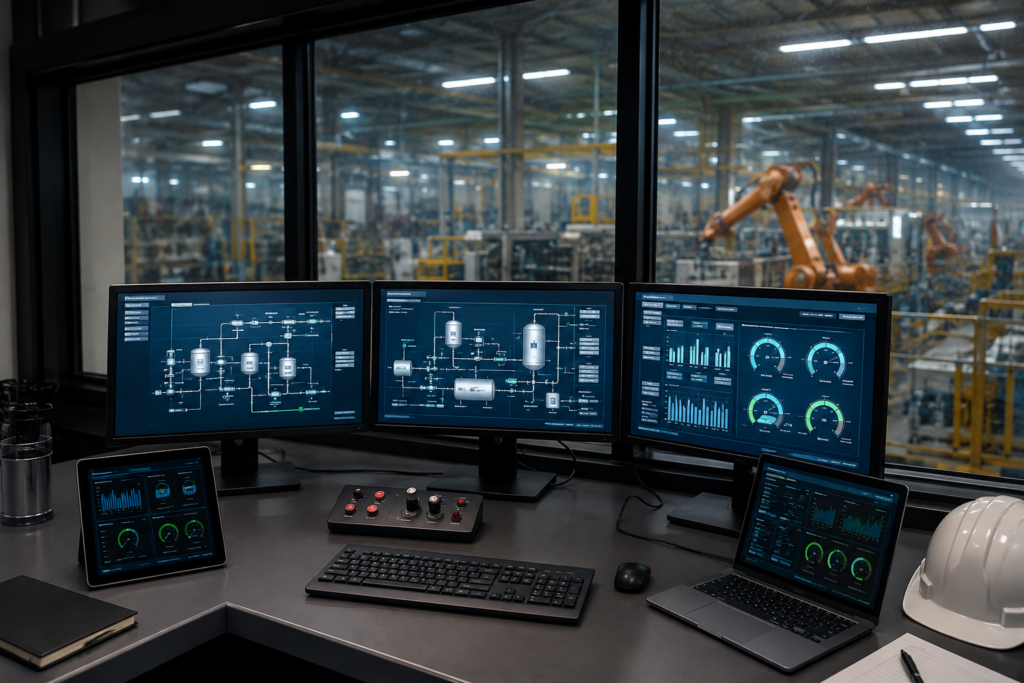
INGSOL implements SCADA Systems using established, interoperable platforms. This includes Ignition, Litmus and Kepware for OT-IT integration. We also work alongside Siemens, Mitsubishi Electric and Allen-Bradley systems. Our architecture follows open protocols, including OPC UA, MQTT, Modbus TCP/IP, EtherNet/IP and PROFINET. Therefore, your SCADA Systems integrate with existing equipment. You avoid locking your plant into one proprietary vendor.
SCADA Retrofits for Legacy Equipment
Many factories run capable machines with outdated control visibility. INGSOL’s retrofit capability covers PLC systems, automation and drives. We also handle modular upgrades across industrial equipment. As a result, legacy assets join a modern SCADA Systems architecture. You avoid the cost of full machine replacement. Motor control, material handling and process equipment can all connect. This works into one SCADA Systems environment, whatever your sector.
Why Manufacturers Choose INGSOL for SCADA
Engineering depth
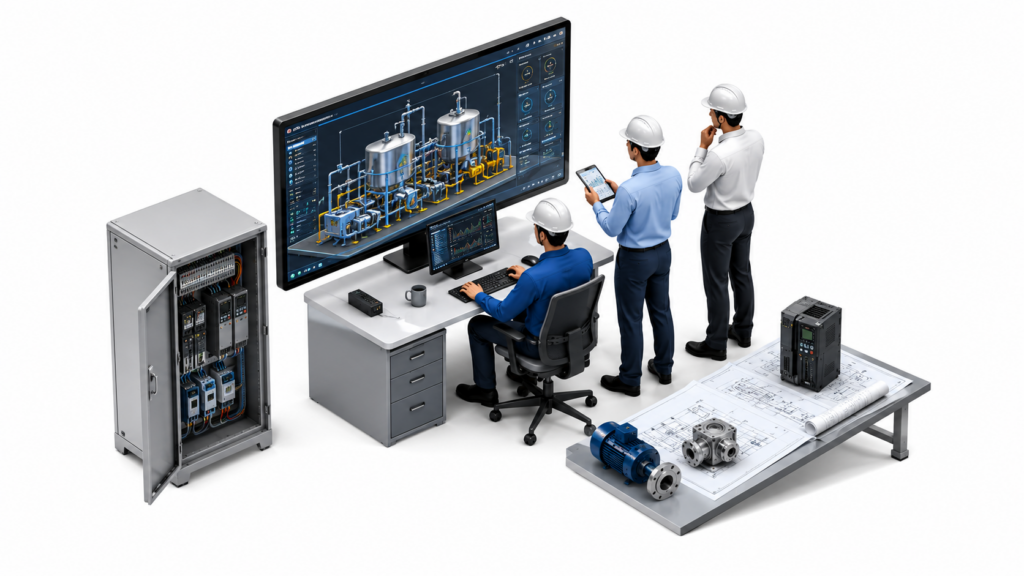
Engineers bring backgrounds across electrical, mechanical and process disciplines. Therefore, SCADA Systems screens reflect how your process actually runs. This never comes from a generic template.
Open architecture
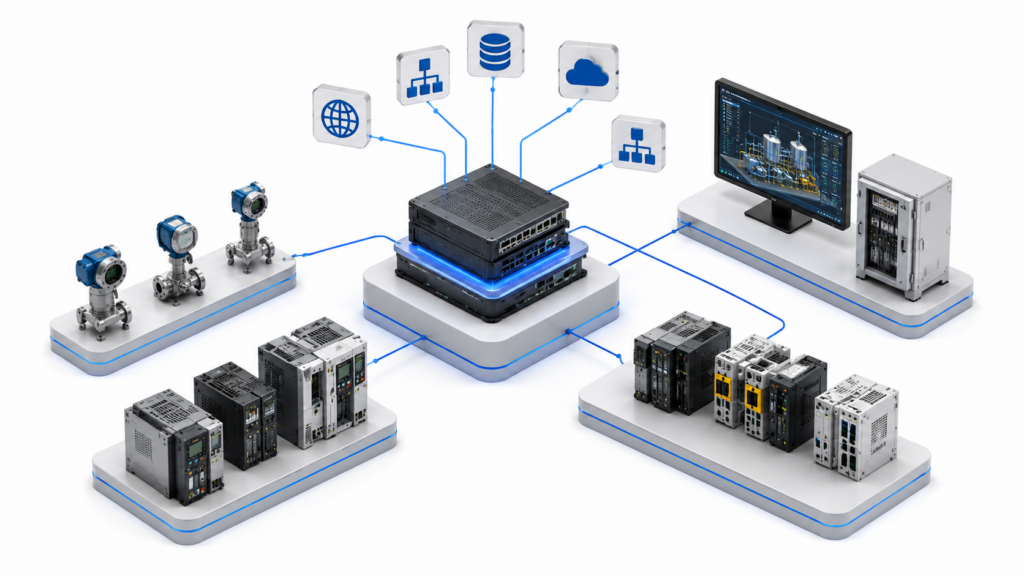
SCADA Systems run on open protocols and platforms. As a result, you are never locked into one supplier.
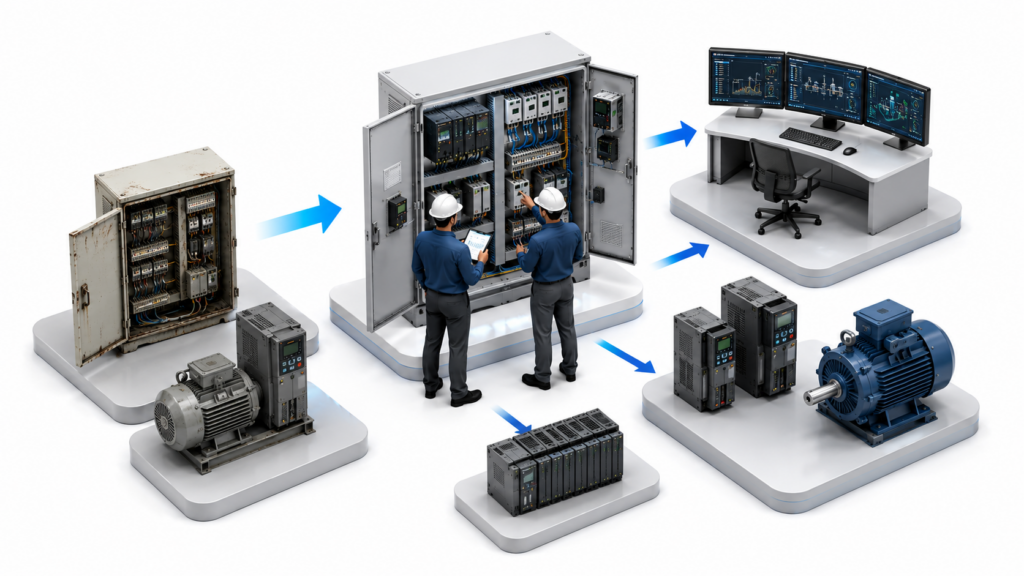
Retrofit capability
INGSOL delivers SCADA Systems, PLC and drive upgrades together. This happens within the same retrofit programme. Therefore, coordination overhead drops significantly.
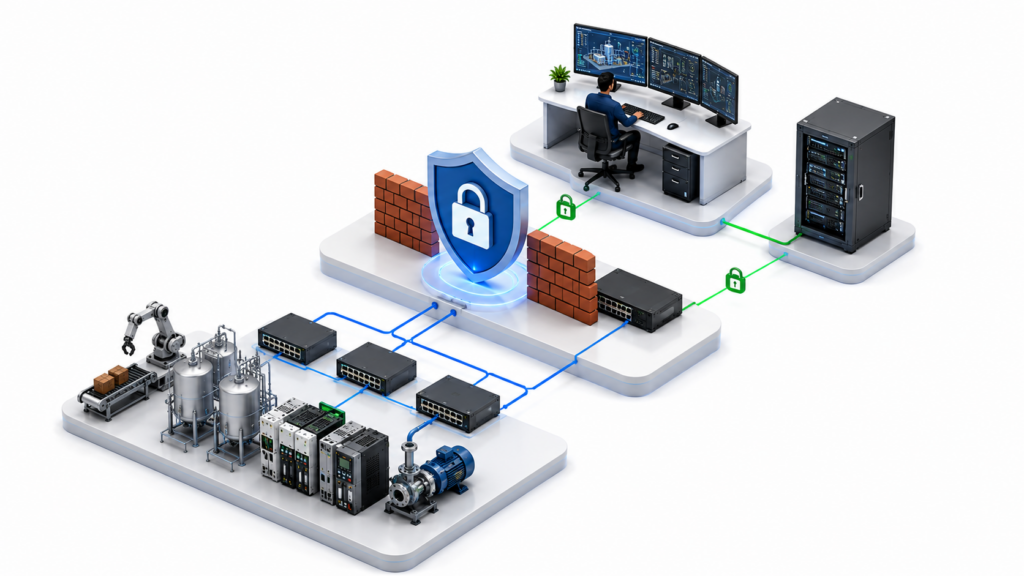
Security by design
Network segmentation and access control get designed in from the start. This never gets retrofitted after a concern is raised.

Proven expertise
INGSOL brings 10+ years of engineering experience. We also bring a track record across major automation platforms.
INGSOL supports SCADA Systems implementations across industrial sectors. This includes flexible packaging alongside other process and discrete environments. It sits within our wider Industrial Solutions, Digital Transformation, Energy and INGSOL Labs verticals.

Where to Start: The Digital Transformation Maturity Assessment
INGSOL’s Digital Transformation Maturity Assessment evaluates your OT infrastructure. It also reviews assets, people and processes. This gives you a baseline maturity score. You also get a clear view of where investment pays off fastest. As a result, SCADA Systems get designed as part of one coherent roadmap. It never becomes an isolated project.
Frequently Asked Questions
SCADA provides real-time monitoring and control at the process and equipment level. An MES operates a layer above SCADA, managing production orders, recipes, quality gates and traceability, and bridging ERP planning with shopfloor execution.
Yes. INGSOL retrofits PLCs, drives and sensors on existing production equipment across industries, integrating them into a modern SCADA system without requiring full machine replacement.
SCADA systems can be configured for secure remote monitoring through proper network segmentation and access control. INGSOL builds this into the system architecture from the outset rather than treating it as an afterthought.
SCADA and IIoT serve different purposes and often work together. SCADA handles real-time process control at the plant level, while IIoT extends connectivity across a wider network of sensors and devices, typically feeding broader analytics, cloud dashboards and cross-site reporting.
No. SCADA applies to virtually any factory or manufacturing environment that relies on PLCs, drives and field instrumentation, from discrete assembly and machining to continuous process, chemical, energy and packaging operations.

Get in touch to discuss your SCADA requirements or a Digital Transformation Maturity Assessment.
Our Clients


















membership