
Industry 4.0
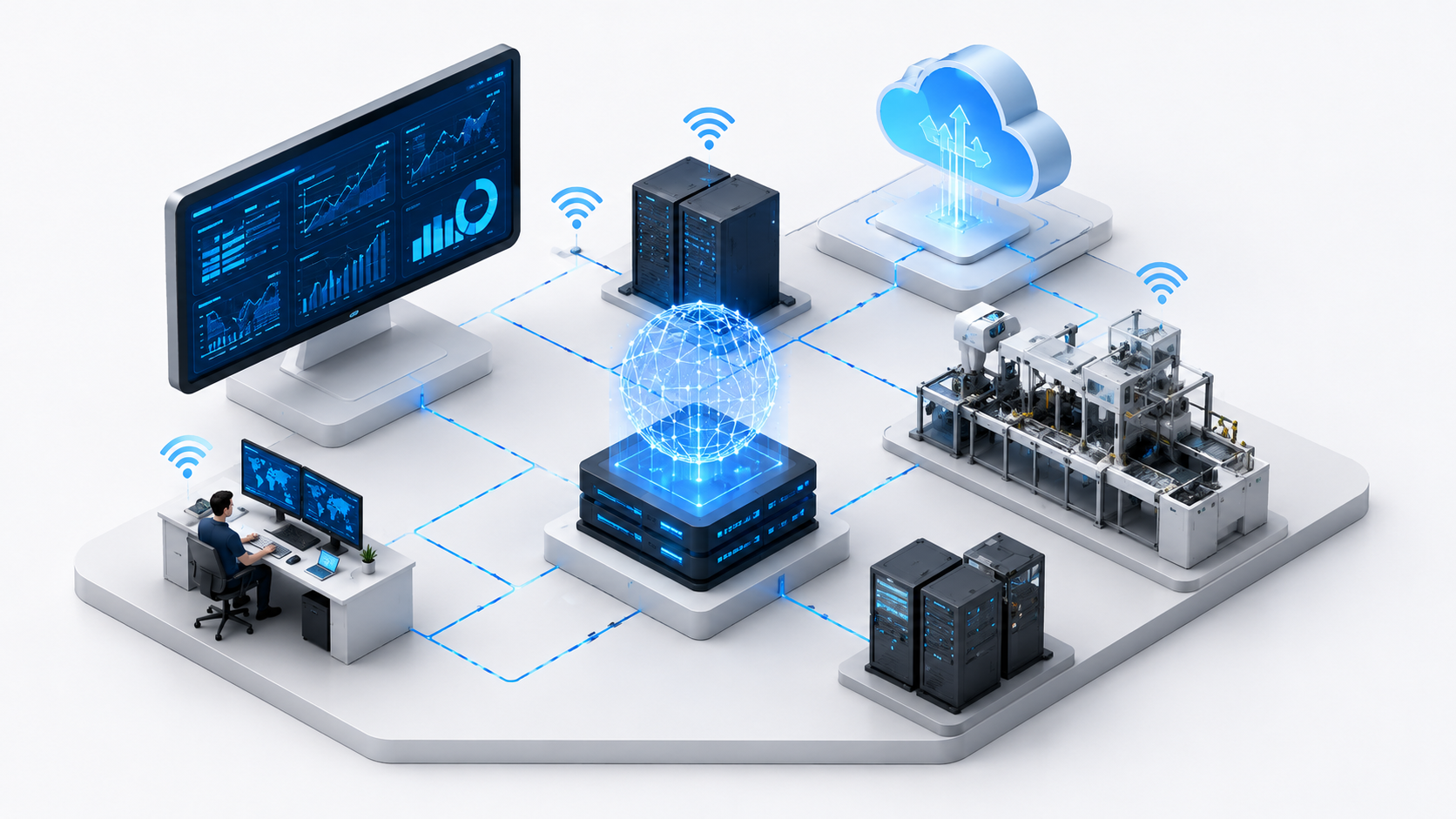
Industry 4.0: Connecting Engineering and Technology for Smarter Manufacturing
Industry 4.0 Solutions are changing how manufacturers plan, run and improve production. For flexible packaging and process plants, this means real-time data replaces guesswork. This page explains what Industry 4.0 Solutions mean in practice. It also shows why the gap between plan and shopfloor matters. Finally, it explains how INGSOL builds Industry 4.0 Solutions step by step.
INGSOL delivers Industrial AI through INGSOL Labs, our applied R&D ecosystem. Industry 4.0 Solutions depend on a reliable, real-time data foundation. DigitalX and MES integration build that foundation. Therefore, every AI model we build reflects actual plant data. It also reflects real engineering experience, not theoretical patterns.
What Is Industry 4.0?
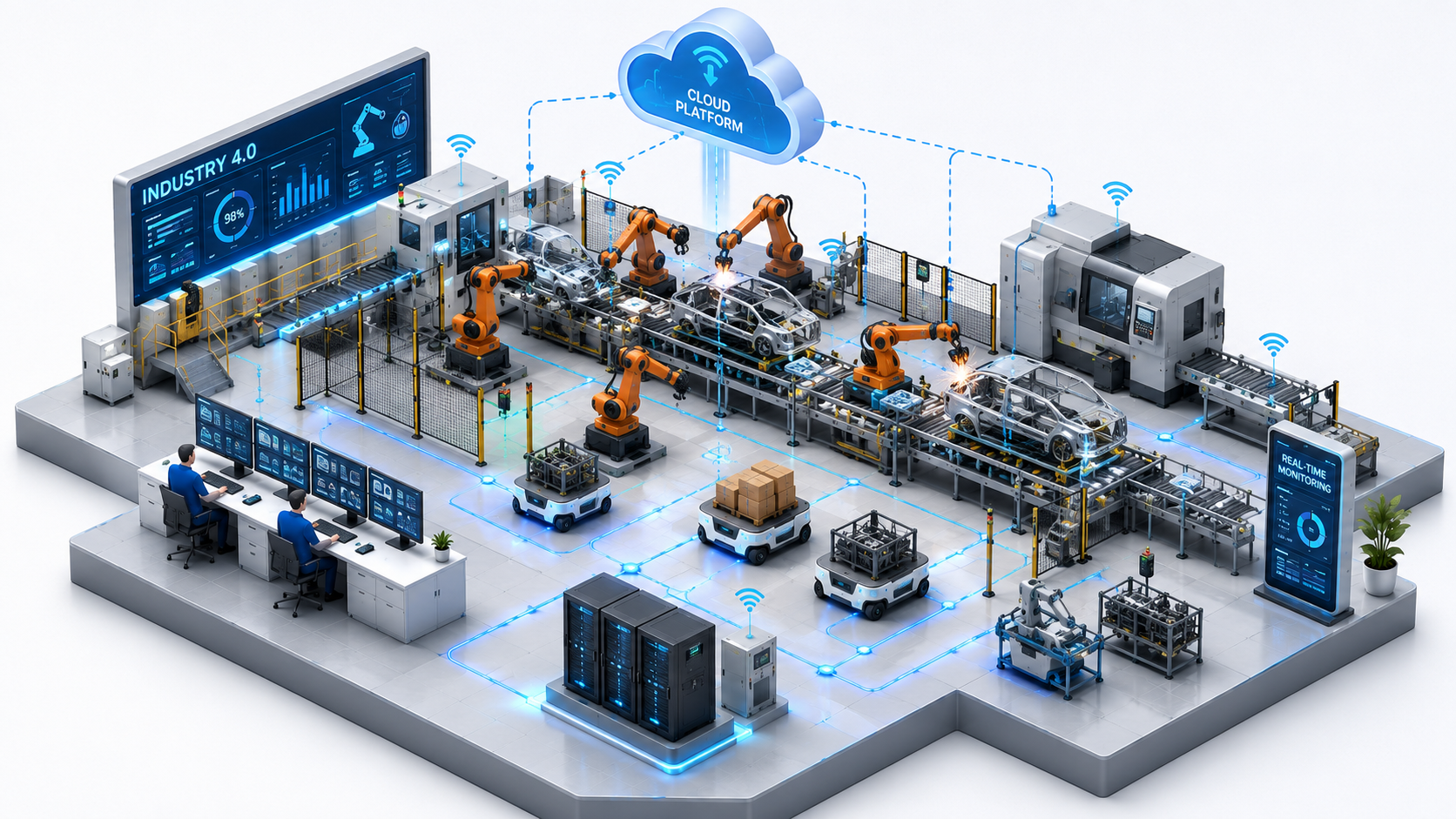
Industry 4.0, often called the Fourth Industrial Revolution, integrates several technologies. This includes digital systems, Industrial IoT, industrial AI, automation and cloud computing. Industry 4.0 Solutions connect physical equipment with digital systems directly. As a result, shop floor decisions run on live data, not guesswork.
However, Industry 4.0 Solutions are not a product you install. They also do not replace engineers. Instead, Industry 4.0 Solutions represent a capability. Industry 4.0 Solutions get built through the right infrastructure, systems and people working together. Done well, it gives real-time visibility into equipment, quality and energy use. It also lets you act before small issues become expensive ones.
The Gap Industry 4.0 Needs to Close
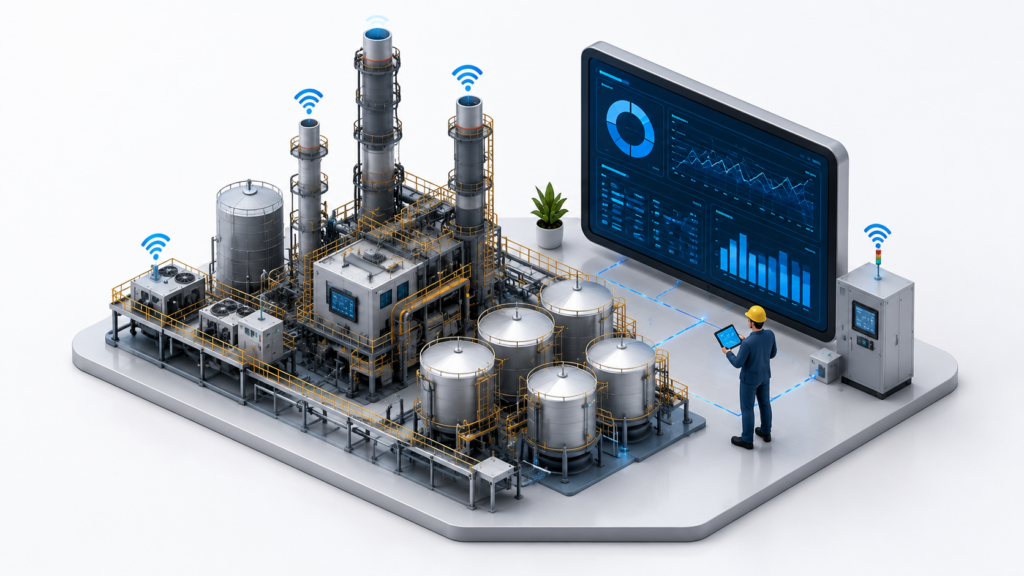
Most manufacturers already have an ERP that tells them what should happen. Very few have a reliable way to see what actually happens. That gap compounds across every production cycle.
Actual changeover times often run well beyond the standard. As a result, downtime extends with every product switch.
Start-up scrap frequently exceeds documented targets. Therefore, avoidable material cost gets added to every batch.
Energy use during transitions and off-spec running can exceed optimised levels significantly.
Without real-time monitoring, issues often surface hours after they occur. By then, considerable material has already been affected.
The real cost here is not the technology you are missing. Instead, it is the visibility you are missing. Industry 4.0 Solutions exist specifically to close that gap.
How INGSOL Builds Industry 4.0 Capability
INGSOL takes a layered approach to Industry 4.0 Solutions. Therefore, each stage of capability builds on a reliable foundation. Nothing gets bolted on top of another system.
1. OT Backbone
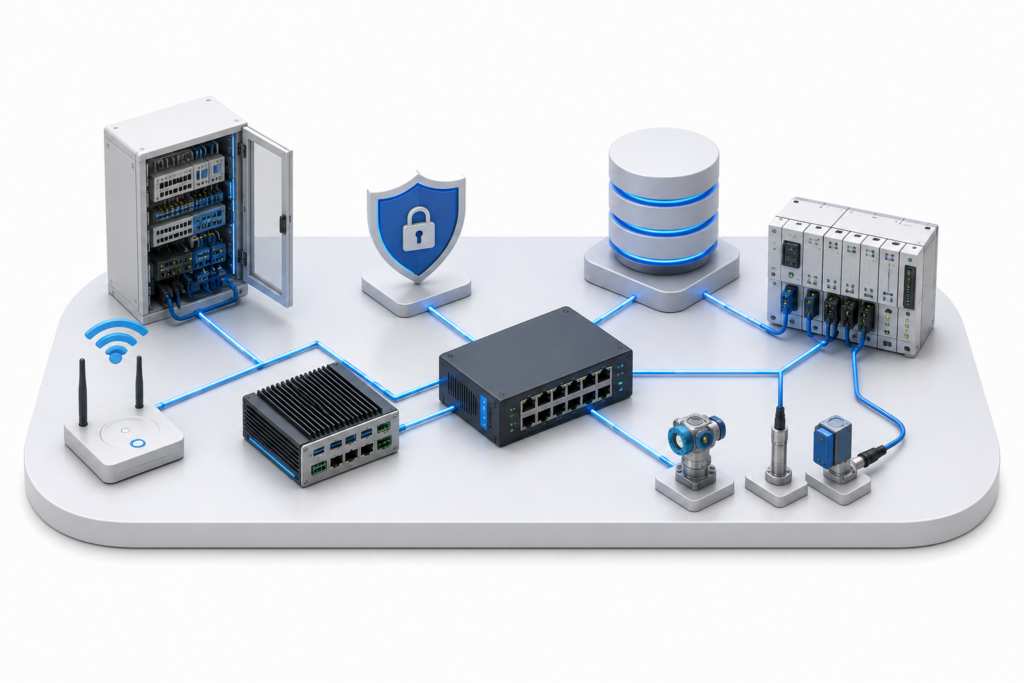
Before any Industry 4.0 Solutions dashboard adds value, the underlying network needs reliability. INGSOL establishes network infrastructure and edge connectivity first. We also handle data aggregation, security and access control. In addition, we address brownfield readiness for legacy equipment. As a result, every system built afterwards actually works on the plant floor.
2. Visibility Layer
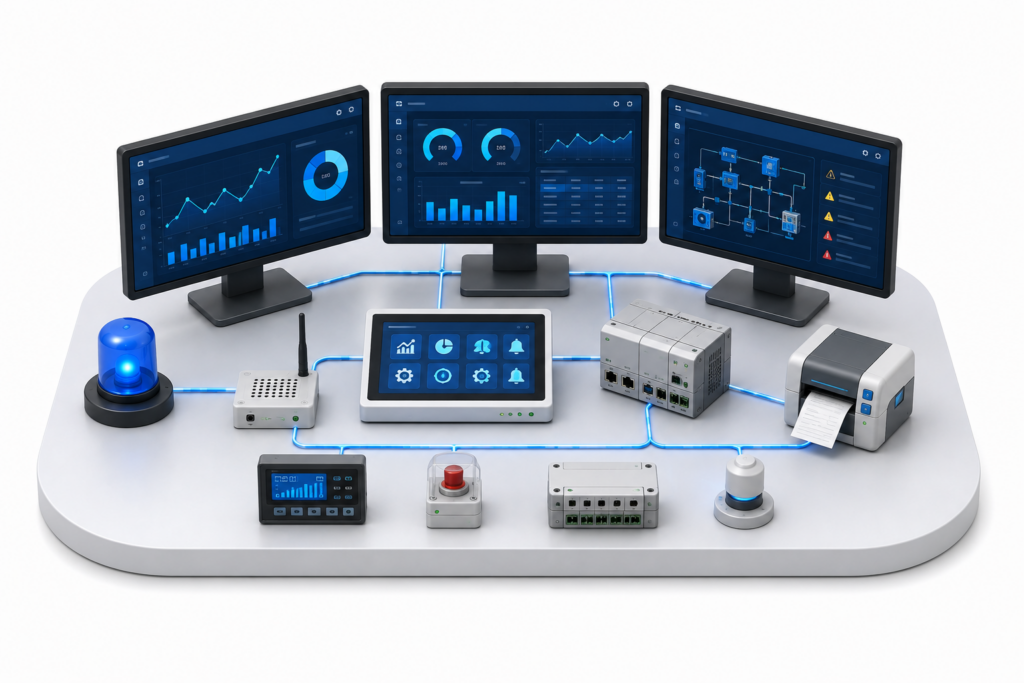
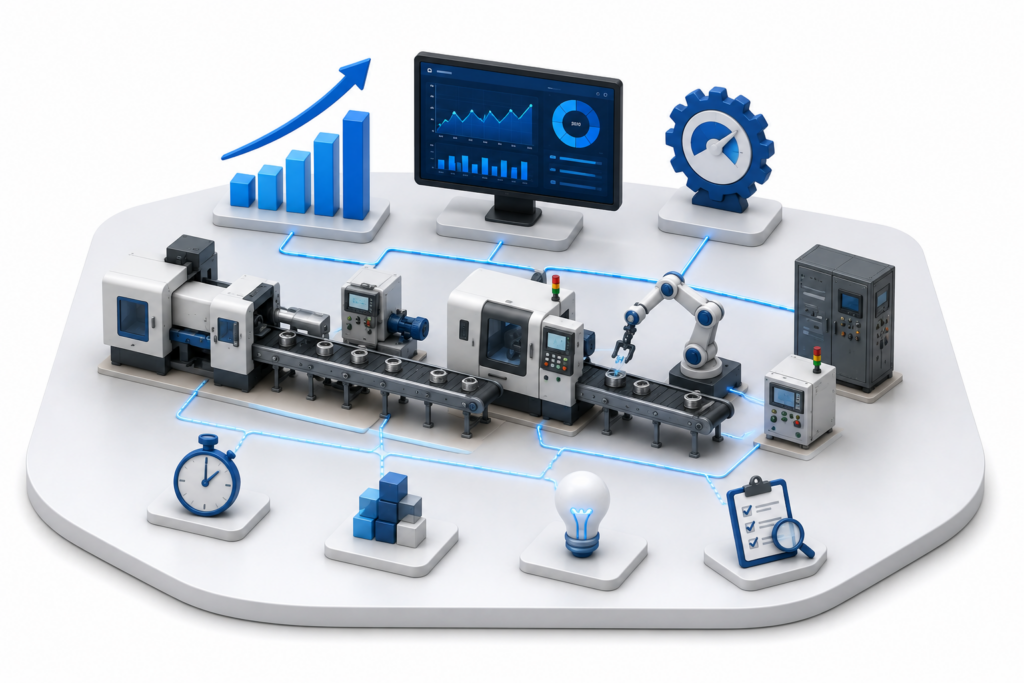
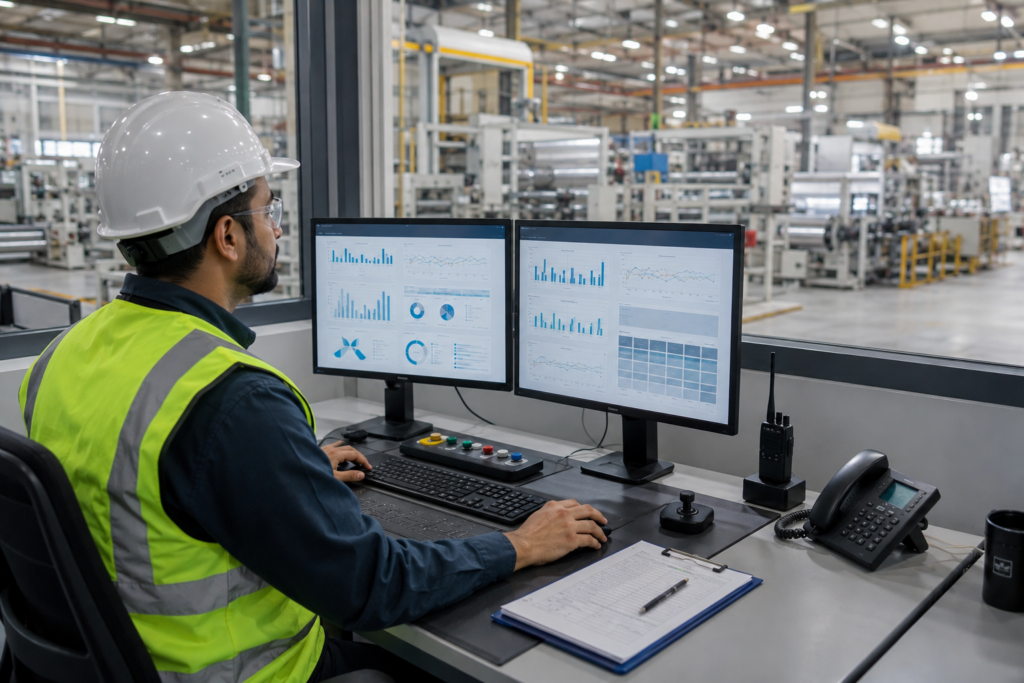
With a solid OT backbone, our Industry 4.0 Solutions deliver real-time OT analytics. We also build unified dashboards, alarms and anomaly detection. OEE reporting by equipment and line completes this layer. Therefore, this layer answers a simple question most plants cannot answer today. What is actually happening on the shop floor, right now?
3. Process Optimisation
Visibility becomes valuable once teams act on Industry 4.0 Solutions data systematically. INGSOL uses shopfloor data to reduce changeover losses. We also control start-up scrap and optimise energy per kilogram of output. In addition, we identify genuine production bottlenecks. As a result, measured, repeatable improvement replaces operator instinct.
4. MES Execution Layer
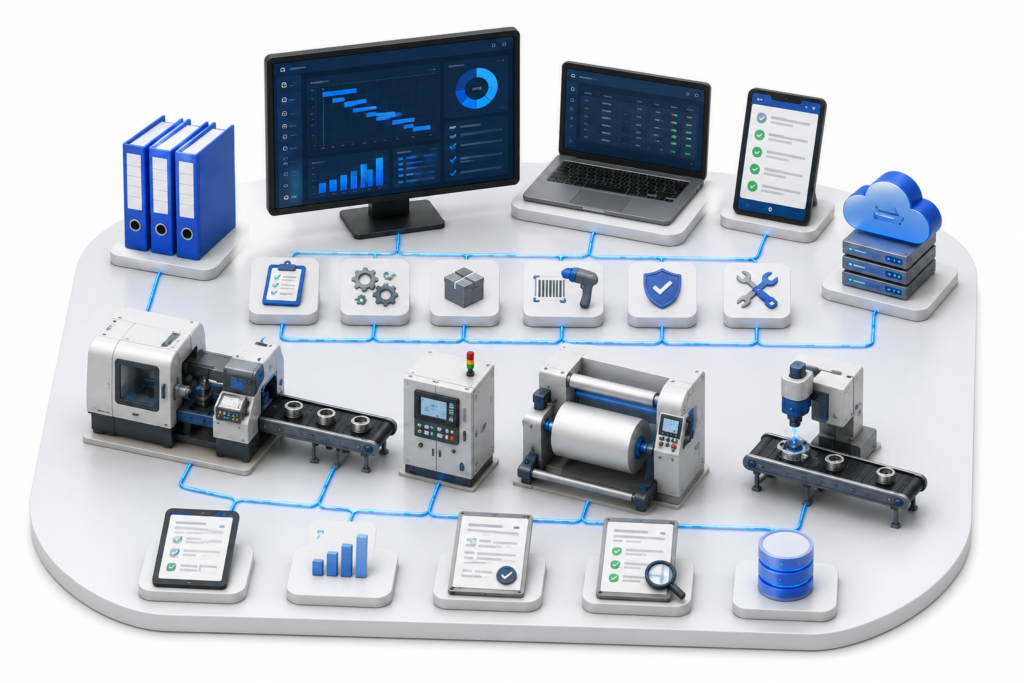
Within Industry 4.0 Solutions, a Manufacturing Execution System, or MES, makes improvements stick. It bridges ERP planning with shopfloor execution directly. MES manages production orders and recipes, too. It also enforces quality and traceability gates. In addition, it drives condition-based maintenance. Therefore, static paperwork gives way to digital procedures that update automatically.
5. Industrial AI and Advanced Optimisation
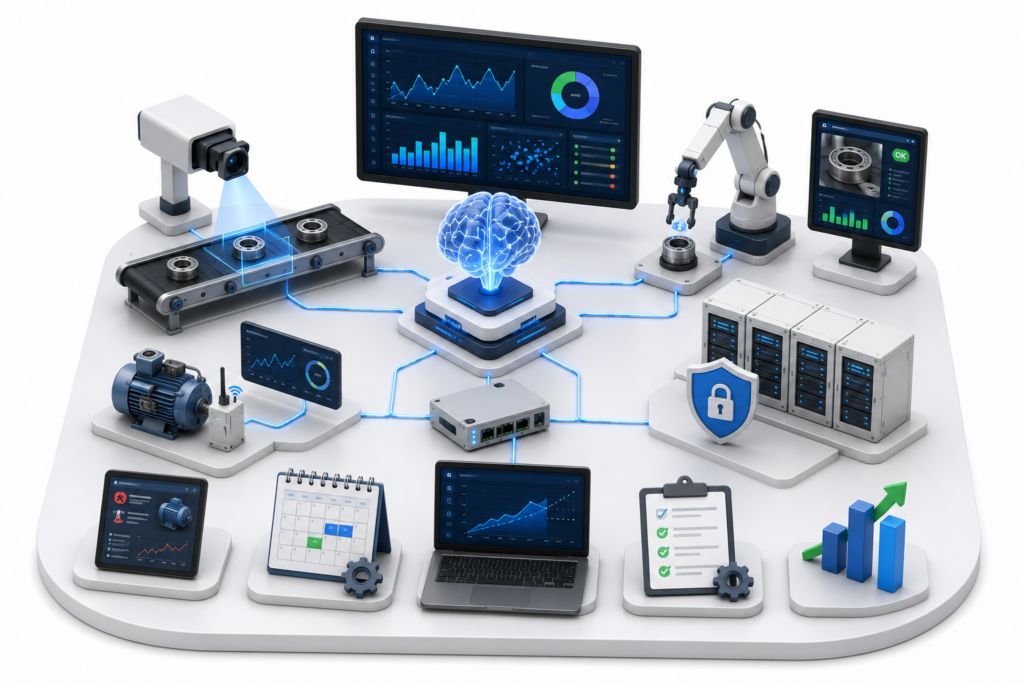
The final Industry 4.0 Solutions layer looks forward, not backward. INGSOL applies industrial AI to predictive maintenance and vision-based quality inspection. We also apply it to advanced process optimisation models. As a result, plants anticipate failures and quality issues before they affect production.
Why It Matters
Generic AI does not understand your machines.
Generic AI, without real Industry 4.0 Solutions context, does not understand your machines. AI built without engineering context often looks correct on a dashboard.
Early detection changes outcomes.
Catching an issue minutes earlier can prevent hours of scrap. It can also prevent unplanned downtime.
Bad data produces bad predictions
AI models stay only as reliable as the data feeding them. That is why ours build on validated MES and DigitalX data.
Institutional knowledge becomes a lasting asset.
A retiring engineer’s judgment does not have to leave with them. Instead, it lives on in a model that keeps learning.
Where to Start: The Digital Transformation Maturity Assessment
Every transformation should start with an honest diagnosis, not a purchase. INGSOL’s Digital Transformation Maturity Assessment evaluates four pillars. These are OT infrastructure, OT assets, people and processes. It then produces a baseline maturity score. You also get a benchmark against industry peers. Finally, you see which pillar holds performance back. From there, INGSOL builds a roadmap. This addresses foundational blockers first. It then delivers measurable quick wins. Long-term, strategic scaling comes later.
Industry 4.0 and Industry 5.0
Industry 5.0 does not replace Industry 4.0 Solutions. Instead, it builds on the same digital foundation. It adds a focus on human-machine collaboration and sustainability. Operational resilience rounds out this focus. INGSOL designs Industry 4.0 Solutions with this direction in mind. Therefore, today’s investment in connectivity stays relevant as priorities evolve.
Built on Open, Production-Proven Technology
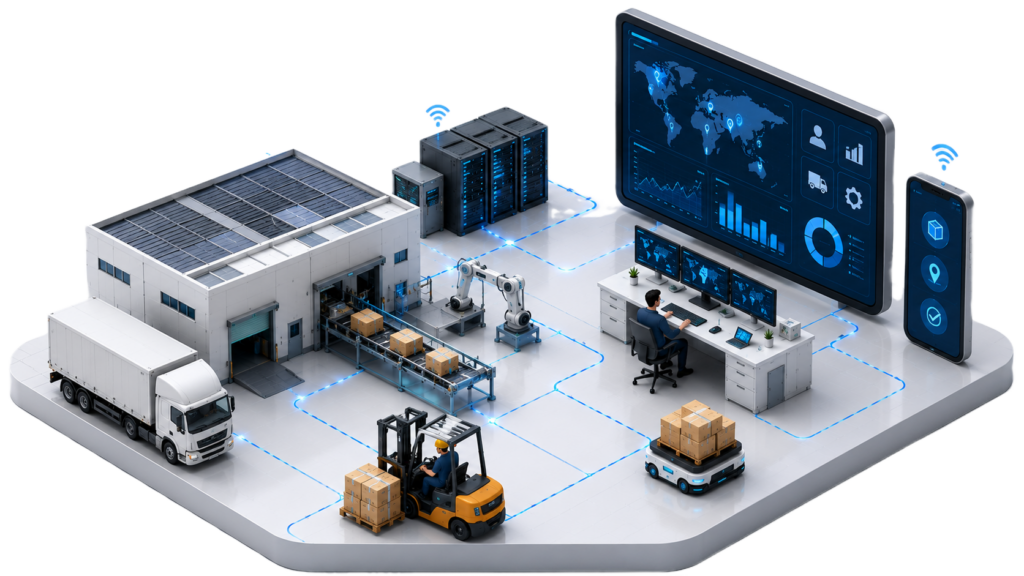
INGSOL implements Industry 4.0 Solutions using established, interoperable platforms. We avoid proprietary lock-in entirely. Our stack includes Ignition, Litmus and Kepware for OT-IT integration. It also includes Siemens, Mitsubishi Electric and Allen-Bradley control systems. ThingsBoard and AWS handle IIoT and cloud analytics. In addition, we use open protocols. These include OPC UA, MQTT, Modbus TCP/IP, EtherNet/IP and PROFINET. As a result, this open architecture lets manufacturers add lines and sensors over time. Nobody needs to disrupt systems already in production.
Why Manufacturers Choose INGSOL for Industry 4.0
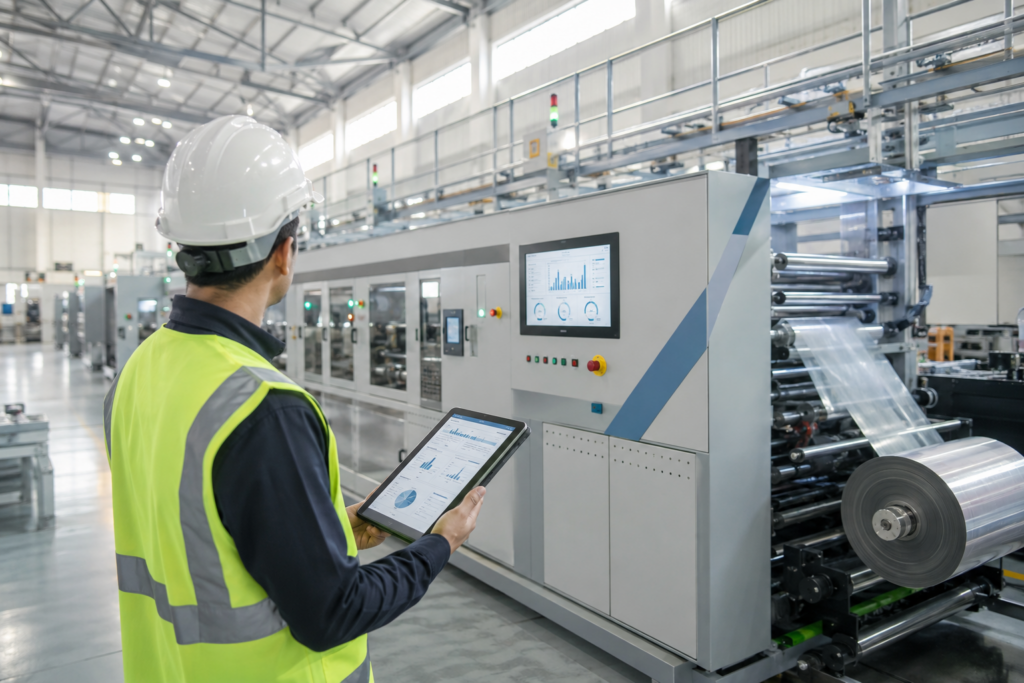
- Engineering depth: engineers understand film behaviour, tension dynamics and extrusion physics. This goes beyond automation and software alone.
- Open architecture: no vendor lock-in. Systems integrate with existing ERP, SCADA and equipment instead.
- Scalable design: a modular, layered approach. Therefore, you add capability without disrupting current operations.
- Global presence: our Industry 4.0 Solutions footprint spans India, the US, the UK and the UAE. As a result, manufacturers across multiple regions get consistent support.
INGSOL’s Digital Transformation work sits alongside Industrial Solutions, Energy and INGSOL Labs. This gives manufacturers one partner for the engineering Industry 4.0 Solutions requires.
INGSOL helps manufacturers turn shopfloor data into measurable performance. We skip the buzzwords and oversized promises. Get in touch to discuss a DTMA for your plant.
Our Clients











membership