
Hardware & Edge
Hardware & Edge: The Physical Foundation of Industrial Data
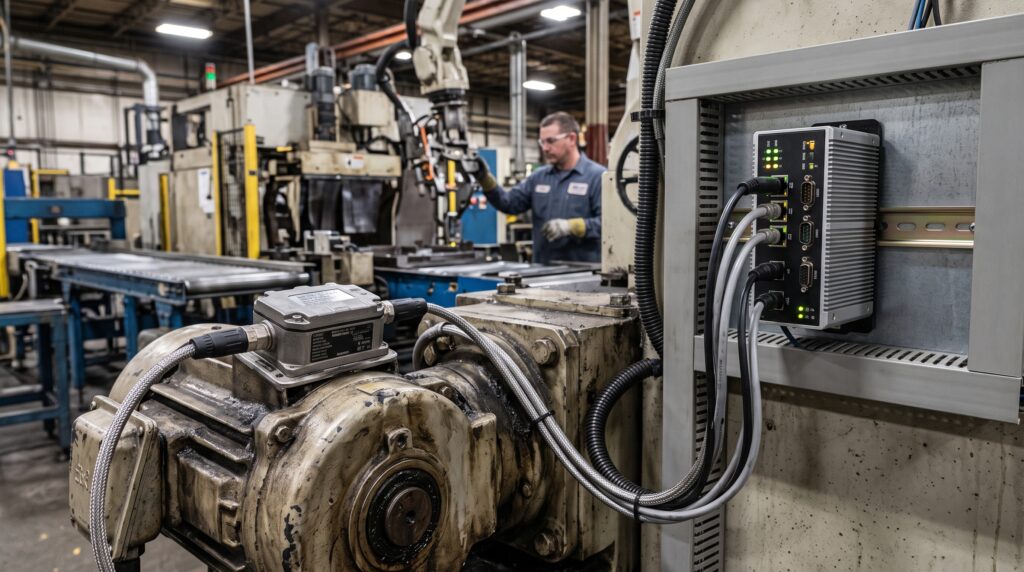
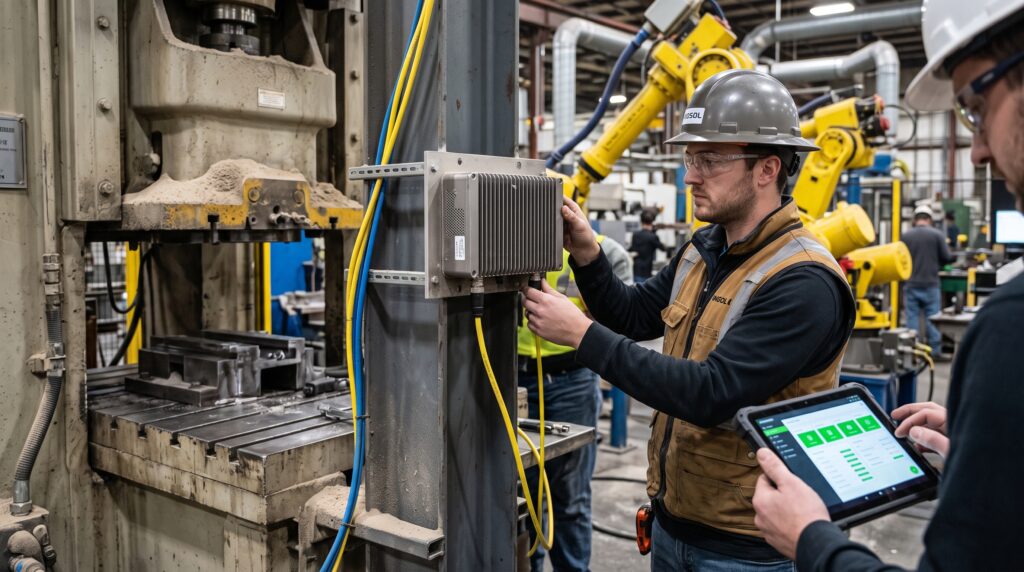
Every dashboard, every predictive model, and every real-time alert a factory relies on starts with a physical sensor or device on the equipment itself. If that hardware layer is unreliable, everything built on top of it inherits the same unreliability. INGSOL designs and deploys the edge devices, gateways and sensors that form this foundation, engineered for the conditions found on a real production floor rather than a controlled lab environment. This page explains our approach to Hardware & Edge and how it applies across factories and manufacturing plants of every kind.
Why the Hardware Layer Deserves Attention
It is tempting to focus digital transformation budgets on software, dashboards and analytics, since that is where the value appears to live. In practice, the hardware layer determines whether any of that value is trustworthy. Industrial environments bring vibration, temperature extremes, electrical noise and dust that consumer-grade or office equipment is not built to withstand. Hardware chosen without this in mind tends to fail quietly, producing gaps or errors in the data long before anyone notices a dashboard is wrong.
INGSOL treats Hardware & Edge as engineering, not procurement: selecting, configuring and positioning devices to match the specific conditions and requirements of your plant.
IoT Gateways: Bridging Legacy Equipment and Modern Platforms
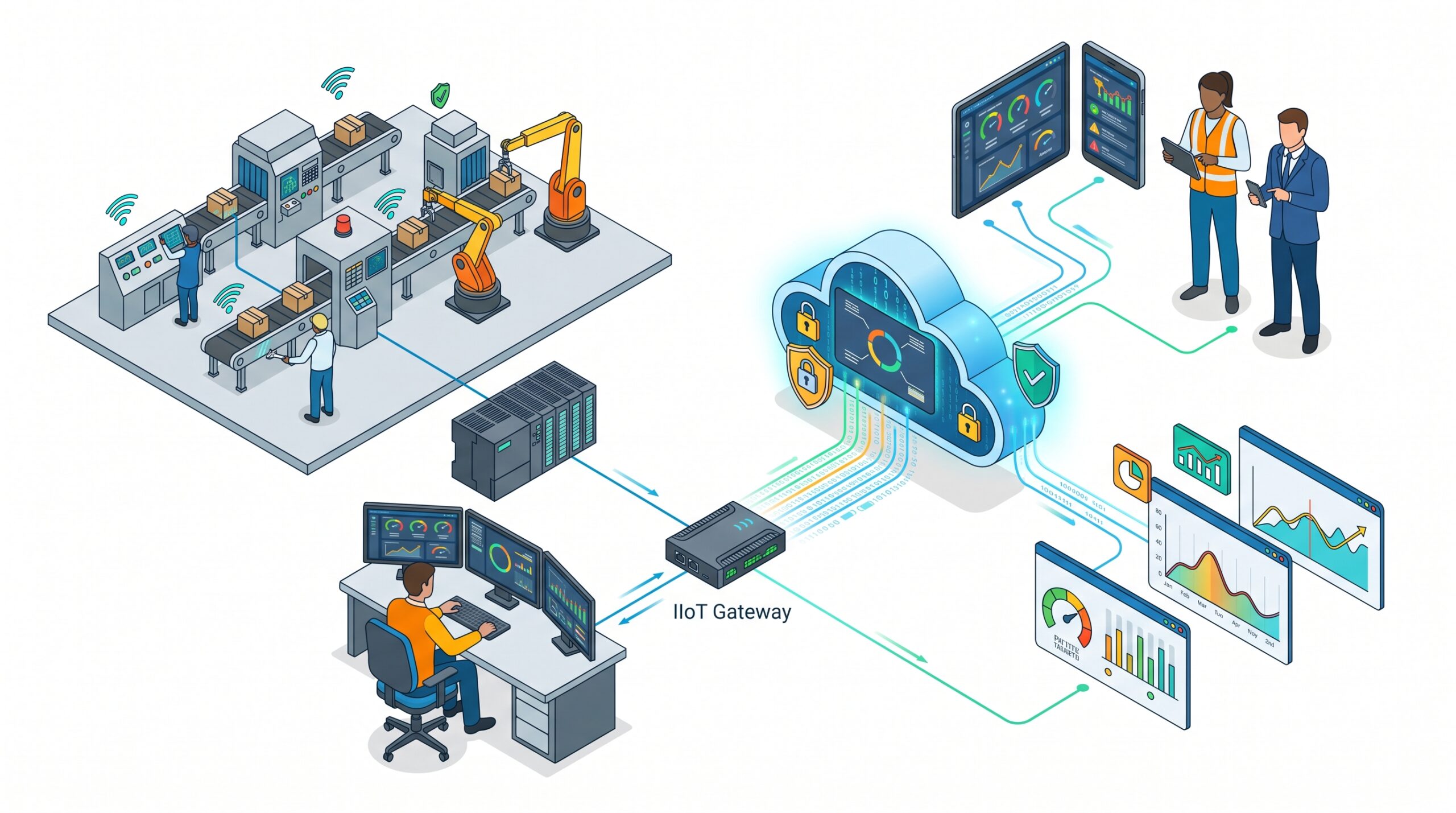
Many factories run capable, well-maintained machines that predate modern networking standards. IoT gateways give this equipment a way to participate in a current data architecture without replacement: translating legacy signals and protocols into formats that analytics platforms, historians and cloud systems can use. INGSOL selects and configures gateways based on the protocols already present on your equipment, whether that is an older PLC communicating over a proprietary interface or a newer device using OPC UA or MQTT, so that older and newer assets can be brought into a single, coherent system.
Edge Devices: Processing Data Where It Is Generated
Edge computing units are positioned close to the machines and processes they monitor, so that data is collected, processed and acted on locally rather than depending entirely on a distant server or cloud connection. This keeps monitoring and control responsive, and it means critical functions continue to operate even during a network interruption. INGSOL specifies edge hardware rated for the temperature, vibration, and electrical conditions of the specific installation point, so that low-latency performance is not compromised by the environment it operates in.
Smart Sensors: The Basis for Condition-Based Monitoring
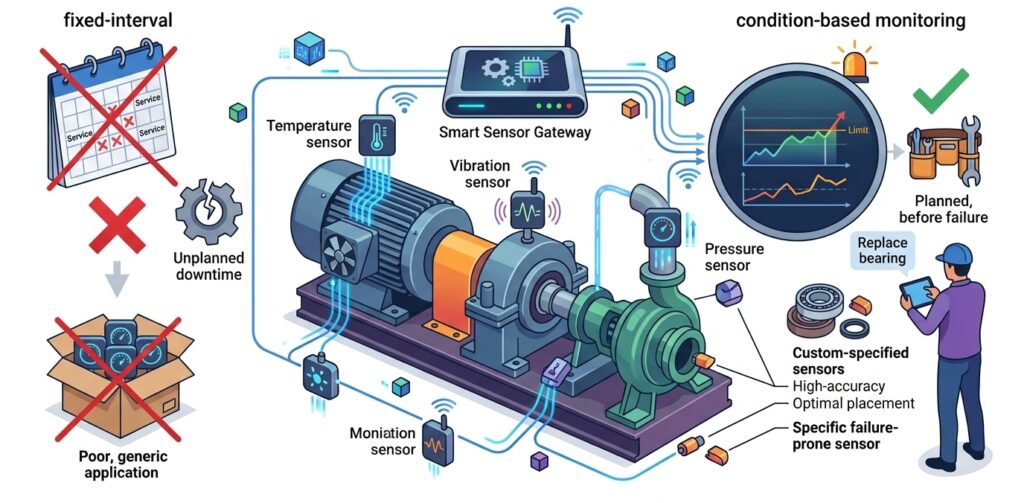
Accurate sensing of temperature, vibration, pressure, and other operational parameters is what makes condition-based monitoring and predictive maintenance possible. Rather than servicing equipment on a fixed calendar, continuous sensor data allows maintenance to be triggered by actual asset condition, catching early signs of wear before they cause an unplanned stoppage. INGSOL specifies sensor accuracy, placement, and sampling rate around the specific failure modes and quality parameters that matter for your process, rather than applying a generic sensor package regardless of application.
Hardware Matched to Your Operation
we assess your existing equipment, protocols and workflows before specifying hardware, so devices integrate with what you already have rather than requiring workarounds later.
Architecture that starts with a single line or pilot area can extend to additional lines, sites or an enterprise-wide deployment without a redesign.
Devices are selected to work across the industrial protocols already present in your plant, bridging legacy machines and modern digital platforms rather than favouring one vendor.
Hardware specification reflects the actual environment and duty cycle of the installation, from continuous process equipment to intermittent, high-vibration machinery.
The objective of every Hardware & Edge deployment is measurable: reduced unplanned downtime, better visibility, or tangible cost savings, not hardware for its own sake.
How INGSOL Approaches a Hardware & Edge Deployment
INGSOL begins with an assessment of existing PLCs, drives, sensors and network infrastructure, identifying where instrumentation is missing and where legacy protocols need bridging. From there, we specify edge devices, gateways and sensors matched to the site conditions and the specific parameters that matter for your process, and we integrate this hardware into the wider communication and data architecture, so that what is captured at the edge reaches the dashboards, historians and control systems that depend on it. Implementation is planned to minimise disruption to ongoing production, with commissioning and validation carried out before handover.
Why Manufacturers Choose INGSOL for Hardware & Edge
Engineering-led selection
Hardware is specified by engineers who understand process conditions and failure modes, not only device specifications.
Legacy equipment integration
Gateways and protocol support that bring older PLCs and instruments into a modern architecture rather than requiring replacement.
Open, interoperable devices
Devices built on open protocols, so your plant is never dependent on a single proprietary hardware supplier.
Part of a complete architecture
Hardware & Edge is delivered as part of INGSOL’s wider Communication & Integration and Data & Intelligence work, so hardware decisions support the full digital transformation rather than standing alone.
Global support
Supported by INGSOL’s Industrial Solutions, Digital Transformation, Energy, and INGSOL Labs verticals across India, the United States, the United Kingdom, and the UAE.
INGSOL designs and deploys the edge devices, gateways and sensors that make accurate, real-time industrial data possible, matched to the realities of your plant rather than a generic hardware catalogue.
Our Clients


















membership