
opcua

One open standard, connecting every machine, vendor, and platform on your floor.
INGSOL designs and implements OPC UA architecture for factories and manufacturing plants, giving PLCs, SCADA systems, MES platforms, and cloud applications a secure, vendor-neutral way to exchange data, without locking your plant into a single manufacturer’s ecosystem.
What OPC UA Is, and Why It Matters
OPC UA, short for Open Platform Communications Unified Architecture, is an open, platform-independent standard for industrial data exchange. Unlike its predecessor, OPC Classic, which depended on Windows-specific technology and offered limited security, OPC UA was built from the ground up to run on any operating system, carry rich, structured information rather than raw tag values, and secure that information with built-in encryption and authentication.
For manufacturers, this matters because equipment from different vendors, PLCs, drives, sensors, historians, rarely speaks the same proprietary language natively. OPC UA gives all of it a common, secure way to communicate, which is why it has become the default choice for structured, system-to-system communication in modern industrial environments.

What Our OPC UA Implementation Covers
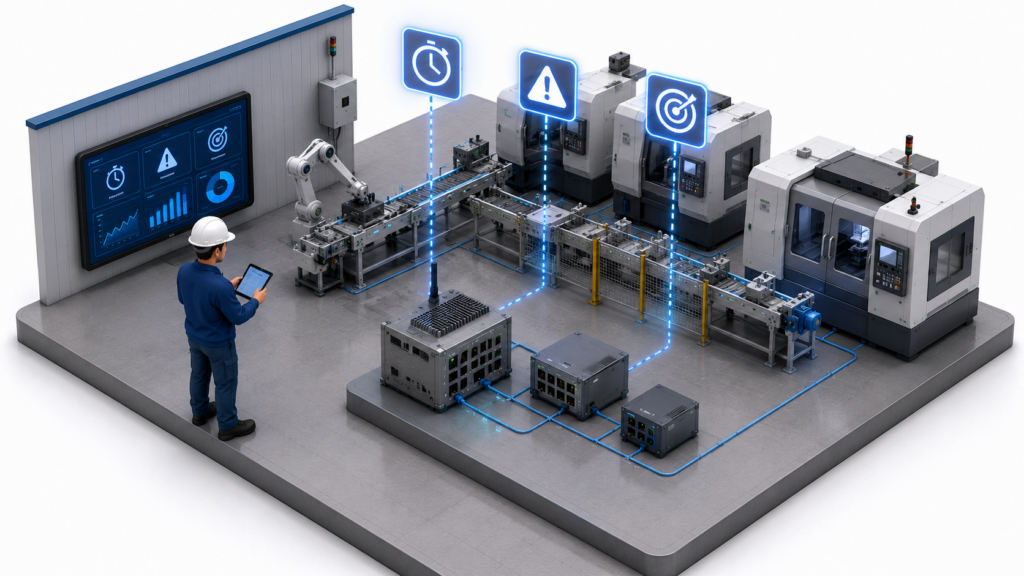
OPC UA Server & Client Deployment
Configuring OPC UA servers on your machines and control systems, and OPC UA clients on the platforms that consume that data, MES, SCADA, historians, or cloud applications, so information flows in both directions reliably.
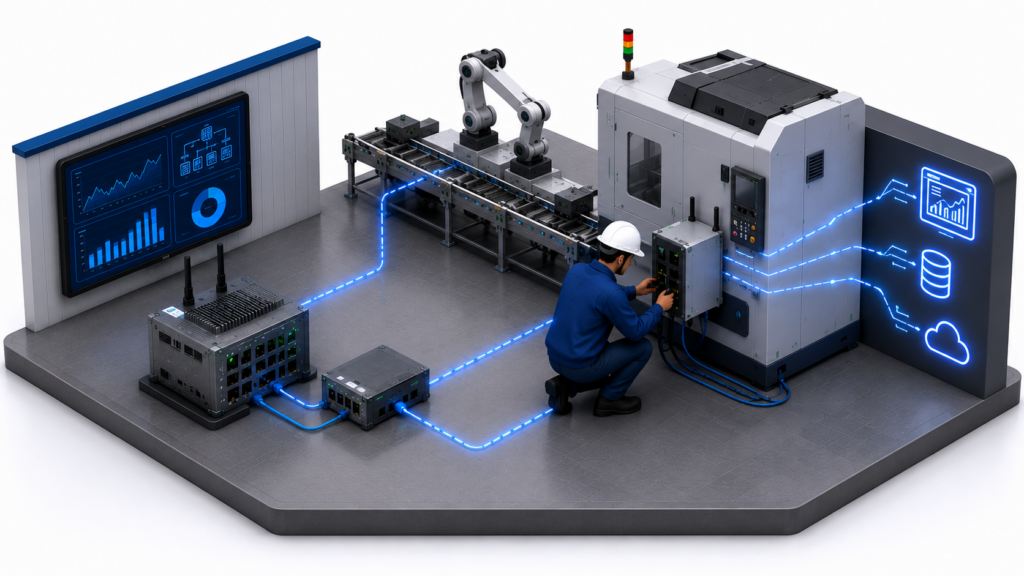
Legacy System Integration
Connecting older PLCs and control systems that do not natively support OPC UA through gateway devices and protocol converters, bringing legacy equipment into a modern data architecture without requiring replacement
Information Modeling
Structuring your plant’s data into OPC UA’s semantic information model, so a temperature reading, a batch ID, or a machine state carries meaning and context, not just a raw number.
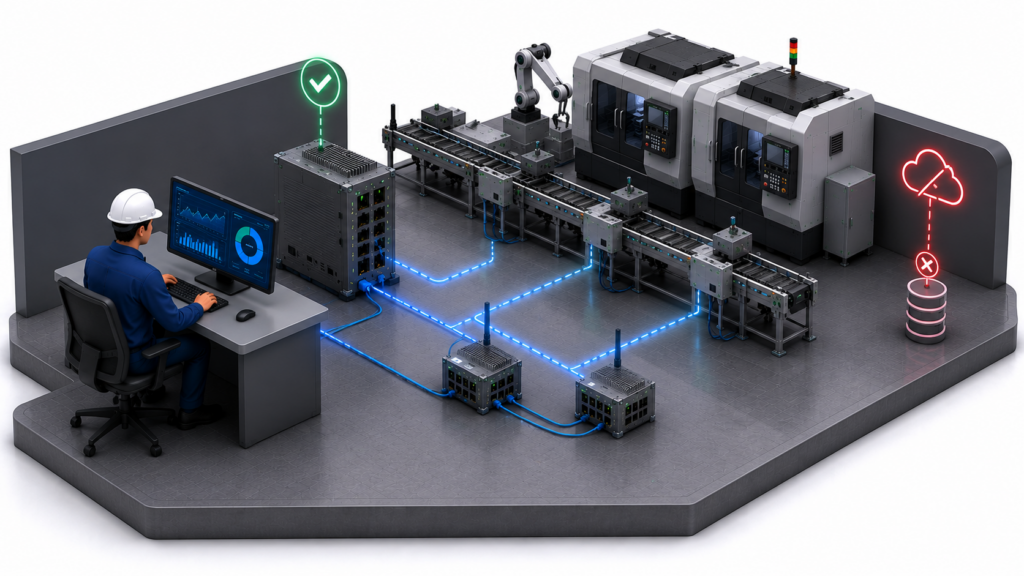
Secure Architecture Design
Implementing OPC UA’s built-in security model, encryption, authentication, and certificate management, aligned with your broader OT cybersecurity requirements.
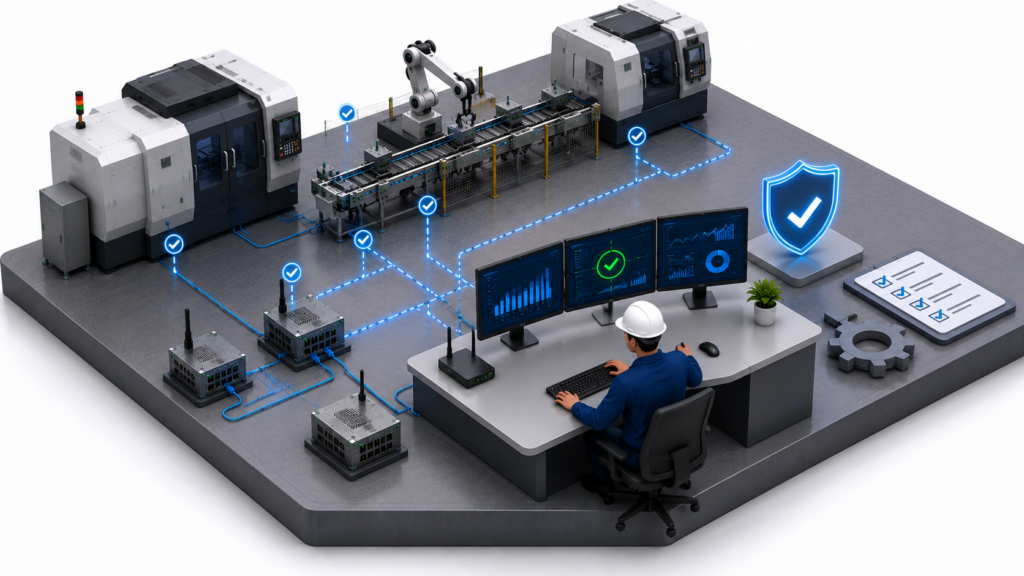
SCADA, MES & Cloud Connectivity
Using OPC UA as the connective layer between your control systems and your MES, historian, and cloud platforms, feeding the Data & Intelligence layer with structured, trustworthy information.
OPCUA vs. OPC Classic vs. MQTT
Manufacturers often ask which protocol they actually need. The honest answer is usually more than one, each suited to a different part of the architecture:
Factor |
OPC UA |
OPC Classic |
MQTT |
|---|---|---|---|
Platform
|
Platform-independent
|
Windows-dependent (DCOM)
|
Platform-independent
|
Security
|
Built-in encryption & authentication
|
Limited, relies on network-level security
|
Depends on broker configuration
|
Data Modeling
|
Rich semantic information modelingRich semantic information modeling
|
Basic tag-based data
|
Lightweight, minimal structure
|
Best Suited For
|
Structured, information-rich system-to-system communication
|
Legacy Windows-based industrial systems
|
High-volume sensor data, remote/bandwidth-constrained links
|
why it mATTERS
Vendor Neutrality Protects Future Choices
OPC UA works the same way regardless of vendor, which means your plant is never locked into a single manufacturer's proprietary ecosystem.
Structured Data Reduces Integration Work Later.
Because OPC UA carries structured, meaningful data rather than raw tag values, downstream systems like MES and analytics platforms can use it with far less manual mapping.
Security Is Built In, Not Bolted On
Encryption and authentication are part of the standard itself, not an add-on that has to be configured separately or is easy to overlook.
One Standard Scales From a Sensor to the Cloud
The same OPC UA architecture that connects two machines today can scale to connect an entire plant, or multiple sites, tomorrow
How INGSOL Delivers SCADA Systems
We review your current PLCs, SCADA, and systems to determine OPC UA readiness and identify equipment that will need a gateway or converter.
We design the server/client architecture, information model, and security configuration suited to your plant and planned expansion.
OPC UA servers, clients, and gateways are deployed and configured across your production environment.
We validate that data is flowing accurately and securely between machines, SCADA, MES, and any cloud platforms in scope.
Configuration is documented and your team is trained to manage and extend the OPC UA architecture going forward.
Why Manufacturers Choose INGSOL for OPCUA
Engineering-Led Implementation
Our engineers understand both the OPC UA specification and the industrial equipment it connects to, not just the protocol in isolation.
Built to Fit the Bigger Picture
We design OPC UA architecture as part of your broader Communication & Integration and Data & Intelligence strategy, not as an isolated technical exercise.
No Equipment Left Behind.
Legacy PLCs and control systems are brought into your OPC UA architecture through gateways, not treated as a reason to replace them
Purpose-Built Not Overbuilt
Lorem ipsum dolor sit amet, consectetur adipiscing elit. Ut elit tellus, luctus nec ullamcorper mattis, pulvinar dapibus leWe implement only the servers, clients, and information models your plant actually needs. No unnecessary complexity.o.

Part of a Larger Communication & Integration Strategy
OPC UA implementation is one component of INGSOL’s broader Communication & Integration pillar, which also covers industrial network design and SCADA/IIoT platform modernisation. OPC UA typically works alongside other protocols, MQTT for lightweight, high-volume sensor data, for example, rather than replacing them outright. Our team designs the right combination for your specific architecture.
Built for Factories Across Industries
OPC UA implementation is not specific to one type of equipment or sector. The same architecture and security model applies whether you are connecting extrusion lines, compressors, curing presses, CNC machines, or continuous process equipment. What changes is the specific information model and the systems on either end; the underlying standard and INGSOL’s implementation approach stay consistent.

Request an OPC UA architecture assessment to see how your current systems can be connected securely, and where legacy equipment needs a gateway to participate
Our Clients
















membership